Treasure Hunts Develop both Handwriting & Language Skills

The Easter Holidays are here, so here are some fun activities to keep children of all ages entertained whether we have rain or sunshine.

A treasure hunt is a great way to teach children directional language. Being able to understand directional and placement (prepositions) vocabulary is important for understanding everyday instructions such as ‘put your cup on the table’; ‘go along the hall and stop at the door in front of you’.

We also use this directional language to explain how to draw patterns and write letters, which is another reason why it is important for young children to be introduced to, and have a good understanding of, this kind of vocabulary.

Through treasure hunts you can introduce new directional and placement language in a fun and exciting way. There are a number of different ways to approach this:

  • You can give verbal instructions to the hidden treasure.
  • You could create a map for them to follow and ask them to talk you through the map, supporting them with new language as necessary.
  • You could use a mixture of verbal and map clues.
  • For older children get them to hide the treasure and give you instructions, or draw a map.
  • If you have more than one treasure and they are of different sizes make the larger ones more difficult to find.

The important thing is the language shared. Words and phrases to use are: left, right, straight on, forward, backwards, about turn, turn around, up, down, higher, lower, stop, next to, in front, beside, underneath, on top of, behind, on the left of, on the right of, outside, and inside.

Treasure hunts are a great whole family activity and you are never too young or too old to join in!

The Key to Good Phonics Skills – Part 10

Developing #Listening & #Speaking Skills – Developing Word Awareness

A good word awareness (receptive and expressive language) is a key phonics skill.

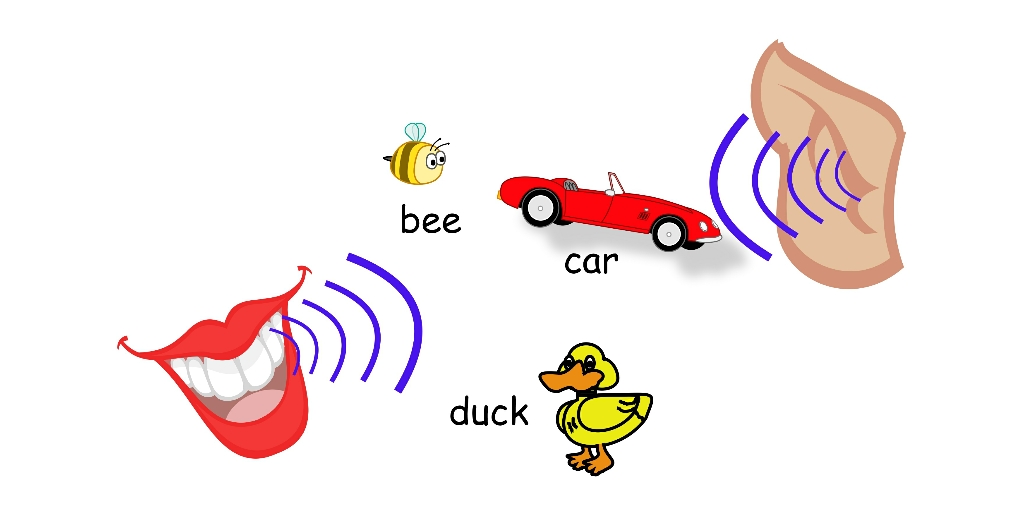
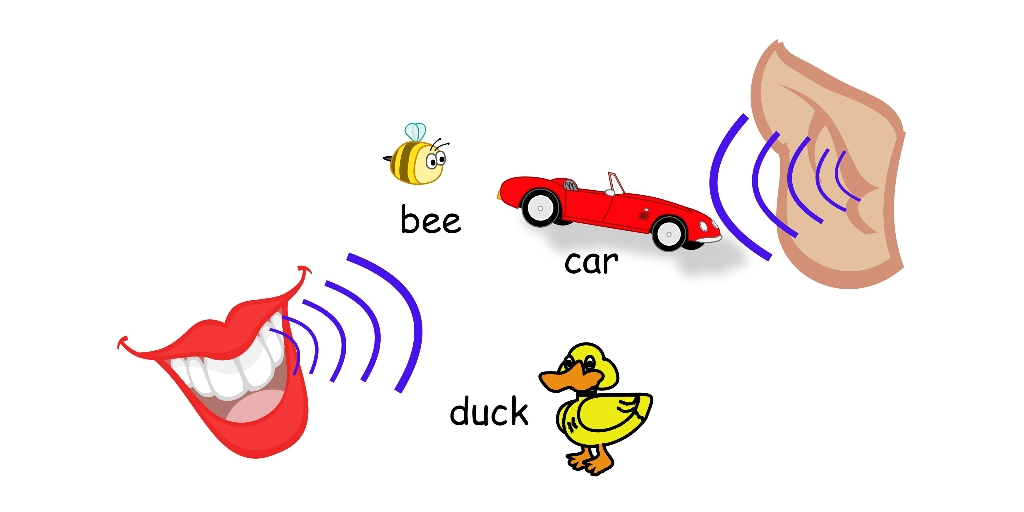
Helping a child build their vocabulary (word awareness – receptive & expressive language) is vital if they are to continue to develop good communication skills. Talking, explaining, sharing and playing are all important as well as making sure that you pronounce words clearly and correctly for a child to hear. A child may not have developed all the skills needed to copy you accurately but they will store the sound pattern information for later use. The more they hear the correct sound patterns the sooner they will start to use them themselves.

Click the link for ‘Tips to Help Develop Word Awareness (Receptive & Expressive Language)’:

https://teachphonics.co.uk/word-awareness.html

The Key to Good Phonics Skills – Part 6

Developing #Listening & Speaking Skills – Turn Taking Skills – Conversation

This week we will look at turn taking in conversation a skill children need to learn to take part in meaningful interaction with others. These interactions are a vital part of children’s physical, emotional, social and intellectual growth and wellbeing.

Children need to learn that in conversation they need to take turns listening and speaking.

This is more complex process than we often give it credit for as often we, especially in our busy lives, can be guilty of only listening to reply rather than listening to understand.

Children need to learn when to talk and when to listen; for this to happen they need to do the following:

  • Actively Listen to the other person. This means:
    • Concentrate on the words being said, by blocking out other environmental noises and voices.
    • For most children and adults this also means looking at the person, watching their facial expression and body language.
    • Listening for the verbal cues and/or changes in the tone of voice that signifies that the person has finished speaking.
    • Recognising that it is either your turn to respond by formulating a reply or not.
  • Formulate a Response. This means:
    • Extracting meaning – taking understanding from the words that have been spoken.
    • Mentally searching for words to compile a grammatically correct set of sentences.

In young children this can take time, not because they do not have the answer, because they just take longer to recall and formulate their responses. This is due to the constant acquisition of new language and understanding of the grammatical conventions that need to be applied.

  • Communicate Response. This means
    • Speaking clearly, pronouncing words correctly in coherent sentences.
    • Using socially appropriate facial expressions and body language to accompany the response.
    • Using the appropriate verbal cues and/or changes in the tone of voice that allow the other person to understand it is now their turn.
  • Wait. This means giving time for the other person to formulate their response.
  • Actively Listen to the other person.

Learning these skills takes time and needs to be taught as well as modelled by those around the children. It begins very early on for instance, when we talk to a baby, as if expecting an answer. As a baby starts to make cooing and babbling sounds, they begin to respond to you in those gaps, their first conversations.

Something that is worth remembering:

“When you talk, you are only repeating what you already know. But if you listen, you may learn something new.” (Dalai Lama)

The Key to Good Phonics Skills – Part 5

Developing #Listening & Speaking Skills – Games to Develop Phonemic Awareness

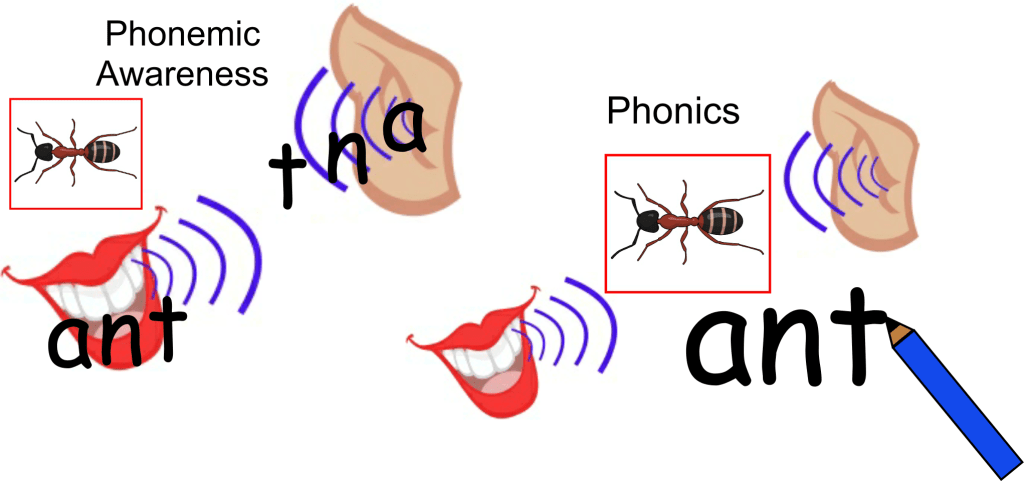
Phonemic awareness is our ability to split words into their smallest sound units (individual phonemes) and to manipulate these sounds through segmentation, blending, substitution and deletion. This is based on what we hear and say, not the written word.

These games are great for playing in the car or when waiting in queues and hopefully soon when out and about with other friends and family.

We usually introduce this concept to children using one syllable CVC words, a word that has a Consonant followed by a Vowel and then another Consonant, such as cat, dog, sit, peg and sun.

Play, ‘I hear with my little ear…’

This is based on the game I spy with my little eye. In this version you say;

 “I hear with my little ear the words (for example) cat, cake, key and kite. What sound do these words begin with?” The answer is they begin with the sound ‘k’ remember it is about what they hear not the spelling or letter names.

  • To begin with focus on helping your child to identify the first sound in words, remember it is about what you hear not the spelling, so shop, ship, and chef all start with the same first sound ‘sh’; fish, photo, fog would also have the same initial ‘f’ sound. Try not to correct your child based on spelling conventions, as it is sounds you are working on – spelling comes later.
  • Next help your child to listen and identify the last sound in a word such as ‘t’ in cat, sit and hat.
  • Then focus on the medial, or middle, sound in the word such as ‘a’ in mat, lap and tap.

Once your child can identify the initial, medial and final sounds in a word the next step is to playing with the words through oral phoneme segmentation and oral phoneme blending. You are probably doing this already with your child without really realising it.

  • Segmentation – being able to split words into their individual sounds, for example ‘cat’ into c-a-t.

Play, ‘How many sounds (phonemes) can you hear?’

This is a simple oral segmentation game just ask; “How many sounds (phonemes) can you hear in the word ‘hat’? The answer is 3. If your child can not count, they can show you using their fingers. The important thing is for them to hear and pick out the individual sounds in the word not the number of letters used to spell the word.

  • Blending – being able to blend individual sounds together to say a word, for example d-o-g into dog. This is achieved by saying the sounds over and over again getting quicker until it sounds and can be identified as the word (a tricky skills to learn).

Play, ‘How many sounds (phonemes) can you hear?’

This oral blending game seems easy but can be very trick skill for some children to master, so do not be surprised if they find it hard to begin with. Use CVC words to begin with, but do keep trying as it is a very important skill to learn; be patient and over time they will get there.

The Key to Good Phonics Skills – Part 4

Developing #Listening Skills – Music Fun

These games are designed to help a child learn about the different levels of sound, pitch, tone and volume.

Music Fun

  • Skittle Band – Use, or make, a drum stick (wooden spoons are good for this) and explore with your child the different sounds the drum stick makes against objects made of different materials, such as steel saucepan, another wooden spoon, plastic bottles etc. Choose items that are safe and you are happy for them to play with. You could photograph the objects, record the sounds they make, or video (on your phone), to play back and talk about later on. Try moving the activity outside for a different sound quality experience.
  • Orchestral Conductor – Once your child is happy and enjoys playing and making sounds, with different objects and instruments, try the conductor game. You can use your hands or a baton to point and encourage them to play certain sounds just like an orchestral conductor does, but make sure you have a clear stop gesture which your child will understand (you may need to say stop at the same time as the gesture to begin with, but they will soon get the idea). Then swap places and you become the musician and they the conductor; it may not be a classic you create but it is great fun. As your child develops their skills you can add new elements and hand gestures to make the sound louder or softer.
  • Musical Bottles – Use plastic bottles with different amounts of water/sand in them and different things as a beater. Talk about how:
    • Low/deep or high pitched a sound is compared with another.
    • Using different beaters can change the quality of the sound when used on the same bottle.
    • Using different amounts of pressure to hit the bottle makes the sound louder (harsher) or quieter (softer).

Try organizing the bottles in order of pitch to create a musical instrument and using this as part of the Orchestral Conductor game. You could number each bottle or use a different picture on the bottle as a way of encouraging your child to play the bottles in different orders (making music).

The Key to Good Phonics Skills – Part 3

Developing #Listening Skills – Sound Scanning Games

These games are designed to help a child learn how to block out ambient noises so that they focus and concentrate on one particular sound.

Games

The idea is to identify and talk about different sounds in different locations; in the park or at home in different rooms. Ask the child to listen for a moment (timed activity 30 seconds to start with then increase) and to pick out different sounds they can hear. Some will be close and easier to identify; other sounds may be further away and require more focused concentration to work out what they may be.

  • Sound Scanning Questions to help:
  • What can you hear that is far away?
  • What can you hear that is close by?
  • What can you hear that is loud?
  • What can you hear that is quiet?
  • What can you hear that makes a high-pitched sound?
  • What can you hear that makes a low-pitched sound?
  • What can you hear that sounds big?
  • What can you hear that sounds small?
  • Listening Walk Activities- You could record some of the sounds heard and talked about on the walk. Try changing the ‘What can you …?’ questions to ‘What did you…?’ Depending on your child’s age they may be able to draw a sound scape picture showing all the things they heard on the walk.
  • Where is the Sound? – The aim of the game is finding out where the sound is coming from. Start by using something that makes a good clear sound.  Ask your child to cover their eyes (can use a blindfold) and have them sit or stand in the middle of the room. Move around the room, starting not too far away from them and make the sound. Pause between each sound to give your child time to settle and focus on it before you make the next sound. Try to keep an even, slow pace. The aim is for your child to point in the direction they believe the sound is coming from. Gradually move further away, maintaining the same sound level. Swap places with your child, so you have to guess where the sound is coming from.

To make it more challenging:

  • Change the volume of the noise.
  • Change the object that is making the noise.
  • Change the speed (rhythm), as well as the location, at which the sounds are made.

Have Fun!

The Key to Good Phonics Skills

The key to good phonics skills is having good listening, speaking and vocabulary skills.

These are not just the elements for phonics and other literacy success but an essential for social communication skills as well.

Sadly, schools are reporting ever increasing concerns over the decline in young children’s speaking and listening skills. So, over the next 13 weeks, we are looking again at the different developmental elements of listening and speaking which in turn will support vocabulary development. Providing practical information, games and activities to help build a child’s skills. 

Week 1. What is Listening?

Week 2. Games to Develop Listening Skills – Sound Screen Games

Week 3. Games to Develop Listening Skills – Sound Scanning Games

Week 4. Games to develop Listening Skills – Music Fun

Week 5. Games to develop Listening Skills – Phonemic Awareness

Week 6. Conversational Turn Taking Skills

Week 7. Different Types of Talk

Week 8. The Importance of Small Talk

Week 9. How to Encourage Your Child to Keep Talking

Week 10.  Word Awareness

Week 11. Activities to Develop Talking & Language Skills

Week 12. Activities to Develop Rhyme & Alliteration

Week 13. Activities to Develop Syllable Awareness

Accents – Phonemic awareness & Phonics

Because the English language is so rich and diverse it is very difficult to create a phonics system that caters for all. Every region that speaks the English language has its own accent which means there are always variations in the way that a word is pronounced.

Across England we all spell words the same but we certainly do not say them all the same, even though we all use the same 44 sounds. In the English language the 44 sounds can be represented by over 280 letter combinations.

So, accents have arisen from regions applying different phonemes (sounds) to graphemes (letters) when they pronounce words. The regions still use the same sounds and letters, they just associate them differently.

For example, in the South of England the letter ‘a’ can be pronounced as the ‘long ’R’ controlled’ vowel sound /ar,(ɑː)/ in words such as ‘grass’ and ‘bath’ whereas in the North of England it will be pronounced as the ‘short’ vowel /a,(æ)/ sound in these two words.

Click and then scroll down the page to see the animations of the different pronunciations of the word ‘bath’. https://www.teachphonics.co.uk/teaching-phonics.html#pronunciation

Both pronunciations are correct, which can make teaching phonics a little tricky; the key is to teach the sound to letter relationships which best suit the children being taught in relation to their regional accent. It is important to remember that children’s knowledge of the sounds that make words is based on how you speak to them naturally and not a strict standardized set of sounds.

However, for general educational and learning purposes the English language’s phonics system has been standardized, this is known as the ‘Received Pronounced’ (RP) English, and is used in comprehensive English dictionaries and translation dictionaries. The RP is based on a southern accent sound to letter relationship basis.

Letter & Sound Relationships That Break the #Phonics Rules

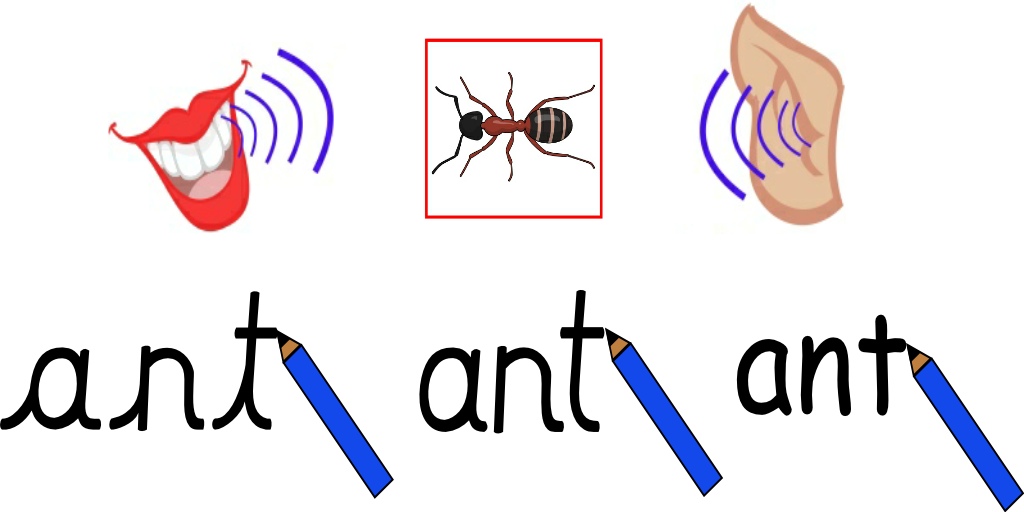
Back in September we explained that Phonics is very useful as a decoding tool used for developing reading skills and an encoding tool for spelling. It is the simple process of linking sounds to letters, its complexity comes from how many sounds (phonemes) to letter combinations (graphemes) there are.

Some letter and sound associations just don’t follow the normal phonics rule of a single sound being associated to a letter or letter combination. A few letters represent two sounds, such as the letter ‘u’ which in the word ‘cupid’ represents the two sounds /y,(j)/ and /oo,(uː)/.

A more common one letter two sound relation is that of the letter ‘x’ representing the two sounds /k,(k)/ and /s,(s)/ as in thewords: six and box.

Here are some other examples of single letters and split digraphs making two sounds instead of the usual phonics rule of only making one sound:

The ‘Long’ Vowel Sounds

A couple of weeks ago we explained that there are 20 vowel sounds in the English (UK) sound system and last week we looked at the 7 ‘short’ vowel sounds. This week we are taking a look at the remaining 13 ‘long’ vowel sounds.

Here at Teach Phonics we split them in to two groups: 7 ‘long’ vowel sounds and 6 ‘long ‘R’ controlled’ vowel sounds.

The 7 ‘long’ vowel sounds areso calleddue to the length of their pronunciation; these can often be held without distorting their sound.

 The /ai,(eI)/ sound found in the words: train, tray, cake and break.

The /oa,(ǝƱ)/ sound found in the words: boat, hotel, toe and bone.

The /oi,(ɔI)/ sound found in the words: boy, coin and buoy.

The /ow,(aƱ)/ sound found in the words: owl, house, drought and hour.

The /ee,(іː)/ sound found in the words: tree, pea, me, and pony.

The /I,(aI)/ sound found in the words: iron, fly, pie and light.

The /oo,(uː)/ sound found in the words: spoon, blue, screw and you.

The 6 ‘long ‘R’ controlled’ vowel sounds are so called because of the slight /r,(r)/ sound quality that can be heard in them along with the length of their pronunciation; these can often be held without distorting their sound.

The /ar,(ɑː)/ sound found in the words: car, father (southern UK accent) and art.

The /or,(ɔː)/ sound found in the words: fork, door, walk and sauce.

The /ear,(Iǝ)/ sound found in the words: ear, here, deer and pier.

The /er,(ɜː)/ sound found in the words: bird, kerb, nurse and worm.

The /re,(Ʊǝ)/ sound found in the words: manure, tour and mature.

The /air,(eǝ)/ sound found in the words: chair, pear, square and where.