The Key to Good Phonics Skills – Week 11 – Games to Encourage Talking and Language Knowledge

Before for the Easter break, we explained the importance of developing your child’s word awareness skills here are some further games ideas to encourage them to use this new language.

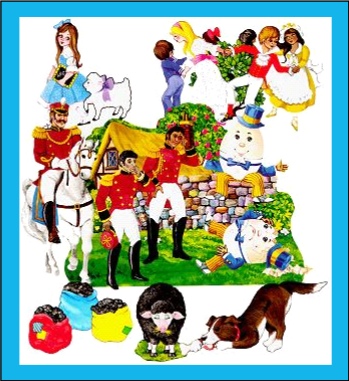
  • Playing tapes or CDs of nursery rhymes and children’s song are good for helping your child to make the distinction between the music and words (language used) in them. It is a good idea to practise this skill when there are no other noise distractions.
  • When your child points at something tell them the name of the object, for example if they point at an apple, say “Apple”.
  • Try to use the new word in context regularly as repetition of the word will help your child to remember it and reinforce the meaning of the word.
  • Try playing some action songs and rhymes to help your child learn the actions for the rhyme, then let them have a go on their own. Watch them to see if they can do some of the actions at the right time in the song, to see if they are listening for the right cue words. If they are struggling, explain they have to wait for certain words and show them what to do and when to do it.
  • If they are trying to say a word, let them finish and then say it back to them clearly and correctly. Do not make them repeat it back to you, they may choose to do so but make it their choice.
  • Repeat and expand on what your child says, so if they say “Dog!” you may say “A big dog!” This also helps them to develop an understanding of sentence structure.
  • Finger rhymes, such as ‘Round and Round the Garden’, ‘Pat-a-cake’ and ‘Incy Wincey Spider’ and action songs encourage your child to interact with words, the sounds within them and the rhythms they create. ‘Row, Row Your Boat’ is a lovely whole body movement song that encourages a rhythmic whole-body motion, which babies and toddler enjoy (as well as the adults).
  • Sharing and talking about the books you are reading helps to build word knowledge, as you point to the pictures, picking out different objects.  Reading out aloud helps to introduce your child to words that they may not experience in their everyday talk. This helps to expose them to new vocabulary and the sounds to be found in those words.
  • Introducing and playing sorting games helps your child to build a mental filing cabinet system of categories, this helps them to remember and learn the meaning of words. Start by introducing simple categories of everyday items like food or clothes as their vocabulary increases categories such as colour, size and texture become more appropriate.

Spring/Easter Drawing Activity Ideas – Supporting Language & Pre-handwriting Pattern Development

It’s the Easter holiday break!

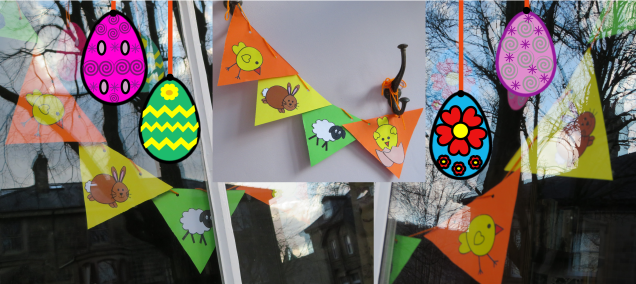
We have put together some quick step by step Easter and farm drawing ideas for you to try, using basic shapes such as circles, rectangles and triangles. It is amazing how, by using these simple shapes, you and your child can create fantastic Spring/Easter: cards, pictures mobiles or bunting. Just follow this link and scroll down the page: https://teachhandwriting.co.uk/more-activities.html

Drawing pictures is a great way to help your child develop their pre-handwriting strokes and shape forming skills. As well as supporting shape, colour, pattern and language development.

Treasure Hunts Develop both Handwriting & Language Skills

The Easter Holidays are here, so here are some fun activities to keep children of all ages entertained whether we have rain or sunshine.


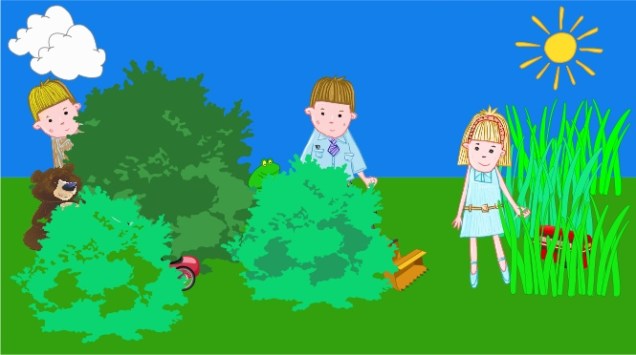
A treasure hunt is a great way to teach children directional language. Being able to understand directional and placement (prepositions) vocabulary is important for understanding everyday instructions such as ‘put your cup on the table’; ‘go along the hall and stop at the door in front of you’.
We also use this directional language to explain how to draw patterns and write letters, which is another reason why it is important for young children to be introduced to, and have a good understanding of, this kind of vocabulary.


Through treasure hunts you can introduce new directional and placement language in a fun and exciting way. There are a number of different ways to approach this:


• You can give verbal instructions to the hidden treasure.
• You could create a map for them to follow and ask them to talk you through the map, supporting them with new language as necessary.
• You could use a mixture of verbal and map clues.
• For older children get them to hide the treasure and give you instructions, or draw a map.
• If you have more than one treasure and they are of different sizes make the larger ones more difficult to find.


The important thing is the language shared. Words and phrases to use are: left, right, straight on, forward, backwards, about turn, turn around, up, down, higher, lower, stop, next to, in front, beside, underneath, on top of, behind, on the left of, on the right of, outside, and inside.
Treasure hunts are a great whole family activity and you are never too young or too old to join in!