Back to School – Ways to Support Your Child’s Phonics Knowledge

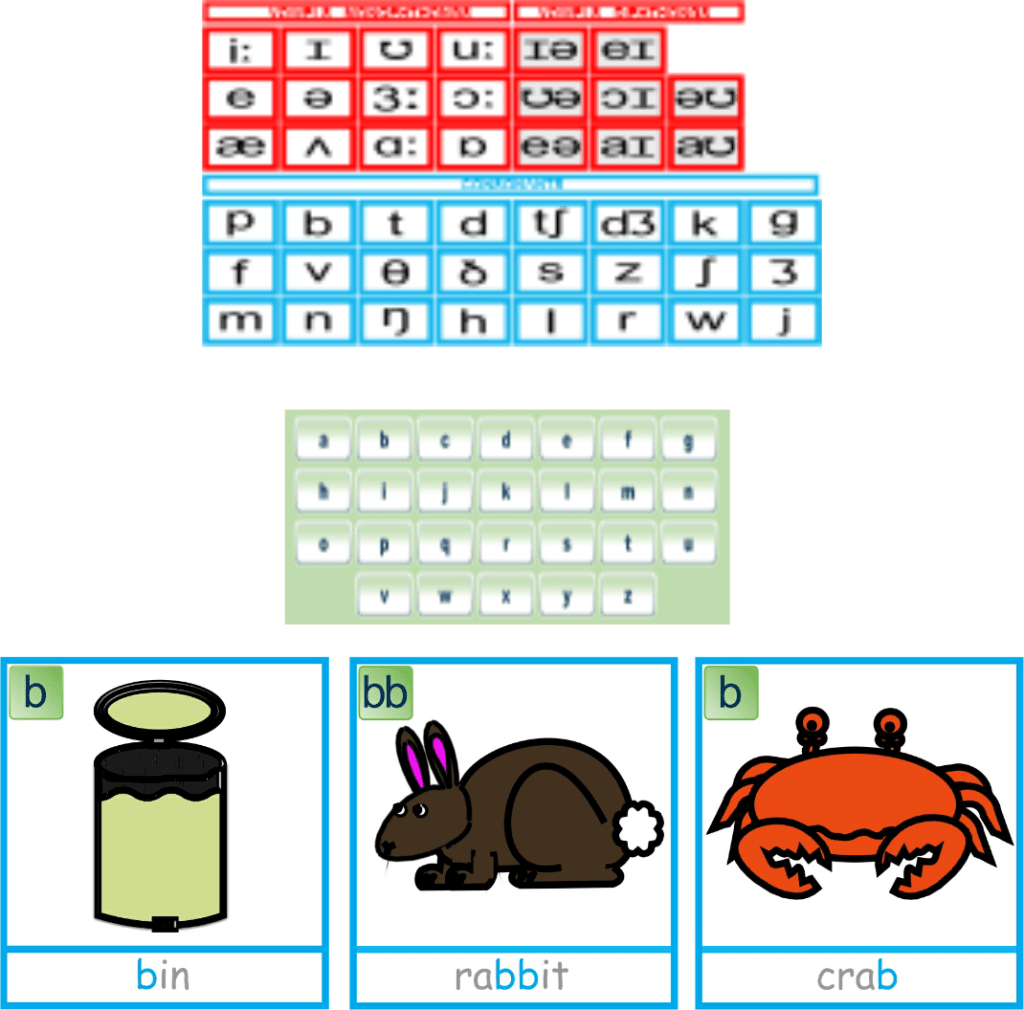
grapheme chart keyboard

After such a long break from school it is good to take some time to check your child has not slipped back.

Playing some simple letter name and sound games can really help get your child (and you) back into school mode.

Some simple game ideas:

  • You can use words in books, cards, on labels or signs when out and about. Ask your child to point to a particular letter in the word using the letter name. Then ask your child to say the word, or you can say it. Then ask them to tell you what sound the letter is making in that word.
  • Pick a card at random, using lower-case and capital letter flash cards (you can make your own); show your child and ask them to tell you the name of the letter on the card, and to give you a sound the letter makes. Ask older children to give you the other sounds the letter can make. For older children you can also use cards that have common digraphs (two letters representing one sound) and trigraphs (three letters representing one sound) on.
  • Play Pelmanism (Memory Game). How to Play:
    • You will need two sets of flash cards. The cards are thoroughly mixed and spread face down on the table or floor. They can be arranged in a regular pattern or randomly, but they must not overlap.
    • One player turns over a card, leaving it in the same place, they say what it is (letter name and/or sound) and then turn over another saying what it is. If the two cards match then the player keeps them and has another go. If the cards do not match then the cards are turned back over in the same location as before and it is the next players turn.
    • The game is finished when all the cards have been matched and the winner is the one with the most pairs.

If you are not sure of all the sounds a letter, or combination of letters, can represent then use our Alphabet Keyboard to help you find the sounds (phonemes): bit.ly/2bUtZae

Summer Fun – Part 4 – Get Cooking!

Cooking 1

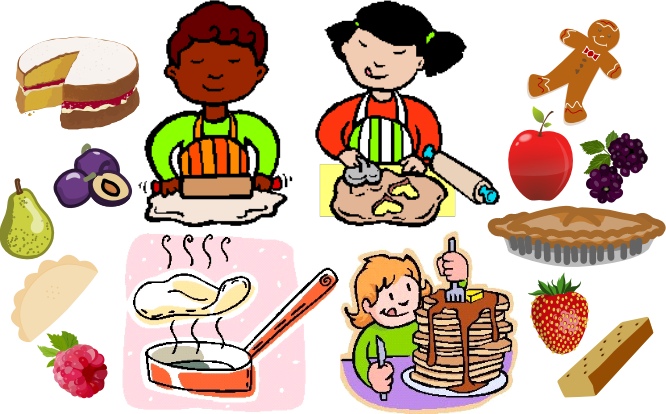
Cooking is a great fun way to practise getting both hands to work together. This helps to develop coordination, hand and finger strength and dexterity skills; all skills required for handwriting. However, it is amazing how much talk can come from this as well; not just at the time with you but when they share the day’s experience with others later on (developing their phonological awareness).

An added benefit at this time of year is that you can do ‘Pick Your Own’. Getting out and about and encouraging your child to pick their own fruit is not only great fun but another sneaky way of working on their hand and finger strength and dexterity.

There are so many recipes, especially online, for making quick easy great tasting food (make a large batch and freeze the rest).

So, if the sun is shining, or it is just not raining, get out there find your local ‘Pick Your Own’ or check out the bargains at your local shops/market and get cooking!

Summer Fun – Part 3 – Think more Play, Play and Play!!!

Play play play 2

We are nearly through the summer holidays; six weeks may have seemed like a long time but it is amazing how quickly it passes.

The last thing you and your child probably want to think about right now is handwriting or phonics and getting ready for next term; and quite right too!

So, don’t think about it in the conventional way of practise, practise and practise.

Think more play, play and play!!!

Children learn so much through just playing; developing physical, mental, communication and vocabulary strengths and skills, which all support them at school and with learning.

Once introduced to a new game or activity children will very often take it and make it their own, making new rules and introducing extra characters or challenges.

The skill as a parent is remembering to let go of your preconceived ideas about how a game should be played and letting your child take the initiative.

If you provide the opportunities it is amazing how they will take on the challenge of inventing a new game or (in their eyes) improving an existing one.

This does not have to cost a penny; use the toys they already have or make games using empty plastic bottles or cardboard tubes.

The following types of play can support and develop the key strengths and skills your child needs for handwriting and you have not had to mention school or homework.

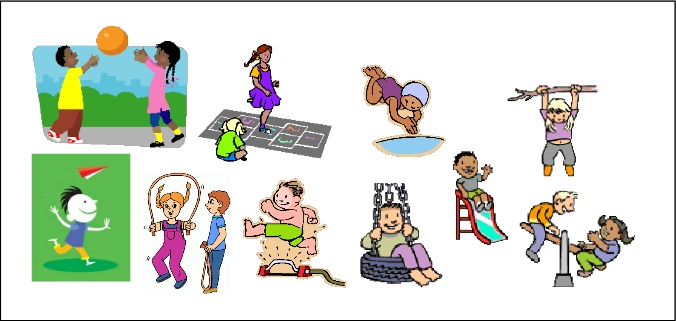
  • The local play park is a fantastic free resource; running, jumping, crawling and climbing can all be encouraged. If your child is a little reluctant then it may well be that they are unsure how to do some of these activities. Explain when jumping that they needed to land on their feet and bend their knees as they land. Start small and as their confidence grows so does the height or distance they jump. Climbing can be scary for some children so again explain how to climb, moving one hand or foot at a time so that there are always three other points of contact.
  • If you are lucky enough to have a garden then mud play is messy but so much fun, it can be contained in a small area and will not only make you a cool adult but, if you join in, it will knock years off you (have a go, it is a great free therapy session).
  • Skittle games are always fun, extend the activity by decorating the skittles (plastic bottles or cardboard tubes) using anything from crayons, paint or even dress them up as people or animals.

Enjoy!

Summer Fun Part 2 – Water, water everywhere!

Water fun 2

The SUN is out which makes it time for the water fights and games to begin.

It is August and for once, the weather is perfect, so why not set up water squirting games in the garden. The kids are waterproof and everything else will dry out, eventually!

How can water fights and games, where you can get wet, be handwriting and phonics homework?

You will be encouraging your child to develop their hand strength, co-ordination and eye tracking skills (all handwriting skills). However, these games are also fantastic for developing sound and word awareness skills.

Try mimicking the sounds that the water makes as it drips on to the floor or hits the targets; use directional language to support your child’s aiming skills; describe how the objects move when hit: bouncing, rolling or flying and talk through the emotions evoked through playing the games.

As well as supporting your child in developing a whole range of physical and language skills you will also increase your cool adult status.

Some fun water games:

  • Try setting up a target wall, using chalk to draw the targets.
    • How many of the targets can you hit with water squirted from a water pistol or squeeze bottle in a set time.
    • How many targets can be washed off.
  • Set up a skittles range.
    • Each skittle hit with water can be worth a certain number of points, or the distance of the skittles may affect their value.
    • A time trial game to hit all the skittles. If you are using plastic bottles as skittles try making some of them a little heavier by putting sand or dirt in them to make it a bit harder to knock them over.
  • Move the object race games.
    • A light toy/ball has to be moved by squirts of water over a distance.
    • A range of objects moved in to target areas to gain points.

The only limitation is you and your child’s imagination and trust me kids never tire of finding new ways to play with water (but then again neither do many adults)!

Homework has never been so much FUN!

Summer Fun – Part 1 – Indoor/Outdoor Summer Circuits Ideas

Play 1

Well, true to form, the Summer Holiday weather is a mixed bag, sunny one minute then pouring with rain the next!

So, here are a couple of ideas to help your child burn off some of that pent-up energy. Best of all you can class it as handwriting homework (working on gross and fine motor skills).

An indoor/outdoor circuit training course does not have to take up much space or be messy (but it might be a good idea if indoors to move ornaments a little further out of the way).

Simple activities can be fun if they are done for short periods of time and children do love a time challenge. Make each activity last anything from 30 seconds to 1 minute.

You could record how many they did in the time and see if they have improved when you try it again.

Why not try:

  • Hopping on one leg and then the other (balance & coordination)
  • Use the bottom step of the stairs for step ups (bi-lateral coordination)
  • Curl ups (Core strength -see our games page)
  • With a cushion balanced on their head can they touch their toes without dropping the cushion (balance, coordination, bi-lateral coordination and core strength)
  • Star Jumps (balance & coordination)

For more fun, simple activity ideas check out our games pages, it is amazing how much fun you can have just hopping, jumping, skipping and dancing on the spot: http://bit.ly/2FhFkR7

If you are feeling really brave why not try building an obstacle course, a lot of the fun is in the designing and making. It is amazing how much communication and language skills are required as well.

Let go and have fun!!!

The Five Common Stages of Play Development

Stage of play 1

Last week we discussed the five types of play necessary to support your children’s physical, intellectual, social and emotional growth and well-being. Here we explain the five common stages of play so that you can better understand your child’s play development and how best to support them through play.

The Five Common Stages of Play:

  1. Watching – A child watches what others are doing but does not join in, they are purely an onlooker.
  2. Solitary Play – They play on their own without regard, or need for others, and enjoy independent activities that do not require others to participate.
  3. Parallel Play– This is when they play near others but do not interact with them, even if they are using the same play materials.
  4. Associative Play – When children play in small groups with no defined rules or assigned roles.
  5. Co-operative Play – Is when children work together in building projects, or pretend play, assigning roles for each member of the group.

Children are all so different and because of this the length of time they spend at each stage varies greatly; but they all find their way in time.

You are your child’s first, and most important, playmate. They just love it when you are silly and play games with them; become a pilot, rally car diver or fairy princess for 10 minutes. Can’t remember how? Then let your child show you!

To Play is to Learn

To Play 2

The summer holidays are here!

So, it is the perfect time to go out and play or, as is often the case, stay indoors and play.

We are always being shown how important play is in the development of young animals’ survival and hunting skills. How many times have you thought how cute or lovely when watching kittens, puppies or polar bears playing.

Humans are also animals which thrive and develop through play; in fact, play is so important the United Nations High Commission for Human Rights state it as a right for every child (Ginsburg, 2013).

We often think of play as a frivolous pastime rather than a practical and meaningful one. However, here at Teach Children we see play as a vital part of a child’s physical, emotional, social and intellectual growth and well-being.

There has been considerable research over the years on play, which supports our point of view, with the consensus being that children need to experience five different types of play (Dr.D Whitebread, 2012). These five types of play are roughly based on the developmental opportunities they provide, especially if it is child driven rather than adult lead:

Physical Play – active exercise (running, jumping, skipping etc..), rough & tumble and fine motor skills activities to develop whole body and hand and eye co-ordination strength and endurance. The outdoor element of such play develops independence, resourcefulness and self-regulation while the fine motor skills activities support the development of concentration and perseverance.

Play with Objects – starts as soon as a child can grasp and hold an object; mouthing, biting, turning, stroking, hitting and dropping. It’s how we all learn through the exploration of our senses (sensory-motor play). This type of play develops our abilities to; physically manipulate items, think, reason and problem solve, to set challenges and goals as well as to monitor our own progress.

Symbolic Play – refers to the development of spoken language, visual symbols such as letters and numbers, music, painting, drawing and other media used for communication of thought and ideas. This type of play allows children to develop the abilities to express and reflect on experiences, ideas and emotions. Sound and language play develops phonological awareness required for literacy, while number play that relates to real life situations supports numeracy skills.

Pretence/socio-dramatic Play – Pretend play provides the opportunity to develop cognitive, social, self-regulatory and academic skills. This kind of play means children have to learn and pick up on unspoken rules of interaction, taking on the role of a character and playing within the expected confines of that role.

Games with Rules – physical games such as chase, hide & seek, sport, board and computer games. Develop social skills and the emotional skills of taking turns, winning and losing as well as other people’s perspectives.

                                                             So, to play is to learn!

Bibliography

Kenneth R. Ginsburg, MD, MSEd, 25/07/2013; ‘The Importance of Play in Promoting Healthy Child Development and Maintaining Strong Parent-Child Bonds’: THE AMERICAN ACADEMY OF PEDIATRICS: http://pediatrics.aappublications.org/content/119/1/182.full

Dr.D. Whitebread, April 2012: ‘The Importance of Play’; Commissioned for the Toy Industries of Europe:  originally sourced from: http://www.importanceofplay.eu/IMG/pdf/dr_david_whitebread_-_the_importance_of_play.pdf

What are CVC Words?

VC Letters 1

The letter C means a consonant letter is required.

The letter V means that a vowel letter is required.

So, a CVC word is one that has a consonant letter followed by a vowel and then a consonant as in the following examples:

cat    dog    mat

There are 26 letters in the English alphabet and these can be split in to two categories:

Vowels – ‘a’, ‘e’, ‘i’, ‘o’, ‘u’ and the letter ‘y’, when it is used as a semi-vowel, in words such as by, my and fly.

Consonants – ‘b’, ‘c’, ‘d’, ‘f’, ‘g’, ‘h’, ‘j’, ‘k’, ‘l’, ‘m’, ‘n’, ‘p’, ‘q’, ‘r’, ‘s’, ‘t’, ‘v’, ‘w’, ‘x’, ‘z’ and the letter ‘y’ when it is being used as a consonant, in words such as yak, yam and yellow.

Schools will often use the abbreviation CV, CVC, CVCC words when sending home phonics work or suggestions for phonics games. It is also used by many phonics computer games, activity programs and schemes.

Here are some examples for:

CV & VC CVC CVCC
as bat lamp
at cat milk
be dog tent
by fog hump
he hot band
if pig tilt
in peg want
is lap pond
it mop jump
me net just
my put nest
no but send
on set went
so tap wind
to zig bend


What is Phase 1 Phonics?

Phase 1 Phonics 1

Phase 1 Phonics is the first phase of the Department of Education’s ‘Letter and Sounds’ program. This is designed to focus on developing a child’s speaking and listening skills (phonological awareness).

It focuses on developing their:

  • Ability to listen attentively
  • Vocabulary knowledge
  • Confidence in speaking to adults and other children
  • Ability to hear the difference between phonemes (sounds)
  • Ability to say/repeat clearly the phonemes they hear
  • To hear a word and then split that word up and say the individual sound (phonemes) that make up that word (segmentation)

This is all about developing their skills through what they hear and say only (phonemic awareness).

To be honest it is all about playing with sounds and words and having fun.

The 7 areas Phase 1 focuses on; what is referred to as the pre-phonics stages 2 to 7 of a child’s phonological awareness development (https://www.teachphonics.co.uk/phonological-development.html):

  1. Environmental Sound Discrimination
  2. Instrumental Sound Discrimination
  3. Body Percussion Sound Discrimination
  4. Rhythm and Rhyme
  5. Alliteration
  6. Voice Sounds
  7. Oral Blending and Segmenting

Our 6 weeks blog ‘Speaking and Listening’ series focuses on areas 1 to 4, providing practical games and activities to help build your child’s skills.

Week 1. The Importance of Small Talk – https://teachphonics.blog/2020/01/23/the-importance-of-small-talk-week-1-2/

Week 2. Conversational Turn Taking Skills – https://teachphonics.blog/2019/06/20/conversational-turn-taking-skills-part-2/

Week 3. What is Listening? https://teachphonics.blog/2020/02/06/what-is-listening-part-3-2/

Week 4. Games to Develop Listening Skills – Sound Screen Games https://teachphonics.blog/2020/02/13/sound-screen-barrier-games-part-4-2/

Week 5. Games to Develop Listening Skills – Sound Scanning Games https://teachphonics.blog/2020/02/20/sound-scanning-games-to-develop-listening-skills-part-5-2/

Week 6. Games to develop Listening Skills – Music Fun https://teachphonics.blog/2020/02/27/games-to-develop-listening-skills-part-6-2/

Developing and Supporting Your Child’s Reading Journey – Week 6

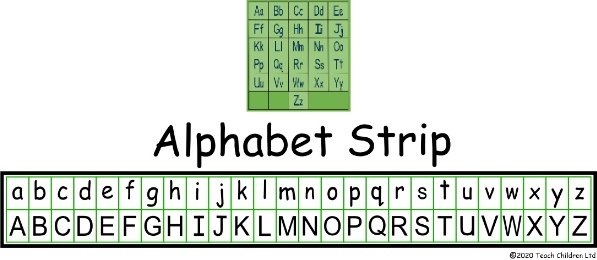
Letter Knowledge

Letter 1

Letter knowledge is understanding;

  • That the same letter can look different, for example, a lower-case letter ‘b’ looks different from a capital letter ‘B’. Letters will also look different depending on which font type is being used or if it is handwritten, for example, an Arial font letter ‘g’ looks different from a Calibri font ‘g’.
  • That letters have names and the same name is used for that letter even when they look different, so the lower-case letter ‘a’ and its capital letter form ‘A’ are both called ‘ay’.
  • That letters (graphemes) are used to represent sounds (phonemes) in words. Teaching the unique letter names of the alphabet is an important pre-phonics skill. A letter or combination of letters can represent more than one sound and so the only way of identifying alphabet letters when we talk about them is to use their unique names.

Developing Letter Knowledge:

Through Play:

  • Sorting and Matching Games – use plastic or wooden letters, alphabet letter flash cards; can they group all the lower-case letters together, or all the capital letters or all the different letter ‘ay’s’ together.
  • Kim’s Games – use plastic or wooden letters, alphabet letter flash cards. Using a few letters at a time, place 5 to 10 on a tray and let your child look at them and talk through which letters are there. Cover with a tea towel and ask your child to look away, then remove 1 or 2 of the letters. Then ask your child to look back and remove the tea towel. Can they spot which letters are missing.
  • Detective Games – focus on identifying individual letters of the alphabet and naming them, this can be played at home or when out and about.
  • Leap Frog – use the letters of the alphabet on home-made paper lily pads. Use the letter names to identify the target lily pad for your child to either jump onto or to throw a bean bag/soft toy on to.
  • Skittles and Throwing Games – use letters of the alphabet on the targets and use the letter names as a way of identifying which of the targets your child is aiming for.

Through Drawing/Writing:

  • Making lists of things to do or a shopping list. Their version of the list may be just squiggles and dots (so don’t rely on this for your shopping trip) but it is the beginning. I would keep the list and get them to tick off things done or items purchased as part of the experience so that it has a genuine purpose (children really like this).
  • Making and drawing their own story book.
  • Learning to write letters correctly (see our Teach Handwriting Website: http://bit.ly/2F9P7cI)

Through Songs/Nursery Rhymes:

  • Singing Alphabet Songs, try singing it to different tunes.
  • Make up Your Own Rap – point to the letters as the rap is said.

Through Talk:

  • Talk about letters as being shapes made up of straight, curves and diagonal lines.
  • Look at the letters in your child’s name, talk about the fact that the first letter in their name is always a capital letter and that normally the other letters are lower-case letters.
  • Point out, especially for slightly older children, that lower-case letters are about half the size of the capital letters.
  • Compare letters looking at what is the same and different about them.
  • When taking about letters use the letter name as well as the sound it is making in the word, remember a letter is often used to represent more than one sound. The letter ‘a’ can be used to represent different sounds in the following words: ant, apron, was, and any (just 4 of the eight sounds it is used to represent).

Through Book Sharing:

What books to choose?

  • Books with shapes
  • Books where you have to find things (like I spy)
  • Alphabet books
  • Books which use different font styles in the pictures and text.

Book Sharing Tips:

  • Alphabet books do not need to be read from cover to cover. Let your child choose which letters they want to look at.
  • Trace the letters with your finger or let your child trace it (make sure you trace the letter using the correct formation orientation, encourage your child to do the same).
  • Talk about the pictures in alphabet books before focusing on the letter, its name and the sound it can make.
  • Show your child the first letter in their name and then look for that letter in the book.
  • Show and talk about how some letters are in their capital form and others in their lower-case form. Can they find other examples of the letters?
  • Choose two letters to talk about: How do they look alike? How do they look different? What shapes/line styles are they made up of?