Here at Teach Phonics we are always saying how important speaking, listening and vocabulary building is for all children. If a child does not hear or use a wide range of words they cannot develop their phonics skills. A child needs to experience a wide variety of word so they can learn how to make and use all the sounds required in the English language. This doesn’t happen by chance it has to be experienced and taught.
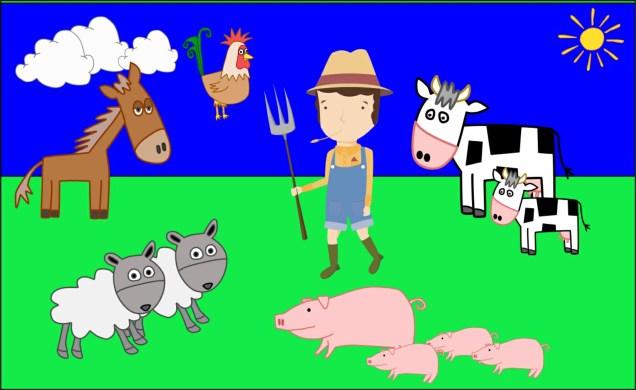
Spring and all that we often associate with this time of year is upon us: lambs, chicks and new life. This in turn prompted memories of singing ‘Old MacDonald had a Farm’, with my own children and grandchildren. A strange connection; maybe!
But, maybe not! Through the making of animal noises and the repetition of the ‘e i e i o’ refrain they were learning to play with sounds. Through the song they were learning how to make sounds through changing their mouth shape, the position of their tongue and controlling their breathing.
When they couldn’t make a particular animal noise we just moved to the next animal on the farm, because it is a fun song, so no pressure. Next time we sang the song, the animals were still all included and over time they learnt to make all the animal sounds. Which, by happy coincidence, are the same sounds (phonemes) needed in our everyday speech.
The great thing about Old MacDonald and his farm is that he also has tractors, a quad bike and depending on where he lives even a helicopter. The list of vehicles and additional animals is endless, especially if he opens up his own zoo next to the farm!
Old MacDonald and other nursery rhymes/songs all help to build and teach a child how to make the sounds required for pronouncing words. They offer a child the opportunity to practice making sounds which they may otherwise have no experience of in their normal everyday life. They will store this sound making information for later use as they mature and extend their vocabulary, which in turn supports their phonics knowledge, which impacts on their reading ability.
 teachphonics.blog