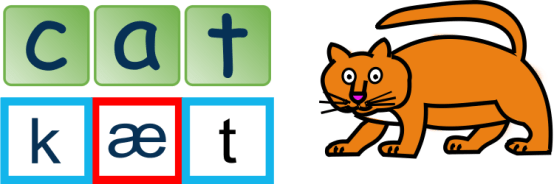
Be School Ready – Ways to Support Your Child’s Phonics Knowledge

Blog Phonics

After the long school summer holiday it is always good to take some time to check your child has not slipped back.

Playing some simple letter name and sound games can really help get your child (and you) back into school mode.

Some simple game ideas:

  • You can use words in books, cards, on labels or signs when out and about. Ask your child to point to a particular letter in the word using the letter name. Then ask your child to say the word, or you can say it. Then ask them to tell you what sound the letter is making in that word.
  • Pick a card at random, using lower-case and capital letter flash cards (you can make your own); show your child and ask them to tell you the name of the letter on the card, and to give you a sound the letter makes. Ask older children to give you the other sounds the letter can make. For older children you can also use cards that have common digraphs (two letters representing one sound) and trigraphs (three letters representing one sound) on.
  • Play Pelmanism (Memory Game). How to Play:
    • You will need two sets of flash cards. The cards are thoroughly mixed and spread face down on the table or floor. They can be arranged in a regular pattern or randomly, but they must not overlap.
    • One player turns over a card, leaving it in the same place, they say what it is (letter name and/or sound) and then turn over another saying what it is. If the two cards match then the player keeps them and has another go. If the cards do not match then the cards are turned back over in the same location as before and it is the next players turn.
    • The game is finished when all the cards have been matched and the winner is the one with the most pairs.

If you are not sure of all the sounds a letter, or combination of letters, can represent then use our Alphabet Keyboard to help you find the sounds (phonemes): bit.ly/2bUtZae

Games to Develop Listening Skills – Part 6

Music Inst 1

These games are designed to help a child learn about the different levels of sound, pitch, tone and volume.

Music Fun

  • Skittle Band – Use, or make, a drum stick (wooden spoons are good for this) and explore with your child the different sounds the drum stick makes against objects made of different materials, such as steel saucepan, another wooden spoon, plastic bottles etc. Choose items that are safe and you are happy for them to play with. You could photograph the objects, record the sounds they make, or video (on your phone), to play back and talk about later on. Try moving the activity outside for a different sound quality experience.
  • Orchestral Conductor – Once your child is happy and enjoys playing and making sounds, with different objects and instruments, try the conductor game. You can use your hands or a baton to point and encourage them to play certain sounds just like an orchestral conductor does, but make sure you have a clear stop gesture which your child will understand (you may need to say stop at the same time as the gesture to begin with, but they will soon get the idea). Then swap places and you become the musician and they the conductor; it may not be a classic you create but it is great fun. As your child develops their skills you can add new elements and hand gestures to make the sound louder or softer.
  • Musical Bottles – Use plastic bottles with different amounts of water/sand in them and different things as a beater. Talk about how:
    • Low/deep or high pitched a sound is compared with another.
    • Using different beaters can change the quality of the sound when used on the same bottle.
    • Using different amounts of pressure to hit the bottle makes the sound louder (harsher) or quieter (softer).

Try organizing the bottles in order of pitch to create a musical instrument and using this as part of the Orchestral Conductor game. You could number each bottle or use a different picture on the bottle as a way of encouraging your child to play the bottles in different orders (making music).

This is the last in our ‘Speaking and Listening Development’ series we hope you have found it useful and enjoy the games and activities!

Sound Scanning Games to Develop Listening Skills – Part 5

Scanning Games 1

These games are designed to help a child learn how to block out ambient noises so that they focus and concentrate on one particular sound.

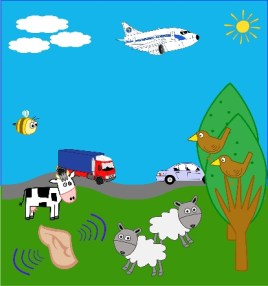
The idea is to identify and talk about different sounds in different locations; in the park or at home in different rooms. Ask the child to listen for a moment (timed activity 30 seconds to start with then increase) and to pick out different sounds they can hear. Some will be close and easier to identify; other sounds may be further away and require more focused concentration to work out what they may be.

  • Sound Scanning Questions to help:
    • What can you hear that is far away?
    • What can you hear that is close by?
    • What can you hear that is loud?
    • What can you hear that is quiet?
    • What can you hear that makes a high-pitched sound?
    • What can you hear that makes a low-pitched sound?
    • What can you hear that sounds big?
    • What can you hear that sounds small?
  • Listening Walk Activities- You could record some of the sounds heard and talked about on the walk. Try changing the ‘What can you …?’ questions to ‘What did you…?’ Depending on your child’s age they may be able to draw a sound scape picture showing all the things they heard on the walk.
  • Where is the Sound? – The aim of the game is finding out where the sound is coming from. Start by using something that makes a good clear sound. Ask your child to cover their eyes (can use a blindfold) and have them sit or stand in the middle of the room. Move around the room, starting not too far away from them and make the sound. Pause between each sound to give your child time to settle and focus on it before you make the next sound. Try to keep an even, slow pace. The aim is for your child to point in the direction they believe the sound is coming from. Gradually move further away, maintaining the same sound level. Swap places with your child, so you have to guess where the sound is coming from.

To make it more challenging:

  • Change the volume of the noise.
  • Change the object that is making the noise.
  • Change the speed (rhythm), as well as the location, at which the sounds are made.

Have Fun!

What is listening? – Part 3

Listening Skills 1

Listening is a complicated skill that requires children to learn how to pay attention – being able to focus on a particular voice or sound by filtering out other voices and ambient noises. They then have to concentrate on the voice or sounds to take in the information, building the stamina needed to listen for extended periods of time. Then they have to interpret that information to gain meaning – comprehension.

The usual approach to teaching children to listen is based on three behaviours:

  • Sitting or standing still
  • Looking at the person who is speaking
  • Thinking about what the person is saying or said

However just because your child is replicating these behaviours doesn’t mean they are listening.

It is also surprising how often children are happy to follow steps 1 and 2 but completely miss step 3.

This is not surprising really as listening is not a set of behaviours but a set of skills that need to be taught and developed, starting from birth.

A child with poor listening skills will find it difficult to complete tasks, as they have not taken in all the information and so not understood the full extent of the task, or what was required of them. This can lead to a child flitting from one activity to another and never finishing anything, slowing down their learning. They also miss out on the sense of achievement and feeling of pride when a task is completed. This helps to build a child’s confidence, self-esteem and self-motivation to try again or attempt a more challenging task.

For many children good listening skills do not develop naturally, they have to be taught!

Half-term Fun – Clothes Peg Games

Clothes peg games 2

Some fun indoor activities may be the order of the day if the half term weather proves not to be so hot.

This is a very simple idea which children love because they can take greater ownership of it. The aim of the activity is to help build up hand and finger strength through using the pegs; however it can have a dual purpose, helping to keep track of the week by using it as a timetable or for learning spellings or maths activities, as well as supporting the development of language skills.

You do not need anything fancy, just some string (for the washing line), clothes pegs and pieces of paper or card to peg onto the washing line. The washing line can be a permanent fixture or you can just pop it up when you need to use it.

The clothes line needs to be at a height suitable for your child to peg things on to (placed against a wall is a safe option so that no-one can walk into it by accident and hurt themselves).

There are a whole range of games that can be played using this simple washing line and pegs concept:

  1. Memory games – Get your child to peg up 5 to 10 different pictures or items on the line. Then give them 1 minute to remember the items. Once the time is up ask them to look away, or close their eyes, and then you remove one or more of the items. Get them to look back at the line. Can they work out what is missing?
  • You could try just moving one or two of the items around. Can they figure out which ones are in the wrong place and put them back in their correct place?
  • Try swapping an item for something new, which your child did not hang up on the line. Can they work out which is the new item on the line?
  1. Odd One Out – Hang pictures on the line that belong together. Can they pick out the odd item on the line and explain why it is the odd one out.
  • They could all be pictures of fruit with a picture of some clothing
  • They could be shapes with straight sides and one with curves
  • They could all be animals but all are wild with only one being domestic
  1. Sorting – Ask your child to sort all the pictures or items from a selection and to hang all the identical things on the washing line. They could all be the same;
  • Colour
  • Shape
  • Type
  1. Pattern Work – Using pictures, different colour and shaped paper or items create different patterns. The patterns can be based on colour, size or type of object. You can create a pattern sequence on the washing line and then ask your child to try and copy the sequence. Can they explain the pattern and create their own for you to copy and explain?
  2. Pairing or What is the Same? – Hang a range of pictures or items on the line, making sure that some of the items can be paired together because they are exactly the same. They could match because;
  • They are exactly the same e.g. a pair of socks
  • Match numbers to a picture with the same number of items on
  • Match capital to lower-case letters
  • Or have items that can be put together because they are both from the same set, for example they are types of fruit or are the same colour.

Developing and Supporting Your Child’s Reading Journey – Week 2

Word Awareness

Phonological Awareness Games and Book Sharing Ideas

Phonological awareness relates to our sensitivity and understanding of the sound structures of our oral language. It enables us to progress from our awareness of large sound units (words in sentences) to smaller sound units (phonemes in words).

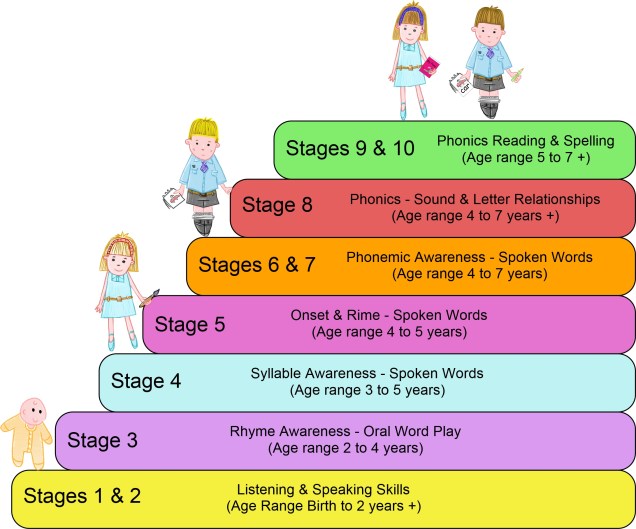
Our phonological awareness develops over time and the depth of that awareness is based on the range of experiences we have. Research suggests that our phonological awareness begins in the womb at about 24 weeks and is continually built upon throughout our lives. We tend to think of children going through ten distinct phonological stages; the later stages being related to phonics.

Children are taught to read in schools through phonics; the association between sounds (phonemes) to written alphabet letters (graphemes).

Phonics reading is the process of firstly segmenting the written word into letters, or letter combinations, then associating known sounds to those letters and finally blending the sounds together to form words (decoding). If a child is weak in any of the phonological awareness stages before those relating to phonics then they will struggle with learning to read.

Because of the nature of how we develop our phonological awareness games and activities cannot easily be split into categories. Playing, drawing, writing, singing and book sharing all require you to talk with your child highlighting sounds, words and rhythms of language.

Here are some games and activities to help you:

  • Singing and sharing nursery rhymes is a great way to help children hear sounds in words because the words are drawn out and the sounds highlighted or exaggerated.
  • Clapping, bouncing or tapping to songs and rhymes helps to highlight the syllables of the words. A syllable is the largest phonological unit (one or a group of sounds) of a word and is like the rhythmic beat of the word.
  • Pointing out the sounds you hear, such as animal or environmental noises, and explaining what is making that noise.
  • Playing games or sing songs where you and your child can make noises such as animal sounds (Old MacDonald had a farm) or vehicle noises (The Wheels on the Bus).
  • Drawing animals or other everyday objects that have a distinct sound, name them and make the sound they produce.

Book Sharing

What books should you choose?

  • Books with sounds of animals and other objects that make sounds
  • Nursery Rhymes
  • Books formatted from songs
  • Books with rhyme and alliteration
  • Poetry books
  • Any book really, remember your local library can help you to choose a good range of books to share with your child if you are not sure.

Book Sharing Tips

  • Don’t be shy, make animal and object noises. If you are self-conscious about it your child will pick up on this. No one thinks twice about an adult making what may appear to be strange noises if they are sharing them with a child (it’s when you forget they are not with you and you do it that they tend to look at a you a bit funny).
  • Talk about whether the words in a book rhyme or not. Point out the rhyming words, make up other rhyming words for any of the words in the book. Remember they do not have to be real words they can be silly funny words that pick up the rhyming sounds in the original word.
  • It is important to remember for some children saying a word that rhymes with one you have given that can be very difficult, if not impossible. So, don’t stress them out with this, it is often easier for them to recognise a rhyme than to make one. You could ask them to tell you if two words you give rhyme or not. If they find this easy try giving them three words with only two that rhyme and ask them to identify the rhyming words.
  • After sharing the book pick out words that you can clap out the syllables for. You could make this into a jumping or hopping game instead. With older children ask then to tell you how many syllables the word has and then to check their answer by counting the number of claps or jumps they make.
  • Play an ‘I Spy’ game using the pictures in the book looking for rhyming words for instance by giving clues such as; “It is red and rhymes with the word sock.” The answer is clock.

Word Play – Rhyme & Alliteration

Nursery Rhymes

Young children develop their vocabulary and understanding of sound patterns within words through word play.

Rhyme awareness and the enjoyment of alliteration begins early, usually between the ages of 2 and 3 years old (Stage 3 of phonological awareness). This develops in to an important tool, supporting a child in developing an understanding of how words are formed and the sound patterns within them. These are important pre-phonics skills a child needs to develop to support their future ability to succeed with phonics, reading and writing.

This Rhyme awareness is supported and developed through the singing of songs and nursery rhymes and finger chants. Alliteration (words that begin with the same sounds) such as ‘Sammy snake slithers silently’, which children love to hear in rhymes and stories, also supports their word knowledge and understanding of sounds in words.

Being able to repeat, and join in with, short phrases they have anticipated in a story or rhyme, is another important step in a child beginning to understand the use of words in stories and story structure; such as, “I’ll huff and puff and blow your house down!” in the story of The Three Little Pigs.

For more information on this, and other pre-phonics skills (Phonological Awareness) your child develops through from birth to 7 +years old, check out the Pre-phonics section of our website: https://www.teachphonics.co.uk/phonological-development.html 

The Importance of Speaking & Listening

Speaking & Listening Icon 2

Phonological awareness development incorporates the understanding of, and the learning of how to, communicate through speech, body language and written forms. It relates to our sensitivity and understanding of the sound structures of our oral language. It enables us to progress from our awareness of large sound units (words in sentences) to smaller sound units (phonemes in words).

Speaking and listening skills play a vital role in helping children to develop their awareness of the sounds around them. The more they hear, the more associations they can make to those sounds (what they see, feel and experience), the greater their ability to distinguish between them.

Our tips and ideas help you to support your child’s speaking and listening skills: https://www.teachphonics.co.uk/how-to-talk-to-your-child.html

Don’t underestimate the importance of everyday chatter or conversation (‘Small Talk’), children develop and learn a great deal through ‘Small Talk’ with adults and other children.

What do we mean by ‘Small Talk’? With babies it is the kind of talk that explains what we are doing, what they are doing, where we are going and what we can see.  As they get older our verbal exchanges increase as we support their receptive and expressive vocabulary development. Through these exchanges we also support their general language development and understanding of how words are pronounced, basic sentence structure and using the correct tense.

When we talk with a child we demonstrate and model the use of language in real time so that it has meaning. For instance, a child may point and say “cat” and we would respond with “Yes, the cat is sleeping.” Or we may correct the child and say “That is a dog.” If we could we would point to a cat and explain the difference. We also correct mispronunciation of words and correct tense issues in the same way; repeating the word or sentence using the correct pronunciation or tense back to the child.

The Communication Trust has a link to a free downloadable booklet called Small Talk which is a very useful guide for understanding how your child learns to talk from birth to age 5: https://www.thecommunicationtrust.org.uk/resources/resources/resources-for-parents/small-talk.aspx

The Skills a Child Needs to Achieve Phonics Success

Phonological Awareness Chart

Phonics is actually stage 8 of the 10 distinct and progressive stages of phonological awareness development.

Pre-phonics skills are those a child learns as they develop through the phonological awareness stages 1 to 7. Throughout this time they are continually developing their understanding and knowledge of our spoken language as well as other communication forms such as gestures, facial expressions, body language and social conventions.

Speaking and listening skills play a vital role in helping children develop their phonics knowledge as they need to be exposed to a wide and varied vocabulary that allows them to hear and use the range of sounds that form our language.

Being exposed to a greater range of sound experiences helps children to develop their awareness of the sounds around them. The more they hear, the more associations they can make to those sounds (what they see, feel, experience), the greater their ability to distinguish between them. This skill becomes important later on as they begin to isolate individual words in sentences, being able to distinguish between words that sound similar such as dog and hog.

Through listening and speaking games and activities children are exposed to new vocabulary as well as learning to play with the sounds in their language. This helps them to remember how the sounds feel when they make them as well as how they sound in isolation and when combined with other sounds.

Scientists believe a child’s sound awareness begins before they are born; at about 24 weeks, which highlights the importance of sound awareness, including environmental and speech sounds, as part of our instinctive natural development.

The Phonological Awareness Stages on our website (http://bit.ly/2FMnYsS) are set in a developmental order from one to ten. Against each stage we have provided an age range guide based on research, which shows when most children develop the various phonological awareness skills. Clicking on a stage will take you to another page which gives more in-depth information and links to help you support children through the stage.

What is Phonological Awareness?

Phonological Awareness Chart

Phonics is stage 8 of our phonological awareness development, so what comes before?

Pre-phonics skills are those a child learns as they develop through the phonological awareness stages 1 to 7. Throughout this time they are continually developing their understanding and knowledge of our spoken language as well as other communication forms, such as gestures, facial expressions, body language and social conventions.

Speaking and listening skills play a vital role in helping a child develop their phonics knowledge, as they need to be exposed to a wide and varied vocabulary that allows them to hear and use the range of sounds that form our language.

Being exposed to a greater range of sound experiences helps a child to develop their awareness of the sounds around them. The more they hear, the more associations they can make to those sounds (what they see, feel, experience), the greater their ability to distinguish between them. This skill becomes important later on as they begin to isolate individual words in sentences, being able to distinguish between words that sound similar such as dog and hog.

Through listening and speaking games and activities a child is exposed to new vocabulary, as well as learning to play with the sounds in their language. This helps them to remember how the sounds feel when they make them as well as how they sound in isolation and when combined with other sounds.

Scientist believe a child’s sound awareness begins before they are born; at about 24 weeks, which highlights the importance of sound awareness, including environmental and speech sounds, as part of our instinctive natural development.

To find out more about the different developmental stages of a child’s phonological awareness click here.