Why Vocabulary Building with your Child is so Important!

Building your child’s vocabulary is a vital pre-reading skill. This is because schools teach what is referred to as the ‘The Simple View of Reading’:

Reading Comprehension = Decoding (Phonics) x Linguistic (Spoken Language) Comprehension  

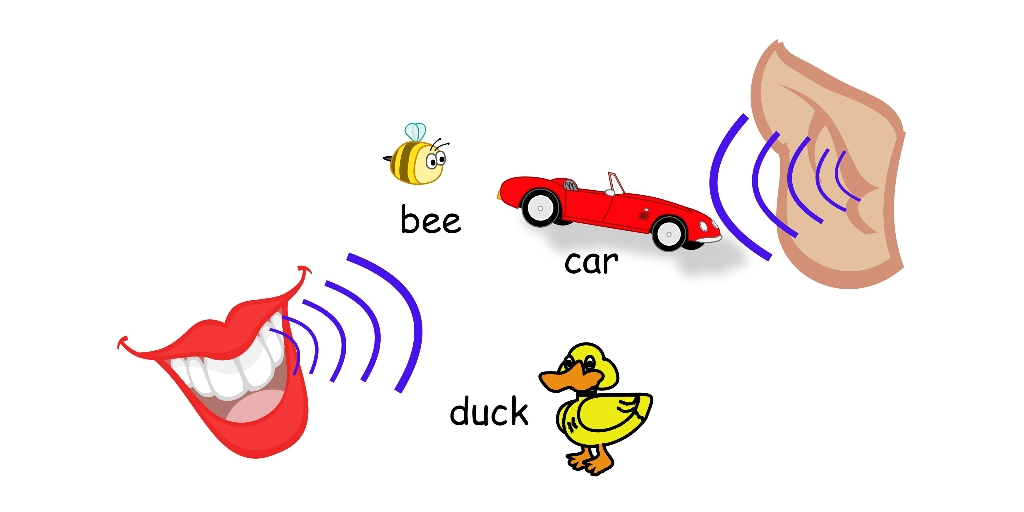
This means that a child decodes the words using their phonics skills and their own vocabulary knowledge to help them understand the text they are reading.

So, for a child to have good reading skills they need to be able to speedily decode unknown words and recognise familiar printed words. And, understand the meaning and grammatical structure of the spoken language and then use this knowledge to understand the printed text.

This means that a child:

  • Who does not fully understand the meaning of all the words and/or the grammatical structure of the spoken language (age appropriate) will also be unable to fully understand the printed text; even if they decoded it correctly.
  • Whose ability to understand the spoken word is poor will also be unable to understand the printed text; even if they have managed to decode a few words.

Helping your child build their vocabulary is also vital, if they are to continue to develop good communication skills. Talking, explaining, sharing and playing are all important in developing your child’s vocabulary, their understanding of the words meaning in the context of the conversation and the grammatical conventions of our spoken language.

Pancake Making – Word Play

Pancake Day (Tuesday 21st February 2023) will soon be upon on us, and a great time to share some cooking time with your child.

It is amazing the number of different noises that occur when we cook, providing an ideal opportunity to use and introduce your child to the wonderfully descriptive world of onomatopoeic words. These are words that imitate the sounds being described such as bang, crash, whoosh, clip and clop.

So, we have created a list of onomatopoeic words which you could use and share with your child as you describe the sounds, potential chaos and fun that comes from shared cooking time with your child.

Bang, crash, rattle, clang, clank, clatter, clink, plop, slap, crack, splish, splash, splosh, hiss, sizzle, fizzle, crackle, squeal, giggle, smack, splat, gobble, scrap.

A Traditional English Pancake Batter Mix

For a thin pancake batter mix:

  • 100g plain flour
  • Pinch of salt
  • 1 egg
  • 270ml of milk or milk and water

Method:

  1. Sift the flour and salt together.
  2. Make a well in the flour and add the egg and enough milk (milk/water) to make a sticky mixture.
  3. Beat well, then gradually whisk in the remaining milk (milk/water).
  4. Keep in a cool place until ready to use, always whisk the batter before using.

An American Style Pancake Batter Mix

For a thick, sweet pancake batter mix:

  • 150g plain flour
  • 1 tea spoon baking powder
  • 3 pinches of salt
  • 1 egg
  • 150ml of milk
  • 30g caster sugar

Method:

  1. Sift the flour, baking powder and salt together.
  2. Stir in the caster sugar
  3. In another bowl, whisk the egg and milk together.
  4. Pour the egg and milk mixture into the flour and beat with a wooden spoon.
  5. If the mixture is left to stand for about half an hour the pancakes tend to have a lighter texture.

Have fun and enjoy!

Why Placement (Preposition) and Directional Vocabulary is Important!

Teaching your child the vocabulary related to placement (preposition) and direction is import in supporting them to understand and follow instructions, as well as sharing information themselves, such as; ‘put your cup on the table’ or to say ‘teddy in car’.

We also use this placement (preposition) and directional language to explain how to draw shapes, patterns and write letters and numbers. We have created three sets of picture cards and games to help you support your child in developing and using positional (preposition) and directional vocabulary

You can find these free resources on our Phonics website by following this link: https://www.teachphonics.co.uk/phonics-resources.html

What are prepositions?

A word used with a noun or pronoun to show place, position, time or means, e.g. at home, in the hall, on Sunday, by train.” Definition from Oxford School Dictionary, third edition 2002.

Here are just some preposition and directional phrases you might like to use:

On the … On top of the … Above the … Over the…

Under the… Below the … Beneath … Underneath …

Behind the …

In front of the…

Next to …Beside the … On the right of … To the right of … On the right-hand side … On the left of … To the left of … On the left-hand side… Before the … After the …

In the…  Inside the …

Out of the … Outside of the …

Between the … In between the … In the middle … In the center …

Going up the ….  Going down the … Going towards the… Going away from …

How do Cheesy #Christmas Stars Improve Vocabulary Skills?

Cooking is a great, fun way introduce new vocabulary to your child especially those related to touch, texture, actions and instructional language. Words such as: cold, warm, soft, hard, smooth, rough, gritty, roll, squeeze, squash and pull, mix, stir, blend, whisk etc…
So why not try our tasty savoury Christmas baking treat!
Go to our ‘More fun handwriting activities’ page: https://teachhandwriting.co.uk/more-activities.html for the recipe and just download the pdf (https://teachhandwriting.co.uk/assets/pdfs/christmas-cooking-cheesy-stars.pdf )

Christmas Finger Printing a Fun Way to Support Language Development

Hand and finger printing can be a fun way of getting your child used to touching, using different textured mediums and descriptive language associated with it. Such as: slimy, smooth, slippery, squidgy, wet, dry, squelch, ooze, press, push down, harder, softer, gentle, lift, light and dark.
Printing activities also help your child to start to become aware of how to control the amount of pressure they use and to develop a vocabulary to describe the different range of pressures required. Learning to control the amount of pressure exerted and how it feels can be very difficult for some children and it takes time and a range of experiences to develop these skills.
There are some fabulous printing ideas out on the internet; one of my favourite art resources is The Usborne Art Idea Books. Hand and finger printing can create some amazing artwork which can be used to make wonderful personalised Christmas cards, tags and paper.
Who could not be charmed by these fun thumb and fingertip snowmen or robins or delighted by a hand print angel or Father Christmas?
For other useful tips on printing and setting up a printing work station, check out our ‘More fun handwriting activities’ in our Parents section of our teachhandwriting.co.uk website under Learning Through Play: https://teachhandwriting.co.uk/more-activities.html

Christmas Fun to Develop Vocabulary Skills

Learning new words (vocabulary) and their meaning begins with earlier play opportunities. Activities, that use play-dough type modelling materials, are great for developing the language knowledge relating to touch, texture, actions and instructional language. Words such as: cold, warm, soft, hard, smooth, rough, gritty, roll, squeeze, squash and pull.
An added benefit to these types of activities is that they also support your child in developing their hand and finger strength, bilateral coordination, sensory perception and for learning and perfecting different grips for using tools.
Salt Dough
So, why not make some great salt dough Christmas gifts and tree decorations with your child. Not only will they melt the hearts of those who receive them but you will be developing your child’s fine motor skills (needed for good handwriting) while having fun; can’t be bad!
For a salt dough recipe that I have found good to use with children go to our Go to our ‘More fun handwriting activities’ page: https://teachhandwriting.co.uk/more-activities.html and just download the ‘Salt Dough Modelling’ pdf (https://teachhandwriting.co.uk/assets/pdfs/Salt%20Dough%20Modelling.pdf )

What are CVC Words?

The letter C means a consonant letter is required.

The letter V means that a vowel letter is required.

So, a CVC word is one that has a consonant letter followed by a vowel and then a consonant as in the following examples:

ca   dog    mat

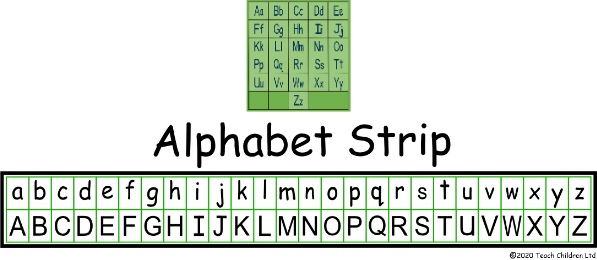
There are 26 letters in the English alphabet and these can be split in to two categories:

Vowels – ‘a’, ‘e’, ‘i’, ‘o’, ‘u’ and the letter ‘y’, when it is used as a semi-vowel, in words such as by, my and fly.

Consonants – ‘b’, ‘c’, ‘d’, ‘f’, ‘g’, ‘h’, ‘j’, ‘k’, ‘l’, ‘m’, ‘n’, ‘p’, ‘q’, ‘r’, ‘s’, ‘t’, ‘v’, ‘w’, ‘x’, ‘z’ and the letter ‘y’ when it is being used as a consonant, in words such as yak, yam and yellow.

Schools will often use the abbreviation CV, CVC, CVCC words when sending home phonics work or suggestions for phonics games. It is also used by many phonics computer games, activity programs and schemes.

Here are some examples for:

Accents – #Phonemic Awareness & #Phonics

Because the English language is so rich and diverse it is very difficult to create a phonics system that caters for all. Every region that speaks the English language has its own accent which means there are always variations in the way that a word is pronounced.

Across England we all spell words the same but we certainly do not say them all the same, even though we all use the same 44 sounds. In the English language the 44 sounds can be represented by over 280 letter combinations.

So, accents have arisen from regions applying different phonemes (sounds) to graphemes (letters) when they pronounce words. The regions still use the same sounds and letters, they just associate them differently.

For example, in the South of England the letter ‘a’ can be pronounced as the ‘long ’R’ controlled’ vowel sound /ar,(ɑː)/ in words such as ‘grass’ and ‘bath’ whereas in the North of England it will be pronounced as the ‘short’ vowel /a,(æ)/ sound in these two words.

Click and then scroll down the page to see the animations of the different pronunciations of the word ‘bath’. https://www.teachphonics.co.uk/teaching-phonics.html#pronunciation

Both pronunciations are correct, which can make teaching phonics a little tricky; the key is to teach the sound to letter relationships which best suit the children being taught in relation to their regional accent. It is important to remember that children’s knowledge of the sounds that make words is based on how you speak to them naturally and not a strict standardized set of sounds.

However, for general educational and learning purposes the English language’s phonics system has been standardized, this is known as the ‘Received Pronounced’ (RP) English, and is used in comprehensive English dictionaries and translation dictionaries. The RP is based on a southern accent sound to letter relationship basis.

The ‘Long’ Vowel Sounds

A couple of weeks ago we explained that there are 20 vowel sounds in the English (UK) sound system and last week we looked at the 7 ‘short’ vowel sounds. This week we are taking a look at the remaining 13 ‘long’ vowel sounds.

Here at Teach Phonics we split them in to two groups: 7 ‘long’ vowel sounds and 6 ‘long ‘R’ controlled’ vowel sounds.

The 7 ‘long’ vowel sounds areso calleddue to the length of their pronunciation; these can often be held without distorting their sound.

 The /ai,(eI)/ sound found in the words: train, tray, cake and break.

The /oa,(ǝƱ)/ sound found in the words: boat, hotel, toe and bone.

The /oi,(ɔI)/ sound found in the words: boy, coin and buoy.

The /ow,(aƱ)/ sound found in the words: owl, house, drought and hour.

The /ee,(іː)/ sound found in the words: tree, pea, me, and pony.

The /I,(aI)/ sound found in the words: iron, fly, pie and light.

The /oo,(uː)/ sound found in the words: spoon, blue, screw and you.

The 6 ‘long ‘R’ controlled’ vowel sounds are so called because of the slight /r,(r)/ sound quality that can be heard in them along with the length of their pronunciation; these can often be held without distorting their sound.

The /ar,(ɑː)/ sound found in the words: car, father (southern UK accent) and art.

The /or,(ɔː)/ sound found in the words: fork, door, walk and sauce.

The /ear,(Iǝ)/ sound found in the words: ear, here, deer and pier.

The /er,(ɜː)/ sound found in the words: bird, kerb, nurse and worm.

The /re,(Ʊǝ)/ sound found in the words: manure, tour and mature.

The /air,(eǝ)/ sound found in the words: chair, pear, square and where.

How Many ‘Short Vowel’ Sounds Do You Know?

There are 7 ‘short’ vowel sounds, although children are usually only introduced to the 5 which are most commonly heard in simple CVC (consonant, vowel, consonant) words: /a,(æ)/ in cat, /e,(e)/ in peg, /i,(I)/ in pin, /o,(ɒ)/ in hot, /u,(ʌ)/ in bus.

The other two ‘short’ vowel sounds are:/oo(u),(Ʊ)/in bull or could and /uh,(ǝ or schwa)/ heard  as the final sound in the words: zebra, doctor and corner. Our ‘Short Vowel’ Finger Chant can help you, and your child, to learn and remember the 7 ‘short vowel’ sounds: https://www.teachphonics.co.uk/phonics-resources.html