The Importance of Using Letter Names for Developing Handwriting, Phonics and Reading Skills

Here at Teach Children we have always promoted the importance and power of teaching the correct letter names to begin with; through our Teach Handwriting website, Schemes and Teach Phonics website. Unfortunately, some schools, teacher and parents still seem to be concerned that this is not consistent with the teaching of phonics, which is just not correct.

A myth which became popular, in the early years of introducing synthetic phonics into schools, is that children should not be taught the alphabet letter names as they find it too confusing. However, in recent years this has started to change as phonics schemes have adjusted some of their approaches to teaching phonics to include the use of letter names.

Learning the unique letter names of the alphabet is a pre-phonics skill; as well as an early learning goal. It has to be remembered that a letter is a shape which only represents a sound when it is placed within a word or sentence (has a context). Also, a letter or combination of letters can represent more than one sound and so the only unique way of identifying alphabet letters when we talk about them is to use their names.

It is important to remember that just because a child can correctly recite the ‘Alphabet’ song it does not mean they know the letters of the alphabet. It is surprising how many children can do this but when shown letters from the alphabet cannot name them at all. They may be able to tell you the sound the letter makes but have no idea of the letters name.

Learning the correct letter names helps to reinforce that when talking about the letter ‘a’ (ay) for example it has a set shape regardless of the sound that it will be representing in the word. This further supports children’s handwriting development as the communication of your requirements is unambiguous.

Teaching the correct letter names is important when supporting handwriting as this can in turn affect a child’s phonics understanding later on. For example, it can seem very easy when explaining to a child which letter to write when they ask which one is making a ‘kuh’ sound in a word such as cat to say a ‘curly kuh’. There is no such letter in the alphabet called ‘curly kuh’ it is the letter ‘c’ (cee). By adding the ‘kuh’ sound to the letter it reinforces incorrect phonics knowledge. The letter ‘c’ does not make a ‘kuh’ sound in words such as: city, circle, cycle and centre.

Some children will then only ever refer to the letter ‘c’ as ‘curly kuh’ and the letter ‘k’ as’ kicking kuh’. As I say these are not letter names of the alphabet and also devalue the power of phonics at the same time.

How can the education establishment get hot under the collar about not using the correct terminology in the teaching of English in schools such as: phonemes, graphemes, digraphs, modal verbs etc… yet still refer to the letter’s ‘c’ and ‘k’ as ‘curly or kicking kuh’!

Phonics is a powerful decoding and encoding tool. However, so is the alphabet letter naming system. Both need to working side by side to support our children, especially in those early years of their educational journey.

The English phonic system is very complex but this is why our language is so rich. Young children need to use letter names as an additional tool, as it takes many years for them to be introduced to the more complex phonics coding system.

Alphabet Name animation (scroll to the bottom of the page): https://www.teachphonics.co.uk/phonics-graphemes.html

What is ‘The Simple View of Reading’?

[For a pdf copy of this diagram click here] PDF:  https://www.teachphonics.co.uk/assets/pdfs/the-simple-view-of-reading.pdf

The term ‘Simple View of Reading’ used by schools may seem strange as there is nothing simple about learning to read.

‘The Simple View of Reading’ was adopted by the Government in 2007 and now underpins the English National Curriculum’s programmes of study for reading at Key Stage 1 and 2.

Even though reading, the ability to decode the word and extract the correct meaning of the words, is a complex set of skills; ‘the Simple View of Reading’ conceptual framework (Stuart et al. 2008, cited Hoover and Gough, 1986) reduces it down to two key components:

  • Word recognition – the ability to decode unknown words and recognise printed words.
  • Language comprehension – the ability to understand the spoken words and use this process to understand the written text.
Reading Comprehension = Decoding x Linguistic Comprehension

So in theory a child’s reading comprehension ability can be predicted by looking at their decoding and linguistic (spoken language) comprehension abilities (Johnston & Watson, 2007).

When using ‘the Simple View of Reading’ as the basis for teaching reading it becomes clearer as to why:

  • A high quality phonics scheme is required, which  the Rose Report (2006) explains ‘…is not a  ‘strategy’ so much as a body of knowledge, skills and understanding that has to be learned.’ (page 20) [This teaches children how to decode.]
  • A language rich environment to develop and encourage linguistic comprehension is vital.

Bibliography

Johnston.R. and Watson.J. ‘Teaching Synthetic Phonics’, 2007, Pub: Learning Matters, Sage Publication Ltd.

Rose.J. ’Independent review of the teaching of early reading: final report March 2006’ Pub: DfES Publications

The simple view of reading and evidence based practice’ Rhona Stainthorp Institute of Education, Reading University, Morag Stuart, Institute of Education, University of London (2008) Pdf downloaded from internet

The Key to Good Phonics Skills – Part 14

Developing #Listening & #Speaking Skills – Directional and Positional Language (Word Play)

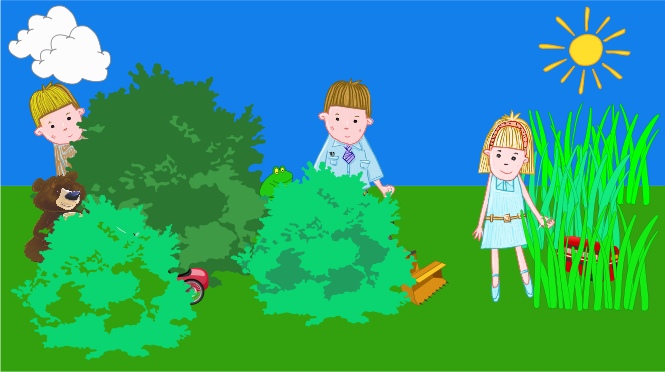
Treasure hunt and hide & seek games are a great way to teach a child directional and placement (prepositions) language. It is important for a child to learn directional and placement vocabulary so that they can both understand instructions given and share information themselves, such as; ‘put your cup on the table’ or to say ‘teddy in car’.

Through treasure hunts and hide & seek games you can introduce new directional and placement language in a fun and exciting way. There are a number of different ways to approach this:

  • You can give verbal instructions to the hidden treasure.
  • You could create a map for them to follow and ask them to talk through the map, supporting with new language as necessary.
  • You could use a mixture of verbal and map clues.
  • For older children get them to hide the treasure and give you instructions, or draw a map.
  • If you have more than one treasure to find, make the most exciting piece more difficult to find.

The important thing is the language shared. Words and phrases to use are: left, right, straight on, forward, backwards, about turn, turn around, up, down, higher, lower, stop, next to, in front, beside, underneath, on top of, behind, on the left of, on the right of, outside, and inside.

Treasure hunts and hide & seek games are a great whole class or family activity and you are never too young or too old to join in!

The Key to Good Phonics Skills – Part 13

Developing #Listening & #Speaking Skills – Syllable Awareness & Counting (Word Play)

At about the age of 4 years old children start to develop an understanding that words can be split into sound parts (syllables) and that these parts give the word its rhythm.  A syllable is the largest phonological unit (one or a group of sounds) of a word and is like the rhythmic beat of the word.

They should be able to orally blend syllables together to form words and segment words into syllables (https://www.teachphonics.co.uk/phonological-awareness-stage-4.html).

A fun activity to help develop syllable understanding:

How Many Syllables?     

Children love to clap out the number of syllables in a word. It is important to say the word at a normal speed rather than really slowly as this can distort the word and make it difficult to hear the syllables. To start with a child just needs to be able to recognize them by clapping, stamping or jumping for each syllable of a word; they don’t need to be able to count them. It is thought that only about 50% of children can count out the syllables by the age of 4, so you can do the counting for them.

Spoken syllables are organised around the vowel sounds, making counting them easy; as the jaw drops when the vowel sound is spoken in the syllable. Try placing your hand under your jaw with your mouth closed before you say a word. Start with ‘cat’ you will notice the jaw drops once; this is because it is a one syllable (monosyllabic) word.

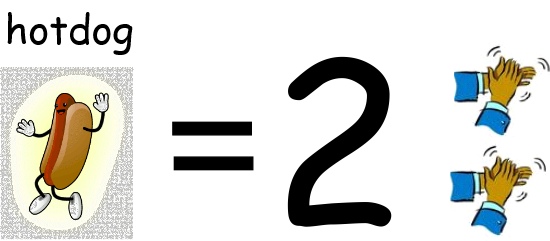
Most children will find it easier to identify syllables in compound words to start with. A compound word is formed by two words (root words) put together such as: sunset, hotdog, snowman and postman. They find it easier because the jaw tends to drop quite distinctly as we say the vowel sound in each of the root words and because we tend to say these words slowly.

The Key to Good Phonics Skills – Part 12

Developing #Listening & #Speaking Skills – Rhyme & Alliteration (Word Play)

Young children develop their vocabulary and understanding of sound patterns within words through word play.

Rhyme awareness and the enjoyment of alliteration begins early, usually between the ages of 2 and 3 years old (Stage 3 of phonological awareness: https://www.teachphonics.co.uk/phonological-awareness-stage-3.html ). This develops in to an important tool, supporting a child in developing an understanding of how words are formed and the sound patterns within them. These are important pre-phonics skills a child needs to develop to support their future ability to succeed with phonics, reading and writing.

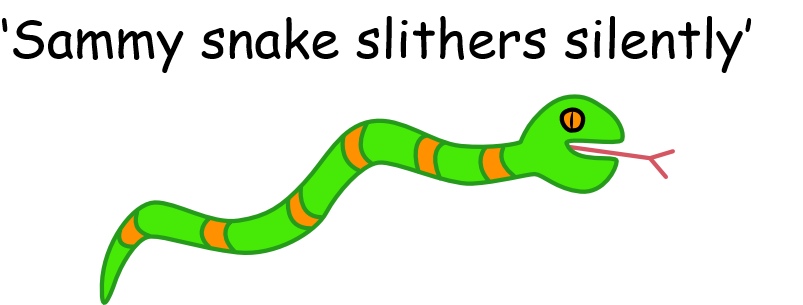
This Rhyme awareness is supported and developed through the singing of songs and nursery rhymes and finger chants. Alliteration (words that begin with the same sounds) such as ‘Sammy snake slithers silently’, which children love to hear in rhymes and stories, also supports their word knowledge and understanding of sounds in words.

Being able to repeat, and join in with, short phrases they have anticipated in a story or rhyme, is another important step in a child beginning to understand the use of words in stories and story structure; such as, “I’ll huff and puff and blow your house down!” in the story of The Three Little Pigs.

For more information on this, and other pre-phonics skills (Phonological Awareness) your child develops through from birth to 7 +years old, check out the Pre-phonics section of our website: https://www.teachphonics.co.uk/phonological-development.html

The Key to Good Phonics Skills – Part 10

Developing #Listening & #Speaking Skills – Developing Word Awareness

A good word awareness (receptive and expressive language) is a key phonics skill.

Helping a child build their vocabulary (word awareness – receptive & expressive language) is vital if they are to continue to develop good communication skills. Talking, explaining, sharing and playing are all important as well as making sure that you pronounce words clearly and correctly for a child to hear. A child may not have developed all the skills needed to copy you accurately but they will store the sound pattern information for later use. The more they hear the correct sound patterns the sooner they will start to use them themselves.

Click the link for ‘Tips to Help Develop Word Awareness (Receptive & Expressive Language)’:

https://teachphonics.co.uk/word-awareness.html

The Key to Good Phonics Skills – Part 7

Developing #Listening & Speaking Skills – Different Types of Talk

There are different types of talk:

  • Business Talk – this is when we use more everyday instructional and informational kinds of vocabulary and sentence structures.
  • Play Talk/Rich Talk – this is more conversational, informal and descriptive.
  • Small Talk – this is everyday chatter or conversations, informal and often less descriptive and more factual.
  • Parentese – this research has shown is how babies prefer you to talk to them using regular words (normal adult vocabulary) in a slightly higher pitched and more sing-song way.

It is important that a child is exposed to the different types of talk as it helps them to build their vocabulary (word awareness – receptive & expressive language) this is vital if they are to continue to develop good communication skills.

The Difference Between Receptive and Expressive Language

Receptive language is how we take in and understand language; it is what we hear, see and read. This also includes body language and environmental clues. All these elements help us to interpret a situation and give it its meaning, so that we can understand what is being communicated. We do not need to be able to produce language to receive and understand it, so infants and toddlers understand far more than they can express (expressive language).

Expressive language is our ability to put our thoughts, needs and wants into words and sentences in a way that makes sense and is grammatically correct. A baby’s expressive language to begin with is based on cries and gestures and then moves to sound making, gestures and body language signals. We use this expressive language when we speak and write. When babies and toddlers move to speaking words, they have a limited vocabulary which is why they can get frustrated when we do not understand them.

Good word awareness (receptive and expressive language) is a key pre- phonics skill.

Click the link for ‘Tips to Help Develop Word Awareness (Receptive & Expressive Language)’: https://www.teachphonics.co.uk/word-awareness.html

The Key to Good Phonics Skills – Part 6

Developing #Listening & Speaking Skills – Turn Taking Skills – Conversation

This week we will look at turn taking in conversation a skill children need to learn to take part in meaningful interaction with others. These interactions are a vital part of children’s physical, emotional, social and intellectual growth and wellbeing.

Children need to learn that in conversation they need to take turns listening and speaking.

This is more complex process than we often give it credit for as often we, especially in our busy lives, can be guilty of only listening to reply rather than listening to understand.

Children need to learn when to talk and when to listen; for this to happen they need to do the following:

Children need to learn when to talk and when to listen; for this to happen they need to do the following:

  • Actively Listen to the other person. This means:
    • Concentrate on the words being said, by blocking out other environmental noises and voices.For most children and adults this also means looking at the person, watching their facial expression and body language.Listening for the verbal cues and/or changes in the tone of voice that signifies that the person has finished speaking.
    • Recognising that it is either your turn to respond by formulating a reply or not.
  • Formulate a Response. This means:
    • Extracting meaning – taking understanding from the words that have been spoken.
    • Mentally searching for words to compile a grammatically correct set of sentences.

In young children this can take time, not because they do not have the answer, because they just take longer to recall and formulate their responses. This is due to the constant acquisition of new language and understanding of the grammatical conventions that need to be applied.

  • Formulate a Response. This means:
    • Extracting meaning – taking understanding from the words that have been spoken.
    • Mentally searching for words to compile a grammatically correct set of sentences.

In young children this can take time, not because they do not have the answer, because they just take longer to recall and formulate their responses. This is due to the constant acquisition of new language and understanding of the grammatical conventions that need to be applied.

  • Communicate Response. This means
    • Speaking clearly, pronouncing words correctly in coherent sentences.
    • Using socially appropriate facial expressions and body language to accompany the response.
    • Using the appropriate verbal cues and/or changes in the tone of voice that allow the other person to understand it is now their turn.
  • Wait. This means giving time for the other person to formulate their response.
  • Actively Listen to the other person.

Learning these skills takes time and needs to be taught as well as modelled by those around the children. It begins very early on for instance, when we talk to a baby, as if expecting an answer. As a baby starts to make cooing and babbling sounds, they begin to respond to you in those gaps, their first conversations.

Something that is worth remembering:

“When you talk, you are only repeating what you already know. But if you listen, you may learn something new.” (Dalai Lama)

The Key to Good Phonics Skills – Part 5

Developing #Listening & Speaking Skills – Games to Develop Phonemic Awareness

Phonemic awareness is our ability to split words into their smallest sound units (individual phonemes) and to manipulate these sounds through segmentation, blending, substitution and deletion. This is based on what we hear and say, not the written word.

These games are great for playing in the car or when waiting in queues and hopefully soon when out and about with other friends and family.

We usually introduce this concept to children using one syllable CVC words, a word that has a Consonant followed by a Vowel and then another Consonant, such as cat, dog, sit, peg and sun.

Play, ‘I hear with my little ear…’

This is based on the game I spy with my little eye. In this version you say;

 “I hear with my little ear the words (for example) cat, cake, key and kite. What sound do these words begin with?” The answer is they begin with the sound ‘k’ remember it is about what they hear not the spelling or letter names.

  • To begin with focus on helping your child to identify the first sound in words, remember it is about what you hear not the spelling, so shop, ship, and chef all start with the same first sound ‘sh’; fish, photo, fog would also have the same initial ‘f’ sound. Try not to correct your child based on spelling conventions, as it is sounds you are working on – spelling comes later.
  • Next help your child to listen and identify the last sound in a word such as ‘t’ in cat, sit and hat.
  • Then focus on the medial, or middle, sound in the word such as ‘a’ in mat, lap and tap.

Once your child can identify the initial, medial and final sounds in a word the next step is to playing with the words through oral phoneme segmentation and oral phoneme blending. You are probably doing this already with your child without really realising it.

  • Segmentation – being able to split words into their individual sounds, for example ‘cat’ into c-a-t.

Play, ‘How many sounds (phonemes) can you hear?’

This is a simple oral segmentation game just ask; “How many sounds (phonemes) can you hear in the word ‘hat’? The answer is 3. If your child can not count, they can show you using their fingers. The important thing is for them to hear and pick out the individual sounds in the word not the number of letters used to spell the word.

  • Blending – being able to blend individual sounds together to say a word, for example d-o-g into dog. This is achieved by saying the sounds over and over again getting quicker until it sounds and can be identified as the word (a tricky skills to learn).

Play, ‘I’m thinking of a word and it has the sounds (phonemes)… What is the word?’

This oral blending game seems easy but can be very trick skill for some children to master, so do not be surprised if they find it hard to begin with. Use CVC words to begin with, but do keep trying as it is a very important skill to learn; be patient and over time they will get there.

Say “I’m thinking of a word and it has the sounds (phonemes) l-o-g what is the word?” The answer is log.

Important Tips

We often slow down our pronunciation of the word and over exaggerate them, thinking we are helping our children to hear these sounds. This can be useful to start with, but be careful not to do it all the time. The aim is for your child to pick out the sounds in normal speech patterns, as these can be different from the way that words are spelt.

The most important thing to remember when modelling this, and when playing games to help develop these skills, is to make sure you are making the sounds correctly. It can be very easy to pollute a sound by adding an extra ‘uh’ sound to it, so ‘k’ becomes ‘kuh’ which makes it very difficult for children then to blend sounds.

When your child feels comfortable using and playing with sounds in CVC words move on to CCVC words such as stop, clop and flop, following the same steps of identifying the initial and last sound in the word and then the vowel sound rather than the middle sound. Then play oral phoneme segmentation and blending games.

The Key to Good Phonics Skills – Part 4

Developing #Listening Skills – Music Fun

These games are designed to help a child learn about the different levels of sound, pitch, tone and volume.

Music Fun

  • Skittle Band – Use, or make, a drum stick (wooden spoons are good for this) and explore with your child the different sounds the drum stick makes against objects made of different materials, such as steel saucepan, another wooden spoon, plastic bottles etc. Choose items that are safe and you are happy for them to play with. You could photograph the objects, record the sounds they make, or video (on your phone), to play back and talk about later on. Try moving the activity outside for a different sound quality experience.
  • Orchestral Conductor – Once your child is happy and enjoys playing and making sounds, with different objects and instruments, try the conductor game. You can use your hands or a baton to point and encourage them to play certain sounds just like an orchestral conductor does, but make sure you have a clear stop gesture which your child will understand (you may need to say stop at the same time as the gesture to begin with, but they will soon get the idea). Then swap places and you become the musician and they the conductor; it may not be a classic you create but it is great fun. As your child develops their skills you can add new elements and hand gestures to make the sound louder or softer.
  • Musical Bottles – Use plastic bottles with different amounts of water/sand in them and different things as a beater. Talk about how:
    • Low/deep or high pitched a sound is compared with another.
    • Using different beaters can change the quality of the sound when used on the same bottle.
    • Using different amounts of pressure to hit the bottle makes the sound louder (harsher) or quieter (softer).

Try organizing the bottles in order of pitch to create a musical instrument and using this as part of the Orchestral Conductor game. You could number each bottle or use a different picture on the bottle as a way of encouraging your child to play the bottles in different orders (making music).