Beat ‘The Terrible Twos’ – Gestures & Signing

Before an infant/toddler (1 to 2 years +) can talk they will often use gestures to help them get what they want, or let you know that they want you to do something again. Quite often these gestures are only really understood by you, this makes it difficult for others to understand your child, causing them to become frustrated at the lack of response.  

Although your child’s receptive language (understanding what is being said and asked of them) is developing well, their expressive language (telling others what they want and think) is far more limited, with them only being able to say around 20 words. The frustration of understanding but not being able to communicate leads to what is commonly known as ‘The Terrible Twos’. Sign language can be a very powerful tool to help you and your child to manage and lessen these communication frustrations.

For more tips and ideas to help you and your child to develop effective gesture and signing techniques follow the link to our ‘Gesture & Signing’ page: https://www.teachphonics.co.uk/gestures-signing-babies.html

Language of Drawing

Sharing and showing your child how to draw shapes and make pictures is a great opportunity for you to help them practice and develop known and new vocabulary.

Your child does not have to actually draw and can just watch, if that is what they prefer to start with. In doing so they may ask you to draw different things in the picture, use certain colours, or want to help you colour or draw things.

You can explain what you are doing as you draw, for instance, if you are drawing a straight line or a wavy line to make a shape or pattern.

Other language you may use:

Straight, short, long, diagonal, up towards …, down towards …, across, curvy, wavey, zig zag, squiggly, swirling, dots, dashes.

A couple of weeks ago we talked about placement (preposition) and directional vocabulary which would also be great to use here as part of drawing activities.

Not all children enjoy drawing and colouring and it can be difficult to encourage them. There are a number of reasons why some children seem reluctant to draw, paint or colour. For instance, some will not like the smell of the paint or crayons, while others may find the pencils, brushes or crayons too thin, long or heavy. Others may be reluctant due to past negative experiences. It can be tricky to work out exactly why a child doesn’t want to draw or write.

For some tips and ideas that may help you get them started, check out this week’s Teach Handwriting Blog: https://teachhandwriting.blog

We have created some new drawings using simple shapes which you may find helps you to get started. Follow this link and scroll down the page a little you will find them under the ‘Activities to help hand development’:  https://teachhandwriting.co.uk/more-activities.html

Pancake Making – Word Play

Pancake Day (Tuesday 21st February 2023) will soon be upon on us, and a great time to share some cooking time with your child.

It is amazing the number of different noises that occur when we cook, providing an ideal opportunity to use and introduce your child to the wonderfully descriptive world of onomatopoeic words. These are words that imitate the sounds being described such as bang, crash, whoosh, clip and clop.

So, we have created a list of onomatopoeic words which you could use and share with your child as you describe the sounds, potential chaos and fun that comes from shared cooking time with your child.

Bang, crash, rattle, clang, clank, clatter, clink, plop, slap, crack, splish, splash, splosh, hiss, sizzle, fizzle, crackle, squeal, giggle, smack, splat, gobble, scrap.

A Traditional English Pancake Batter Mix

For a thin pancake batter mix:

  • 100g plain flour
  • Pinch of salt
  • 1 egg
  • 270ml of milk or milk and water

Method:

  1. Sift the flour and salt together.
  2. Make a well in the flour and add the egg and enough milk (milk/water) to make a sticky mixture.
  3. Beat well, then gradually whisk in the remaining milk (milk/water).
  4. Keep in a cool place until ready to use, always whisk the batter before using.

An American Style Pancake Batter Mix

For a thick, sweet pancake batter mix:

  • 150g plain flour
  • 1 tea spoon baking powder
  • 3 pinches of salt
  • 1 egg
  • 150ml of milk
  • 30g caster sugar

Method:

  1. Sift the flour, baking powder and salt together.
  2. Stir in the caster sugar
  3. In another bowl, whisk the egg and milk together.
  4. Pour the egg and milk mixture into the flour and beat with a wooden spoon.
  5. If the mixture is left to stand for about half an hour the pancakes tend to have a lighter texture.

Have fun and enjoy!

Why Placement (Preposition) and Directional Vocabulary is Important!

Teaching your child the vocabulary related to placement (preposition) and direction is import in supporting them to understand and follow instructions, as well as sharing information themselves, such as; ‘put your cup on the table’ or to say ‘teddy in car’.

We also use this placement (preposition) and directional language to explain how to draw shapes, patterns and write letters and numbers. We have created three sets of picture cards and games to help you support your child in developing and using positional (preposition) and directional vocabulary

You can find these free resources on our Phonics website by following this link: https://www.teachphonics.co.uk/phonics-resources.html

What are prepositions?

A word used with a noun or pronoun to show place, position, time or means, e.g. at home, in the hall, on Sunday, by train.” Definition from Oxford School Dictionary, third edition 2002.

Here are just some preposition and directional phrases you might like to use:

On the … On top of the … Above the … Over the…

Under the… Below the … Beneath … Underneath …

Behind the …

In front of the…

Next to …Beside the … On the right of … To the right of … On the right-hand side … On the left of … To the left of … On the left-hand side… Before the … After the …

In the…  Inside the …

Out of the … Outside of the …

Between the … In between the … In the middle … In the center …

Going up the ….  Going down the … Going towards the… Going away from …

How do Cheesy #Christmas Stars Improve Vocabulary Skills?

Cooking is a great, fun way introduce new vocabulary to your child especially those related to touch, texture, actions and instructional language. Words such as: cold, warm, soft, hard, smooth, rough, gritty, roll, squeeze, squash and pull, mix, stir, blend, whisk etc…
So why not try our tasty savoury Christmas baking treat!
Go to our ‘More fun handwriting activities’ page: https://teachhandwriting.co.uk/more-activities.html for the recipe and just download the pdf (https://teachhandwriting.co.uk/assets/pdfs/christmas-cooking-cheesy-stars.pdf )

Christmas Finger Printing a Fun Way to Support Language Development

Hand and finger printing can be a fun way of getting your child used to touching, using different textured mediums and descriptive language associated with it. Such as: slimy, smooth, slippery, squidgy, wet, dry, squelch, ooze, press, push down, harder, softer, gentle, lift, light and dark.
Printing activities also help your child to start to become aware of how to control the amount of pressure they use and to develop a vocabulary to describe the different range of pressures required. Learning to control the amount of pressure exerted and how it feels can be very difficult for some children and it takes time and a range of experiences to develop these skills.
There are some fabulous printing ideas out on the internet; one of my favourite art resources is The Usborne Art Idea Books. Hand and finger printing can create some amazing artwork which can be used to make wonderful personalised Christmas cards, tags and paper.
Who could not be charmed by these fun thumb and fingertip snowmen or robins or delighted by a hand print angel or Father Christmas?
For other useful tips on printing and setting up a printing work station, check out our ‘More fun handwriting activities’ in our Parents section of our teachhandwriting.co.uk website under Learning Through Play: https://teachhandwriting.co.uk/more-activities.html

The Importance of Using Letter Names for Developing Handwriting, Phonics and Reading Skills

Here at Teach Children we have always promoted the importance and power of teaching the correct letter names to begin with; through our Teach Handwriting website, Schemes and Teach Phonics website. Unfortunately, some schools, teacher and parents still seem to be concerned that this is not consistent with the teaching of phonics, which is just not correct.

A myth which became popular, in the early years of introducing synthetic phonics into schools, is that children should not be taught the alphabet letter names as they find it too confusing. However, in recent years this has started to change as phonics schemes have adjusted some of their approaches to teaching phonics to include the use of letter names.

Learning the unique letter names of the alphabet is a pre-phonics skill; as well as an early learning goal. It has to be remembered that a letter is a shape which only represents a sound when it is placed within a word or sentence (has a context). Also, a letter or combination of letters can represent more than one sound and so the only unique way of identifying alphabet letters when we talk about them is to use their names.

It is important to remember that just because a child can correctly recite the ‘Alphabet’ song it does not mean they know the letters of the alphabet. It is surprising how many children can do this but when shown letters from the alphabet cannot name them at all. They may be able to tell you the sound the letter makes but have no idea of the letters name.

Learning the correct letter names helps to reinforce that when talking about the letter ‘a’ (ay) for example it has a set shape regardless of the sound that it will be representing in the word. This further supports children’s handwriting development as the communication of your requirements is unambiguous.

Teaching the correct letter names is important when supporting handwriting as this can in turn affect a child’s phonics understanding later on. For example, it can seem very easy when explaining to a child which letter to write when they ask which one is making a ‘kuh’ sound in a word such as cat to say a ‘curly kuh’. There is no such letter in the alphabet called ‘curly kuh’ it is the letter ‘c’ (cee). By adding the ‘kuh’ sound to the letter it reinforces incorrect phonics knowledge. The letter ‘c’ does not make a ‘kuh’ sound in words such as: city, circle, cycle and centre.

Some children will then only ever refer to the letter ‘c’ as ‘curly kuh’ and the letter ‘k’ as’ kicking kuh’. As I say these are not letter names of the alphabet and also devalue the power of phonics at the same time.

How can the education establishment get hot under the collar about not using the correct terminology in the teaching of English in schools such as: phonemes, graphemes, digraphs, modal verbs etc… yet still refer to the letter’s ‘c’ and ‘k’ as ‘curly or kicking kuh’!

Phonics is a powerful decoding and encoding tool. However, so is the alphabet letter naming system. Both need to working side by side to support our children, especially in those early years of their educational journey.

The English phonic system is very complex but this is why our language is so rich. Young children need to use letter names as an additional tool, as it takes many years for them to be introduced to the more complex phonics coding system.

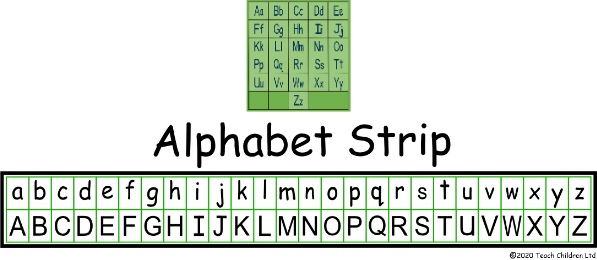
Alphabet Name animation (scroll to the bottom of the page): https://www.teachphonics.co.uk/phonics-graphemes.html

Developing and Supporting Your Child’s Reading Journey – Week 4

Print Awareness to Develop Understanding of Reading Conventions

Print Awareness is knowing that print (words) has meaning, including noticing print around them in the environment (posters & street signs) and understanding how to handle the conventions for reading a book. We can often assume that all young children or pre-readers (as not always young children) will develop print awareness naturally. However, research suggests that 95% of their visual attention is directed towards pictures, which in themselves hold a great deal of meaning and often tell the story very effectively.

Pictures/ illustrations in story books and pure picture books are powerful ways to engage children and adults with books, storytelling and reading. This is not to say that pictures are any easy way to interpret a storyline as they can hold a great deal of meaning, from simple obvious interpretation to more sophisticated symbolic representation.

Young children and pre-readers need opportunities to explore print and be helped to understand that the written word (print) has meaning. Once they start to see print they will begin to notice it everywhere not just in books but on posters, food packets, menus and street signs.

Again we can often assume that a child or pre-reader knows how to handle a book, however this is not always the case and can be due to a lack of experience with books or different cultural reading conventions. So it is important to check and teach these reading conventions for reading English:

  • Front cover opens to the left and we read it from the front to the back.
  • Print on a page is read left to right.
  • Usually print is read from the top of the page across and down (this may differ slightly in some children’s books).

Supporting Print Awareness:

Through Play

  • Use takeaway menus or create your own as part of role playtime, they could have their own café serving up all sorts of interesting dishes for you. A blackboard can be very useful for this, allowing you or your child to write up their own menu for the day. 
  • Travel brochures or leaflets from your local tourist information office are great for role play encouraging new language as well as a different way to explore print as they often have maps and timetables. 
  • Use sticky labels or post it notes to label items or furniture as part of a ‘can you see or find’ game.

Through Drawing/Writing

  • Making lists of things to do or a shopping list. Their version of the list may be just squiggles and dots (so don’t rely on this for your shopping trip) but it is the beginning. I would keep the list and get them to tick off things done or items purchased as part of the experience so that it has a genuine purpose (children really like this).
  • For slightly older children making simple invitations and thank you cards can be fun. Try not to make the messages too long or to write too many as they will get bored and see it as a chore not as fun.
  • Making and drawing their own story book.

Through Songs/Nursery Rhymes

  • Showing the printed words to songs and rhymes.

Through Talk

  • Point out signs, logos and labels when out and about as well as at home.
  • A lot of print awareness skills are developed through the sharing of books and appropriate on-line material.

Through Book Sharing

What books to choose?

  • Books that have writing as part of the story;
  • Books that have writing as part of the picture;
  • Story books; all types;
  • Factual (non-fiction) books; all types;
  • Comics;
  • Children’s magazines and newspapers.

Book Sharing Tips

  • Remember babies will chew and bash the pages of the book as you read. This is normal and part of their learning experience so go with it.
  • Encourage and let your child turn the pages.
  • Point to the words of the title as you say them
  • Explain what the author and illustrator do as you say their names.
  • Point to words or repeated phrases as you say them or as your child says them. This will also help your child to develop the skill of reading from left to right and from the top of the page down (English).
  • Point to words of interest and explain how words have spaces between them and why.
  • To help your child understand how to handle a book use the word ‘front’ and ‘back’ of the book. If you are handed a book upside down or with the ‘back’ cover facing you explain that you have to turn it around or over so that you can read it.
  • Explain that page numbers help you to find things in the book as well as to help make sure you do not miss any part of the story.
  • Explain that content pages in story books show the chapters and in factual (non-fiction) they show different subject areas, as well as giving the page numbers on which to find them.
  • Explain how the index page in non-fiction books work.
  • Explain what a glossary is in a book.

Developing Speaking and Listening Skills: Play – the great starting point!

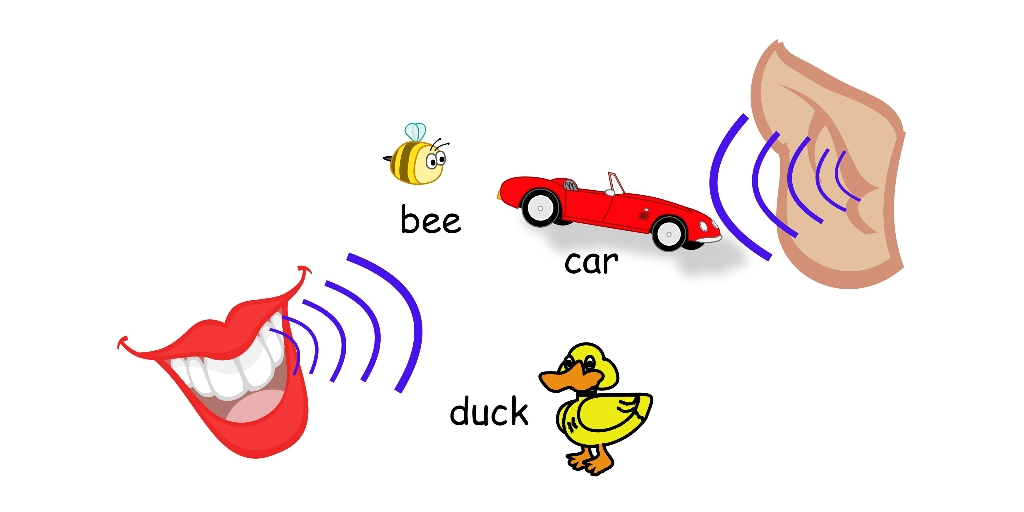
Developing good speaking and listening skills along with a wide vocabulary knowledge is an important part of your child’s phonological awareness development and phonics pre-skills base. So, it is not surprising that if a child has a weakness in these areas, they may struggle in learning to read and write.

How do we start to working on supporting a child to develop the skill sets needed for learning to read?

PLAY!!!

A couple of weeks ago we looked at the importance of different types of play. By giving your child the opportunity to experience the different types of play you will also be supporting them to build their speaking and listening skills as well as broadening their vocabulary.

Developing these skills is not all about paper and pencil worksheet activities (though this helps later on).

For fun game ideas go to our ‘Big to small’ (https://teachhandwriting.co.uk/big-to-small.html) or games (https://teachhandwriting.co.uk/games.html) sections.

All these can be found in our Learning Through Play in the new parents’ area of the website: https://teachhandwriting.co.uk/parents.html

Different Types of Play and their Importance

We are always being shown how important play is in the development of young animals’ survival and hunting skills. How many times have you thought how cute or lovely when watching kittens, puppies or polar bears playing?

Humans are also animals which thrive and develop through play; in fact, play is so important the United Nations High Commission for Human Rights state it as a right for every child (Ginsburg, 2013).

We often think of play as a frivolous pastime rather than a practical and meaningful one. However, here at Teach Children we see play as a vital part of a child’s physical, emotional, social and intellectual growth and well-being.

There has been considerable research over the years on play, which supports our point of view, with the consensus being that children need to experience five different types of play (Dr.D Whitebread, 2012). These five types of play are roughly based on the developmental opportunities they provide, especially if it is child driven rather than adult lead:

Physical Play – active exercise (running, jumping, skipping etc..), rough & tumble and fine motor skills activities to develop whole body and hand and eye co-ordination strength and endurance. The outdoor element of such play develops independence, resourcefulness and self-regulation while the fine motor skills activities support the development of concentration and perseverance.

Play with Objects – starts as soon as a child can grasp and hold an object; mouthing, biting, turning, stroking, hitting and dropping. It’s how we all learn through the exploration of our senses (sensory-motor play). This type of play develops our abilities to; physically manipulate items, think, reason and problem solve, to set challenges and goals as well as to monitor our own progress.

Symbolic Play – refers to the development of spoken language, visual symbols such as letters and numbers, music, painting, drawing and other media used for communication of thought and ideas. This type of play allows children to develop the abilities to express and reflect on experiences, ideas and emotions. Sound and language play develops phonological awareness required for literacy, while number play that relates to real life situations supports numeracy skills.

Pretence/socio-dramatic Play – Pretend play provides the opportunity to develop cognitive, social, self-regulatory and academic skills. This kind of play means children have to learn and pick up on unspoken rules of interaction, taking on the role of a character and playing within the expected confines of that role.

Games with Rules – physical games such as chase, hide & seek, sport, board and computer games. Develop social skills and the emotional skills of taking turns, winning and losing as well as other people’s perspectives.

                                                             So, to play is to learn!

Bibliography

Kenneth R. Ginsburg, MD, MSEd, 25/07/2013; ‘The Importance of Play in Promoting Healthy Child Development and Maintaining Strong Parent-Child Bonds’: THE AMERICAN ACADEMY OF PEDIATRICS: http://pediatrics.aappublications.org/content/119/1/182.full

Dr.D. Whitebread, April 2012: ‘The Importance of Play’; Commissioned for the Toy Industries of Europe:  http://www.importanceofplay.eu/IMG/pdf/dr_david_whitebread_-_the_importance_of_play.pdf