Games to Develop Listening Skills – Part 3

Musical Bottles

These games are designed to help a child learn about the different levels of sound, pitch, tone and volume.

Music Fun

  • Skittle Band – Use or make a drum stick (wooden spoons are good for this) and explore with your child the different sounds the drum stick makes against different objects made of different materials, such as steel saucepan, another wooden spoon, plastic bottles etc. Choose items that are safe and you are happy for them to play with. You could photograph the object and record the sounds they make or video (on your phone), to play back and talk about later on. Try moving the activity outside for a different sound quality experience.
  • Orchestral Conductor – Once your child is happy and enjoys playing and making sounds, with different objects and instruments, try the conductor game. You can use your hands or a baton to point and encourage them to play certain sounds just like an orchestral conductor does, but make sure you have a clear stop gesture which your child will understand (you may need to say stop at the same time as the gesture to begin with, but they will soon get the idea). Then swap places and you become the musician and they the conductor; it may not be a classic you create but it is great fun. As your child develops their skills you can add new elements and hand gestures to make the sound louder or softer.
  • Musical Bottles – Use plastic bottles with different amounts of water/sand in them and different things as a beater. Talk about how:
    • Low/deep or high pitched a sound is compared with another.
    • Using different beaters can change the quality of the sound when used on the same bottle.
    • Using different amounts of pressure to hit the bottle makes the sound louder (harsher) or quieter (softer).

Try organizing the bottles in order of pitch to create a musical instrument and using this as part of the Orchestral Conductor game. You could number each bottle or use a different picture on the bottle as a way of encouraging your child to play the bottles in different orders (making music).

Enjoy!

Games to Develop Listening Skills – Part 2

Listening Games Scanning

These games are designed to help a child learn how to block out ambient noises so that they focus and concentrate on one particular sound.

Sound Scanning Games

The idea is to identify and talk about different sounds in different locations; in the park or at home in different rooms. Ask the child to listen for a moment (timed activity 30 seconds to start with then increase) and to pick out different sounds they can hear. Some will be close and easier to identify, other sounds may be further away and require more focused concentration to work out what they may be.

  • Sound Scanning Questions to help:
      • What can you hear that is far away?
      • What can you hear that is close by?
      • What can you hear that is loud?
      • What can you hear that is quiet?
      • What can you hear that makes a high pitched sound?
      • What can you hear that makes a low pitched sound?
      • What can you hear that sounds big?
      • What can you hear that sounds small?
  • Listening Walk Activities- You could record some of the sounds heard and talked about on the walk. Try changing the ‘What can you …?’ questions to ‘What did you…?’ Depending on your child’s age they may be able to draw a sound scape picture showing all the things they heard on the walk.
  • Where is the Sound? – The aim of the game is find out where the sound is coming from. Start by using something that makes a good clear sound. Ask your child to cover their eyes (can use a blindfold) and have them sit or stand in the middle of the room. Move around the room, starting not too far away from them and make the sound. Pause between each sound to give your child time to settle and focus on it before you make the next sound. Try to keep an even, slow pace. The aim is for your child to point in the direction they believe the sound is coming from. Gradually move further away, maintaining the same sound level. Swap places with your child, so you have to guess where the sound is coming from.

To make it more challenging:

  • Change the volume of the noise.
  • Change the object that is making the noise.
  • Change the speed (rhythm), as well as the location, at which the sounds are made.

Have Fun!

Games to Develop Listening Skills – Part 1

Listening Games

Last week we explained the three things required for good listening skills:

  • To pay attention – being able to focus on a particular voice or sound by filtering out other voices and ambient noises.
  • To concentrate on the voice or sounds to take in the information, building the stamina needed to listen for extended periods of time.
  • To interpret that information to gain meaning – comprehension.

Here are some games to help build these skills.

These games are designed to help a child learn how to block out ambient noises so that they focus and concentrate on one particular sound.

Sound Screen Games

Create a barrier between you and your child so they cannot see the object you are going to use to make noises with and see if they can guess the object. Try to use objects that make sounds that occur around them a lot of the time, for example keys rattling together or wooden blocks being knocked together. There are many variations of the game that can be played but you need to make sure your child has the opportunity to experience the sounds with the relevant object beforehand, if they are not to be frustrated by the game.

  • Mrs Blog has a box… To the tune of Old Macdonald changing the name as best fits the situation. Place a box, on its side with a number of objects inside that make a noise (choose items your child is familiar with the sound of) between you and your child so they can’t see what is in the box. Start singing “My mummy has a box ee, i, ee, i, o and in that box she has…” Stop and gesture to encourage your child to listen (maybe a cupped hand to your ear) then pick one of the objects and make a sound; your child then tries to guess what it is. Continue to sing but imitating the sound of the object you played, which your child can now see. If it was a bunch of keys for example; “with a jingle, jangle here and a jingle jangle there, my mummy has a box ee, i, ee, i, o.” Swap places so your child can choose an object in the box, change the song so you are using their name, for example “My James has a box…”
  • Same or Different? Place a barrier between you and your child so they cannot see which object you will use to make a sound and that you duck behind so they cannot see your face when you make vocal sounds.  This can be played at different levels. At the basic level using animal noises such as baa , moo, woof etc. A more complex level would be to use shakers with different size things inside to make different shaking sounds. Plastic containers or bags of the same size and type can be used to make the shakers with different small items in such as dried pea, rice, sand or small coins, pebbles or small lego bricks. Make the noise once and then repeat either with the same noise or a different one. The child then says if they a were the same or different.
  • Copy Cat! Place a barrier between you and your child so they cannot see which object you will use to make a sound and that you duck behind so they cannot see your face when you make vocal sounds.  You will need two set of the same objects, a set for you and one for your child. The aim of the game is for you to make a noise with either an object or your voice and for your child to copy that sound choosing the correct object in front of them or using their voice as you did. The game can become more complicated as you mix a number of sounds using objects and your voice. Swap roles so that your child becomes the leader of the game and you have to copy them.

Have Fun!

N.B. Be careful of small objects escaping from shakers etc. as these can be a choke hazard.

What is listening?

Listening

Listening is a complicated skill that requires children to learn how to pay attention – being able to focus on a particular voice or sound by filtering out other voices and ambient noises. They then have to concentrate on the voice or sounds to take in the information, building the stamina needed to listen for extended periods of time. Then they have to interpret that information to gain meaning – comprehension.

The usual approach to teaching children to listen is based on three behaviours:

  • Sitting or standing still
  • Looking at the person who is speaking
  • Thinking about what the person is saying or said

However just because your child is replicating these behaviours doesn’t mean they are listening.

It is also surprising how often children are happy to follow steps 1 and 2 but completely miss step 3.

This is not surprising really as listening is not a set of behaviours but a set of skills that need to be taught and developed, starting from birth.

A child with poor listening skills will find it difficult to complete tasks, as they have not taken in all the information and so not understood the full extent of the task, or what was required of them. This can lead to a child flitting from one activity to another and never finishing anything, slowing down their learning. They also miss out on the sense of achievement and feeling of pride when a task is completed. This helps to build a child’s confidence, self-esteem and self-motivation to try again or attempt a more challenging task.

For many children good listening skills do not develop naturally, they have to be taught!

Over the next few weeks we will introduce games and activities to support listening skills.

Conversational Turn Taking Skills

Children need to learn that in conversation they need to take turns listening and speaking.

This a more complex process then we often give it credit for as often we, especially in our busy lives, can be guilty of only listening to reply rather than listening to understand.

Children need to learn when to talk and when to listen; for this to happen they need to do the following:

  • Actively listen to the other person. This means:
    • Concentrate on the words being said, by blocking out other environmental noises and voices.
    • For most children and adults this also means looking at the person, watching their facial expression and body language.
    • Listening for the verbal cues and/or changes in the tone of voice that signifies that the person has finish speaking.
    • Recognising that it is either your turn to respond by formulating a reply or not.
  • Formulate a response. This means:
    • Extracting meaning – taking understanding from the words that have been spoken.
    • Mentally searching for words to compile a grammatically correct set of sentences.

In young children this can take time, not because they do not have the answer, because they just take longer to recall and formulate their responses. This is due to the constant acquisition of new language and understanding of the grammatical conventions that need to be applied.

  • Communicate Response. This means
    • Speaking clearly, pronouncing words correctly in coherent sentences.
    • Using socially appropriate facial expressions and body language to accompany the response.
    • Using the appropriate verbal cues and/or changes in the tone of voice that allow the other person to understand it is now their turn.
  • Wait. This means giving time for the other person to formulate their response.
  • Actively Listen to the other person.

Learning these skills takes time and needs to be taught as well as modelled by those around the children. It begins very early on for instance, when we talk to a baby, as if expecting an answer. As a baby starts to make cooing and babbling sounds they begin to respond to you in those gaps, their first conversations.

Something that is worth remembering:

“When you talk, you are only repeating what you already know. But if you listen, you may learn something new.” (Dalai Lama)

The Sun is out!

It’s June, the weather is perfect, so why not set up water squirting games in the garden. The kids are waterproof and everything else will dry out, eventually!

This week on our Teach Handwriting Blog we have encouraged water fights and games for developing a child’s hand strength, co-ordination and eye tracking skills (all handwriting skills). However these games are also fantastic for developing sound and word awareness skills.

Try mimicking the sounds that the water makes as it drips on to the floor or hits the targets; use directional language to support your child’s aiming skills; describe how the objects move when hit: bouncing, rolling or flying and talk through the emotions evoked through playing the games.

As well as supporting your child in developing a whole range of physical and language skills you will also increase your cool adult status.

Some fun water games:

  • Try setting up a target wall, using chalk to draw the targets.
    • How many of the targets can you hit with water squirted from a water pistol or squeeze bottle in a set time.
    • How many targets can be washed off.
  • Set up a skittles range.
    • Each skittle hit with water can be worth a certain number of points, or the distance of the skittles may affect their value.
    • A time trial game to hit all the skittles. If you are using plastic bottles as skittles try making some of them a little heavier by putting sand or dirt in them to make it a bit harder to knock them over.
  • Move the object race games.
    • A light toy/ball has to be moved by squirts of water over a distance.
    • A range of objects moved in to target areas to gain points.

The only limitation is you and your child’s imagination and trust me kids never tire of finding new ways to play with water (but then again neither do many adults)!

Have FUN!

The Importance Speaking & Listening

Speaking & Listening Icon 2Speaking and listening skills play a vital role in helping children to develop their awareness of the sounds around them. The more they hear, the more associations they can make to those sounds (what they see, feel and experience), the greater their ability to distinguish between them.

Click here to link to our tips and ideas page on how to support a child’s speaking and listening skills. http://bit.ly/2ncjzYn

Why Poor Spatial Awareness and Eye Tracking Skills affect Reading

Eyes

Good spatial awareness enables us to be aware of the space around us and our position in that space, as well the relationship between ourselves and objects. This also includes our ability to see and understand the spacing of text and pictures on a page, to distinguish between paragraphs, sentences, words and individual letters.

Spatial awareness difficulties can have a dramatic effect on a child’s ability to read fluently and with ease due to the fact that they do not see the print in the same way as people with good spatial awareness skills.

Typical problems due to poor spatial awareness skills:

  • They lose their place, skip lines and words or transpose them
  • They use a finger to help keep their place.
  • Comprehension can be difficult as text is mis-read.

Eye tracking is the ability to control and coordinate the fine eye movements that allows us to:

  • Read a line of print by moving our eyes from left to right, without moving the head.
  • To focus and move the eyes to follow an object, without moving the head, in all directions
  • To track/follow objects near and far
  • To focus on one object without moving the eyes.

Eye tracking difficulties can have a dramatic effect on a child’s ability to read fluently and with ease due to the fact that they do not see the print in the same way as people with good eye tracking skills.

Typical problems due to poor eye tracking skills:

  • They lose their place, skips words or transposes them
  • They use a finger to help keep their place
  • Some will turn their head sideways to read or write
  • Others may cover one eye to read
  • They hold their head close to the table when looking at things, reading, writing and drawing

For more information on how to identify spatial awareness and eye tracking difficulties as well as activities to help support and develop these skills use these links:


Eyesight Difficulties

Optition

Children will often be unaware that what they see and experience may be different to what we or their friends are seeing. As parents it can be a real shock when your child says “isn’t that what you see?”, as unless the difference is extreme and has an obvious impact on them we can think everything is ok.

Visual difficulties not only affect a child’s ability to read but also their handwriting skills.

If you are not sure about your child’s vision then book an eyesight test, it could be your child is struggling because they need glasses, and they are now cool and don’t carry the stigma they used to.

Some children may not have a problem with their eyesight but find reading print difficult because it seems to move around on the page as they try to read.

When reading a book with your child it is worth talking to them about what they see. Try to be matter of fact, so that they do not feel you are looking for a particular answer. Using a book with a good print size and not too crammed with words (so a school reading book is a good idea) you are looking to find out:

  • Can they identify each row of text (try asking them to count how many lines on the page or to point to each line of print) or do they jump or miss out lines.
  • Can they identify words in the line of text or do they sometimes blur together.
  • Can they see each letter in words or do they sometimes swap them around so “was” becomes “saw” for instance (this does happen occasionally when a child is first learning to read but is more of a concern if it becomes a regular reading error for a number of words).
  • Does the print do funny things, such as move or wiggle about?

Book an eye test for your child if they are having some, or all, of these difficulties. Also try placing different coloured overlays (coloured plastic wallets are good) over the text to see if your child finds it easier to read or see the print. For many children, struggling with the issues above, coloured overlays or specially tinted glasses can make an amazing difference. We found the impact for our two dyslexic daughters quite dramatic, improving their skills, confidence and self-esteem. It does not work for all children but it is really worth trying.

Some opticians who have an Optometrist or Orthoptist can perform a coloured overlay test (http://www.eyecaretrust.org.uk/view.php?item_id=125) for your child to assess whether coloured lenses would be beneficial. The test can be difficult for children under the age of 8 as they may choose their preferred fashion colour rather than the one best suited for them.

Developing and Supporting Your Child’s Reading Journey – Week 6

Phonics Assessment Pages

Letter Knowledge

Letter knowledge is understanding;

  • That the same letter can look different, for example, a lower case letter ‘b’ looks different from a capital letter ‘B’. Letters will also look different depending on which font type is being used or if it is handwritten, for example, an Arial font letter ‘g’ looks different from a Calibri font ‘g’.
  • That letters have names and the same name is used for that letter even when they look different, so the lower case letter ‘a’ and its capital letter form ‘A’ are both called ‘ay’.
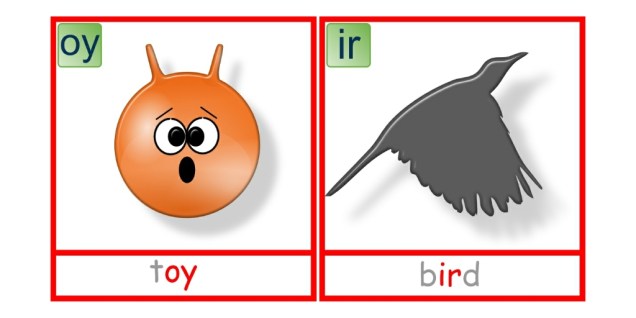
  • That letters (graphemes) are used to represent sounds (phonemes) in words. Teaching the unique letter names of the alphabet is an important pre-phonics skill. A letter or combination of letters can represent more than one sound and so the only way of identifying alphabet letters when we talk about them is to use their unique names.

Developing Letter Knowledge:

Through Play:

  • Sorting and Matching Games – use plastic or wooden letters, alphabet letter flash cards; can they group all the lower case letters together, or all the capital letters or all the different letter ‘ay’s together.
  • Kim’s Games – use plastic or wooden letters, alphabet letter flash cards use a few letters at a time, place 5 to 10 on a tray and let your child look at them and talk through which letters are there. Cover with a tea towel and ask your child to look away, then remove 1 or 2 of the letters. Then ask your child to look back and remove the tea towel. Can they spot which letters are missing.
  • Detective Games – focus on identifying individual letters of the alphabet and naming them, this can be played at home or when out and about.
  • Leap Frog – use the letters of the alphabet on home-made paper lily pads. Use the letter names to identify the target lily pad for your child to either jump onto or to throw a bean bag/soft toy on to.
  • Skittles and Throwing Games – use letters of the alphabet on the targets and use the letter names as a way of identifying which of the targets your child is aiming for.

Through Drawing/Writing:

  • Making lists of things to do, or a shopping list. Their version of the list may be just squiggles and dots (so don’t rely on this for your shopping trip) but it is the beginning. I would keep the list and get them to tick off things done or items purchased as part of the experience so that it has a genuine purpose (children really like this).
  • Making and drawing their own story book.
  • Learning to writing letters correctly – see our Teach handwriting Website: http://bit.ly/1dqBYFm

 Through Songs/Nursery Rhymes:

  • Singing Alphabet Song, try singing it to different tunes.
  • Make up Your Own Rap – point to the letters as the rap is said.

Through Talk:

  • Talk about letters as being shapes made up of straight, curves and diagonal lines.
  • Look at the letters in your child’s name, talk about the fact that the first letter in their name is always a capital letter and that normally the other letters are lower case letters.
  • Point out especially for slightly older children that lower case letters are about half the size of the capital letters.
  • Compare letters looking at what is the same and different about them.
  • When taking about letters use the letter name as well as the sound it is making in the word, remember a letter is often used to represent more than one sound. The letter ‘a’ can be used to represent different sounds in the following words: ant, apron, was, and any (just 4 of the eight sounds it is used to represent).

Through Book Sharing:

What Books to choose?

  • Books with shapes
  • Books where you have to find things (like I spy)
  • Alphabet books
  • Books which use different font styles in the pictures and text.

Book Sharing Tips:

  • Alphabet books do not need to be read from cover to cover. Let your child choose which letters they want to look at.
  • Trace the letters with your finger or let your child trace it (make sure you trace the letter using the correct formation orientation, encourage your child to do the same).
  • Talk about the pictures in alphabet books before focusing on the letter, its name and the sound it can make.
  • Show your child the first letter in their name and then look for that letter in the book.
  • Show and talk about how some letters are in their capital form and others in their lower case form. Can they find other examples of the letters?
  • Choose two letters to talk about: How do they look alike? How do they look different? What shapes/line styles are they made up of?