What is Phonological Awareness?

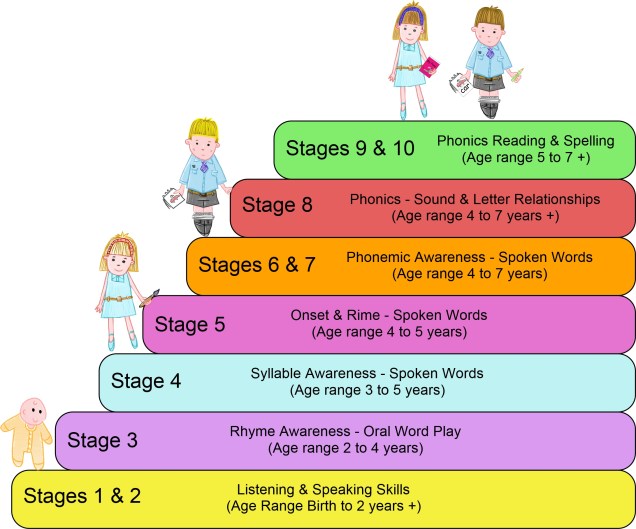
Phonological Awareness Chart

Date Originally Posted: 21/09/17

Phonics is stage 8 of our phonological awareness development, so what comes before?

Pre-phonics skills are those your child learns as they develop through the phonological awareness stages 1 to 7. Throughout this time they are continually developing their understanding and knowledge of our spoken language as well as other communication forms, such as gestures, facial expressions, body language and social conventions.

Speaking and listening skills play a vital role in helping your child develop their phonics knowledge, as they need to be exposed to a wide and varied vocabulary that allows them to hear and use the range of sounds that form our language.

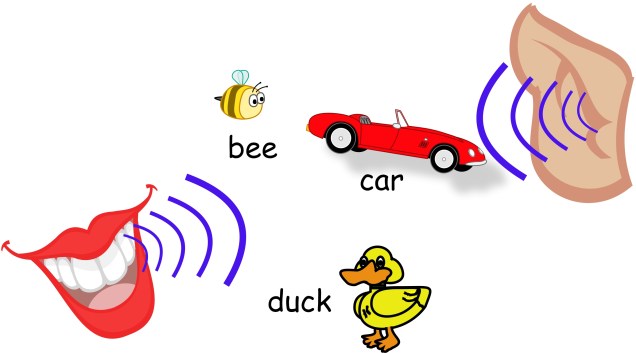
Being exposed to a greater range of sound experiences helps a child to develop their awareness of the sounds around them. The more they hear, the more associations they can make to those sounds (what they see, feel, experience), the greater their ability to distinguish between them. This skill becomes important later on as they begin to isolate individual words in sentences, being able to distinguish between words that sound similar such as dog and hog.

Through listening and speaking games and activities your child is exposed to new vocabulary, as well as learning to play with the sounds in their language. This helps them to remember how the sounds feel when they make them as well as how they sound in isolation and when combined with other sounds.

Scientist believe a child’s sound awareness begins before they are born; at about 24 weeks, which highlights the importance of sound awareness, including environmental and speech sounds, as part of our instinctive natural development.

To find out more about the different developmental stages of a child’s phonological awareness click here.

Back to School – What is Phonics?

Blog Phonics

Date Originally Posted: 07/09/17

With the new school year under way some of you will have been introduced to phonics for the first time. Phonics is a very useful decoding tool used for developing reading skills and as an encoding tool for spelling.

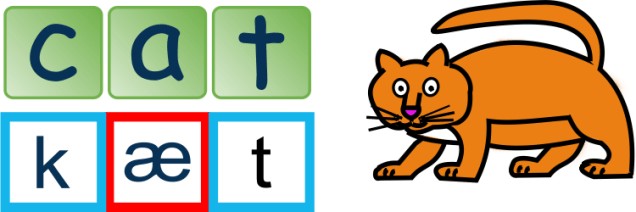
Phonics is the simple process of linking sounds to letters, its complexity comes from how many sound (phoneme) to letter (grapheme) combinations there are. So to be good at phonics a child needs to know the 44 sounds and numerous letter and letter combinations of English and then learn the associations between the two.

Children can communicate orally from an early age; it is when they move to the written word that they need to learn how to decode text, to turn the letters into words they already know.

Using phonics knowledge for reading entails:

  1. Identify the letter or letter combination, in a word, that represent a sound
  2. Associate the letter or letter combination to one of the 44 sounds
  3. Blend each of the sounds together to form the word
  4. Recognise the now oral word to extract its meaning

The theory supporting the teaching of reading using phonics, especially synthetic phonics, is that if a child can decode a word by associating individual sounds to a letter or combination of letters they will then be able to blend those sounds together to form and say the word.

Once a word has been spoken they will extract its meaning by using their far more extensive spoken language comprehension. Children are therefore using the same mental processes to understand written text and speech.