The Key to Good Phonics Skills – Part 3

Developing #Listening Skills – Sound Scanning Games
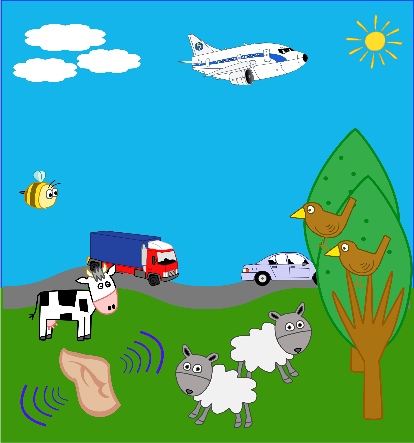
These games are designed to help a child learn how to block out ambient noises so that they focus and concentrate on one particular sound.

Games

The idea is to identify and talk about different sounds in different locations; in the park or at home in different rooms. Ask the child to listen for a moment (timed activity 30 seconds to start with then increase) and to pick out different sounds they can hear. Some will be close and easier to identify; other sounds may be further away and require more focused concentration to work out what they may be.

  • Sound Scanning Questions to help:
  • What can you hear that is far away?
  • What can you hear that is close by?
  • What can you hear that is loud?
  • What can you hear that is quiet?
  • What can you hear that makes a high-pitched sound?
  • What can you hear that makes a low-pitched sound?
  • What can you hear that sounds big?
  • What can you hear that sounds small?
  • Listening Walk Activities- You could record some of the sounds heard and talked about on the walk. Try changing the ‘What can you …?’ questions to ‘What did you…?’ Depending on your child’s age they may be able to draw a sound scape picture showing all the things they heard on the walk.
  • Where is the Sound? – The aim of the game is finding out where the sound is coming from. Start by using something that makes a good clear sound.  Ask your child to cover their eyes (can use a blindfold) and have them sit or stand in the middle of the room. Move around the room, starting not too far away from them and make the sound. Pause between each sound to give your child time to settle and focus on it before you make the next sound. Try to keep an even, slow pace. The aim is for your child to point in the direction they believe the sound is coming from. Gradually move further away, maintaining the same sound level. Swap places with your child, so you have to guess where the sound is coming from.

To make it more challenging:

  • Change the volume of the noise.
  • Change the object that is making the noise.
  • Change the speed (rhythm), as well as the location, at which the sounds are made.

Have Fun!

The Key to Good Phonics Skills – Part 1

What is listening?

Listening is a complicated skill that requires children to learn how to pay attention – being able to focus on a particular voice or sound by filtering out other voices and ambient noises. They then have to concentrate on the voice or sounds to take in the information, building the stamina needed to listen for extended periods of time. Then they have to interpret that information to gain meaning – comprehension.

The usual approach to teaching children to listen is based on three behaviours:

  1. Sitting or standing still
  2. Looking at the person who is speaking
  3. Thinking about what the person is saying or said

However just because your child is replicating these behaviours doesn’t mean they are listening.

It is also surprising how often children are happy to follow steps 1 and 2 but completely miss step 3.

This is not surprising really as listening is not a set of behaviours but a set of skills that need to be taught and developed, starting from birth.

A child with poor listening skills will find it difficult to complete tasks, as they have not taken in all the information and so not understood the full extent of the task, or what was required of them. This can lead to a child flitting from one activity to another and never finishing anything, slowing down their learning. They also miss out on the sense of achievement and feeling of pride when a task is completed. This helps to build a child’s confidence, self-esteem and self-motivation to try again or attempt a more challenging task.

For many children good listening skills do not develop naturally, they have to be taught!

Accents – Phonemic awareness & Phonics

Because the English language is so rich and diverse it is very difficult to create a phonics system that caters for all. Every region that speaks the English language has its own accent which means there are always variations in the way that a word is pronounced.

Across England we all spell words the same but we certainly do not say them all the same, even though we all use the same 44 sounds. In the English language the 44 sounds can be represented by over 280 letter combinations.

So, accents have arisen from regions applying different phonemes (sounds) to graphemes (letters) when they pronounce words. The regions still use the same sounds and letters, they just associate them differently.

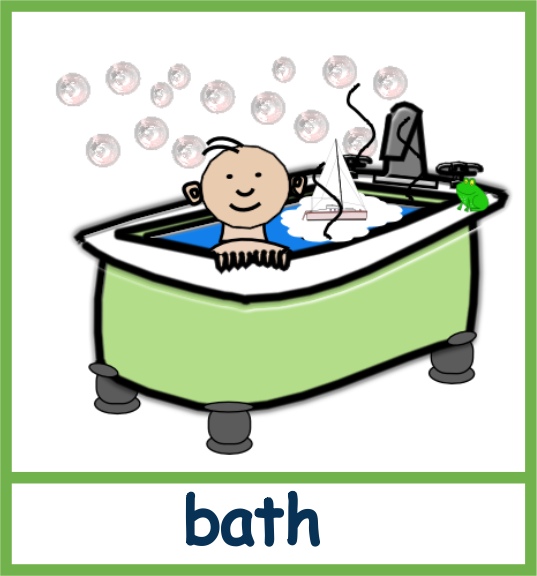
For example, in the South of England the letter ‘a’ can be pronounced as the ‘long ’R’ controlled’ vowel sound /ar,(ɑː)/ in words such as ‘grass’ and ‘bath’ whereas in the North of England it will be pronounced as the ‘short’ vowel /a,(æ)/ sound in these two words.

Click and then scroll down the page to see the animations of the different pronunciations of the word ‘bath’. https://www.teachphonics.co.uk/teaching-phonics.html#pronunciation

Both pronunciations are correct, which can make teaching phonics a little tricky; the key is to teach the sound to letter relationships which best suit the children being taught in relation to their regional accent. It is important to remember that children’s knowledge of the sounds that make words is based on how you speak to them naturally and not a strict standardized set of sounds.

However, for general educational and learning purposes the English language’s phonics system has been standardized, this is known as the ‘Received Pronounced’ (RP) English, and is used in comprehensive English dictionaries and translation dictionaries. The RP is based on a southern accent sound to letter relationship basis.

Letter & Sound Relationships That Break the #Phonics Rules

Back in September we explained that Phonics is very useful as a decoding tool used for developing reading skills and an encoding tool for spelling. It is the simple process of linking sounds to letters, its complexity comes from how many sounds (phonemes) to letter combinations (graphemes) there are.

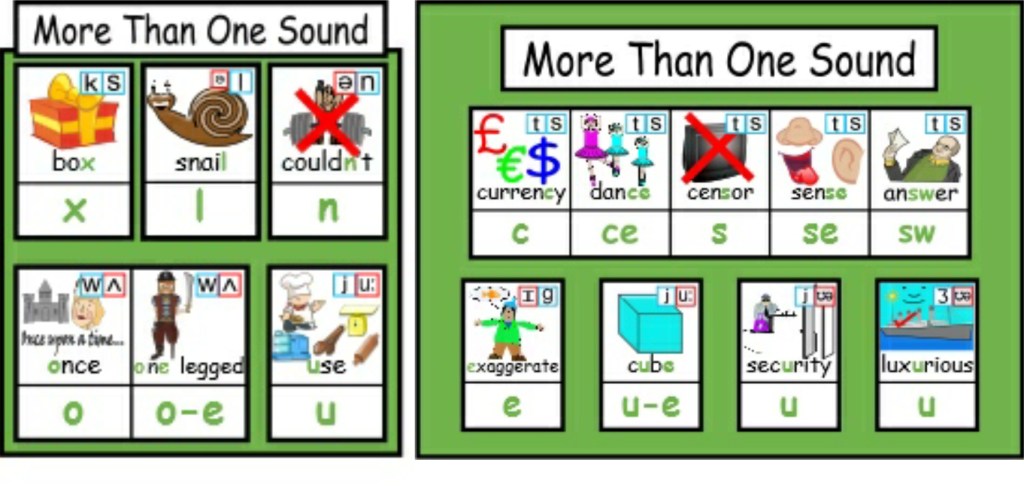
Some letter and sound associations just don’t follow the normal phonics rule of a single sound being associated to a letter or letter combination. A few letters represent two sounds, such as the letter ‘u’ which in the word ‘cupid’ represents the two sounds /y,(j)/ and /oo,(uː)/.

A more common one letter two sound relation is that of the letter ‘x’ representing the two sounds /k,(k)/ and /s,(s)/ as in thewords: six and box.

Here are some other examples of single letters and split digraphs making two sounds instead of the usual phonics rule of only making one sound:

Art Activities to support the Understanding of Pressure

Crayoning and printing activities are great ways for a child to experience and experiment with pressure and the amount needed to create different effects. These activities will also encourage and support a child in helping them to understand, and for you to model, the language associated with pressure and how the pressure used feels. By linking the words used to the feelings and the outcome of using the pressure they can start to understand what is needed when asked to press gently or to press harder. 

When supporting a child to understand what we want when we ask them to press harder, we need to model how our body reacts to make this happen. You may need to exaggerate the actions but as you do this you also need to talk about what your body is doing and how it feels. Then point out the effect that this has had on the crayoning for instance.

When we press hard, we tend to lean our body forward over the table slightly as this allows us to put more force down on to the paper through the crayon. We may feel our arm and hand tense and often the movements made are slower and in small strokes. If it is something we are not used to doing it can make our hand and fingers ache and it will feel like hard work. The crayon marks will be thick and dark.

When we want to be gentler with the crayon, so that the crayoning is lighter in texture and colour, we tend to sit back away from the table. This way the hand moves across the paper more easily and often the strokes are longer and quicker, which sometimes feels as if we have less control over the colouring. This is why young children tend to be a bit heavy handed initially with colouring because their fine motor control skills have not reached a point that enables them to have control.

There are many creative ideas to be found on the internet and in books published by companies such as Usborne.

This crayon technique can be used to create a vast range of pictures. Here are just a couple of ideas to get you started:

Spider Party Time:

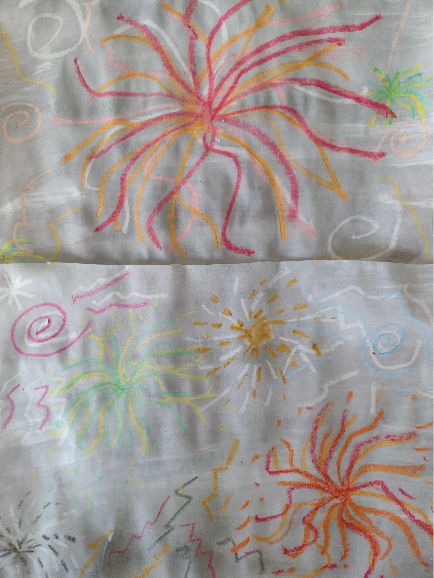
The same technique can also be used to create great firework pictures:

It is also worth remembering that drawing also helps to develop a range of different line formations, also needed for developing a good handwriting style.

Have FUN!

Leaf Investigation, Collecting and Printing

The weather this Autumn has been unseasonably warm, making it easier to go out and explore our local green and wild spaces.

It is amazing how much quality time you can spend with children just looking, talking about and collecting different leaves. The amount of language shared and new vocabulary introduced is invaluable.

It is suitable for all age groups and you don’t need a vast knowledge of plants and trees to make this fun; just remember not to take whole plants or leaves from endangered or dangerous plants and watch out for thorny, spikey and prickly leaves (if you are not sure leave the plant alone). Make sure when collecting leaves, you do not trespass on to other people’s property, or pick from their gardens!

The aim is to look at and talk about the different shapes, sizes, textures, colours and parts of the leaves. There are so many new words you can share. It is important to make sure the words used, especially if new, are age appropriate and help develop the child’s understanding:

  • Shape:  round, oval, heart shapes, oblong, fanned.
  • Size: small, big, tiny, large, bigger, biggest, smallest, smaller, huge.
  • Texture: rough, smooth, bumpy, fluffy, silky, soft, furry, shiny, glossy, feathery, spikey, prickly, thorny, scratchy, hard, stiff, ridged, flexible, bendy, veiny, ragged.
  • Colour: green, brown, tan, orange, yellow, silver, gold, bronze, purple, red.
  • Leaf: stalk (petiole), leaf base, mid-rib, veins, venules, leaf apex, margin (edge), leaf blade (lamina)

Leaf printing is fun and easy!

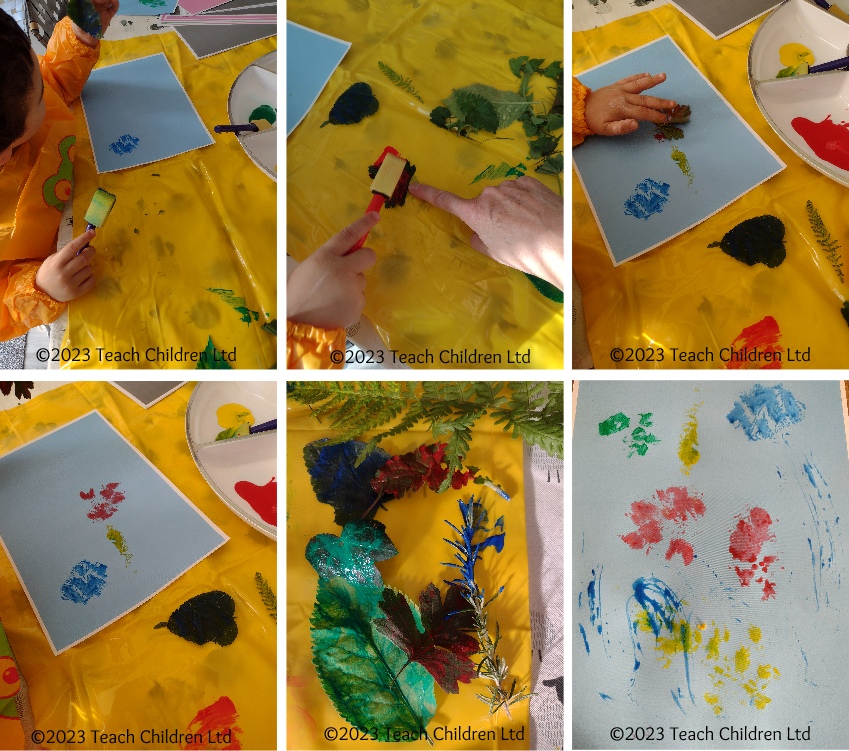
If you have been able to collect some leaves, they can be used to create lovely leaf print pictures and patterns.

The printing activity is a great way of helping children to understand, and for you to model, the language associated with pressure and to experience how the pressure used feels. By linking the words used to the feelings and the outcome of using the pressure they can start to understand what is needed when asked to press gently or harder.  

Materials:

Paper, child safe poster paints, brushes or sponges, leaves collected from walk

Method.

  • Protect the surface being used for painting and aprons for the children
  • Put paint in to trays/tubs
  • It can help to tape the corners of the paper down before you start printing to stop the paper lifting when you lift the painted leaf off.
  • Paint one side of the leaf. This is when we can talk about how much paint (not too thick) and how gentle we need to be. If the leaf tears, due to too much pressure being used, we can support by explaining and helping the child to try again; with maybe a different painting tool or using their finger to give a great sense of feeling.
  • Then pick up the leaf by the stalk, or at one end, and place it paint side down on the paper
  • Encourage the child to gently tap the leaf down on the paper. Help them, if necessary, by demonstrating.
  • Then using the stalk, or from one end, gently peal the leaf off the paper.

The important thing to remember is to chat about what you are doing and have fun!

What are Graphemes & Phonemes?

Last week we started to explain some of the technical language associated with the teaching of phonics, which some new parents may have little or no knowledge of. So, we thought it would be a good idea to continue with this over next couple of weeks to further support you in helping your child.

Graphemes are the alphabet letters, or letter combinations, that represent a single sound (phoneme) in a written word.

An example of a single letter (grapheme) representing a single sound (a phoneme) can be seen in the following words: sat, pat and dog.

Some sounds are represented by two letters and are called digraphs such as the ‘ch’ in ‘chip’ or ‘sh’ in ‘shop’ or ‘ea’ in ‘head’ and the ‘ai’ in ‘rain’.

Other sounds can be represented by 3 (trigraphs) or 4 (quadgraphs) letter combinations such as ‘igh’ in ‘light’ and ‘eigh’ in ‘eight’.

Phonemes are the smallest units of sound of a language; which we blend together to form words.

The English Language has 44 phonemes, 24 consonants and 20 vowels, represented by the unique symbols of the International Phonetic Alphabet (IPA).

The 44 phonemes of English (UK) are represented by more than 280 letter or letter combinations. Most letters therefore never make just one sound and that sound can be made by more than one letter or letter combination.

We have created over 1,000 videos that split words into their individual phonemes, showing which letters are making which sound in each word. You can access these videos in two ways:

  1. If you want to know which letter or letter combination represents a sound, click on the relevant phoneme button on the English Phoneme Chart;
  2. If you want to know what sound a letter or letter combination makes and see supporting animations, click on the relevant letter or letter combination on the Alphabet Keyboard.

We hope you find these useful.

What is the difference between #phonics and #phonemic awareness?

With the new school year well under way many new parents are being introduced to the world of phonics and all the technical language associated with it. So, we thought we would take this opportunity to demystify some of that technical language.

Phonics is the association of sounds (phonemes) to written alphabet letters (graphemes). For reading (decoding) the phonics coding system is used to convert the written word into sounds. For spelling (encoding) the same phonics coding system is used to covert sounds heard into letters to form written words.

Phonemic awareness is our ability to split words into their smallest sound units (individual phonemes) and to manipulate these sounds through segmentation, blending, substitution, re-ordering and deletion. This is based on what we hear and say, not the written word.

Good phonemic awareness is the vital skill required before phonics can be introduced successfully as a tool for learning to read and spell.

  • Segmentation – being able to split words into their individual sounds, for example ‘cat’ into c-a-t.
  • Blending – being able to blend individual sounds together to say a word, for example d-o-g into dog.
  • Substitution – being able to swap one sound for another in a word, for example swapping the /k,(k)/ sound in the word ‘cat’ with a /h,(h)/ sound to say the word ‘hat’.
  • Reordering – being able to swap the sounds around to create a new word, for example changing the order of the letters in the word ‘cat’ to form the new word ‘act’.
  • Deletion (omission) – being able to remove a sound from a word to create a new word, for example removing the /t,(t)/ sound from the word ‘cart’ to say the new word ‘car’.

These are developed further when phonics is introduced, sound to letter association.

Watch our ‘Single Word Reading’ animation to see these manipulation skills in action: https://www.teachphonics.co.uk/phonics-reading-lesson-plans.html

Why Placement (Preposition) and Directional Vocabulary is Important!

Teaching your child the vocabulary related to placement (preposition) and direction is import in supporting them to understand and follow instructions, as well as sharing information themselves, such as; ‘put your cup on the table’ or to say ‘teddy in car’.

We also use this placement (preposition) and directional language to explain how to draw shapes, patterns and write letters and numbers.

We have created three sets of picture cards and games to help you support your child in developing and using positional (preposition) and directional vocabulary.

You can find these free resources on our Phonics website by following this link: https://www.teachphonics.co.uk/phonics-resources.html

You can find these free resources in Parent section of the Teach Handwriting website by following this link: https://teachhandwriting.co.uk/more-activities.html

What are prepositions?

A word used with a noun or pronoun to show place, position, time or means, e.g. at home, in the hall, on Sunday, by train.” Definition from Oxford School Dictionary, third edition 2002.

Here are just some preposition and directional phrases you might like to use:

On the … On top of the … Above the … Over the…

Under the… Below the … Beneath … Underneath …

Behind the …

In front of the…

Next to …Beside the … On the right of … To the right of … On the right-hand side … On the left of … To the left of … On the left-hand side… Before the … After the …

In the…  Inside the …

Out of the … Outside of the …

Between the … In between the … In the middle … In the center …

Going up the ….  Going down the … Going towards the… Going away from …

Why Vocabulary Building with your Child is so Important! 

Building your child’s vocabulary is a vital pre-reading skill. This is because schools teach what is referred to as the ‘The Simple View of Reading’.

This means that a child decodes the words using their phonics skills and their own vocabulary knowledge to help them understand the text they are reading.

So, for a child to have good reading skills they need to be able to speedily decode unknown words and recognize familiar printed words. And, understand the meaning and grammatical structure of the spoken language and then use this knowledge to understand the printed text.

This means that a child:

• Who does not fully understand the meaning of all the words and/or the grammatical structure of the spoken language (age appropriate) will also be unable to fully understand the printed text; even if they decoded it correctly.

• Whose ability to understand the spoken word is poor will also be unable to understand the printed text; even if they have managed to decode a few words.

Helping your child build their vocabulary is also vital, if they are to continue to develop good communication skills. Talking, explaining, sharing and playing are all important in developing your child’s vocabulary, their understanding of the words meaning in the context of the conversation and the grammatical conventions of our spoken language.