A good word awareness (receptive and expressive language) is a key phonics skill.
Helping a child build their vocabulary (word awareness – receptive & expressive language) is vital if they are to continue to develop good communication skills. Talking, explaining, sharing and playing are all important as well as making sure that you pronounce words clearly and correctly for a child to hear. A child may not have developed all the skills needed to copy you accurately but they will store the sound pattern information for later use. The more they hear the correct sound patterns the sooner they will start to use them themselves.
Click the link for ‘Tips to Help Develop Word Awareness (Receptive & Expressive Language)’:
Developing #Listening & #Speaking Skills – Games to Encourage Talking and Language Knowledge
A few weeks ago, we explained the importance of developing your child’s word awareness skills here are some further games ideas to encourage them to use this new language.
Playing tapes or CDs of nursery rhymes and children’s song are good for helping your child to make the distinction between the music and words (language used) in them. It is a good idea to practise this skill when there are no other noise distractions.
When your child points at something tell them the name of the object, for example if they point at an apple, say “Apple”.
Try to use the new word in context regularly as repetition of the word will help your child to remember it and reinforce the meaning of the word.
Try playing some action songs and rhymes to help your child learn the actions for the rhyme, then let them have a go on their own. Watch them to see if they can do some of the actions at the right time in the song, to see if they are listening for the right cue words. If they are struggling, explain they have to wait for certain words and show them what to do and when to do it.
If they are trying to say a word, let them finish and then say it back to them clearly and correctly. Do not make them repeat it back to you, they may choose to do so but make it their choice.
Repeat and expand on what your child says, so if they say “Dog!” you may say “A big dog!” This also helps them to develop an understanding of sentence structure.
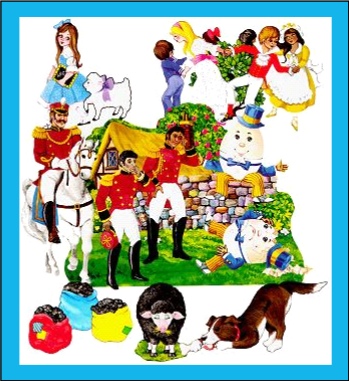
Finger rhymes, such as ‘Round and Round the Garden’, ‘Pat-a-cake’ and ‘Incy Wincey Spider’ and action songs encourage your child to interact with words, the sounds within them and the rhythms they create. ‘Row, Row Your Boat’ is a lovely whole body movement song that encourages a rhythmic whole-body motion, which babies and toddler enjoy (as well as the adults).
Sharing and talking about the books you are reading helps to build word knowledge, as you point to the pictures, picking out different objects. Reading out aloud helps to introduce your child to words that they may not experience in their everyday talk. This helps to expose them to new vocabulary and the sounds to be found in those words.
Introducing and playing sorting games helps your child to build a mental filing cabinet system of categories, this helps them to remember and learn the meaning of words. Start by introducing simple categories of everyday items like food or clothes as their vocabulary increases categories such as colour, size and texture become more appropriate.
Developing #Listening & #Speaking Skills – Games to Encourage Talking and Language Knowledge
Last week we explained the importance of developing your child’s word awareness skills here are some further games ideas to encourage them to use this new language.
Playing tapes or CDs of nursery rhymes and children’s song are good for helping your child to make the distinction between the music and words (language used) in them. It is a good idea to practise this skill when there are no other noise distractions.
When your child points at something tell them the name of the object, for example if they point at an apple, say “Apple”.
Try to use the new word in context regularly as repetition of the word will help your child to remember it and reinforce the meaning of the word.
Try playing some action songs and rhymes to help your child learn the actions for the rhyme, then let them have a go on their own. Watch them to see if they can do some of the actions at the right time in the song, to see if they are listening for the right cue words. If they are struggling, explain they have to wait for certain words and show them what to do and when to do it.
If they are trying to say a word, let them finish and then say it back to them clearly and correctly. Do not make them repeat it back to you, they may choose to do so but make it their choice.
Repeat and expand on what your child says, so if they say “Dog!” you may say “A big dog!” This also helps them to develop an understanding of sentence structure.
Finger rhymes, such as ‘Round and Round the Garden’, ‘Pat-a-cake’ and ‘Incy Wincey Spider’ and action songs encourage your child to interact with words, the sounds within them and the rhythms they create. ‘Row, Row Your Boat’ is a lovely whole body movement song that encourages a rhythmic whole-body motion, which babies and toddler enjoy (as well as the adults).
Sharing and talking about the books you are reading helps to build word knowledge, as you point to the pictures, picking out different objects. Reading out aloud helps to introduce your child to words that they may not experience in their everyday talk. This helps to expose them to new vocabulary and the sounds to be found in those words.
Introducing and playing sorting games helps your child to build a mental filing cabinet system of categories, this helps them to remember and learn the meaning of words. Start by introducing simple categories of everyday items like food or clothes as their vocabulary increases categories such as colour, size and texture become more appropriate.
Developing #Listening & #Speaking Skills – Developing Word Awareness
A good word awareness (receptive and expressive language) is a key phonics skill.
Helping a child build their vocabulary (word awareness – receptive & expressive language) is vital if they are to continue to develop good communication skills. Talking, explaining, sharing and playing are all important as well as making sure that you pronounce words clearly and correctly for a child to hear. A child may not have developed all the skills needed to copy you accurately but they will store the sound pattern information for later use. The more they hear the correct sound patterns the sooner they will start to use them themselves.
Click the link for ‘Tips to Help Develop Word Awareness (Receptive & Expressive Language)’:
Developing #Listening & Speaking Skills – Different Types of Talk
There are different types of talk:
Business Talk – this is when we use more everyday instructional and informational kinds of vocabulary and sentence structures.
Play Talk/Rich Talk – this is more conversational, informal and descriptive.
Small Talk – this is everyday chatter or conversations, informal and often less descriptive and more factual.
Parentese – this research has shown is how babies prefer you to talk to them using regular words (normal adult vocabulary) in a slightly higher pitched and more sing-song way.
It is important that a child is exposed to the different types of talk as it helps them to build their vocabulary (word awareness – receptive & expressive language) this is vital if they are to continue to develop good communication skills.
The Difference Between Receptive and Expressive Language
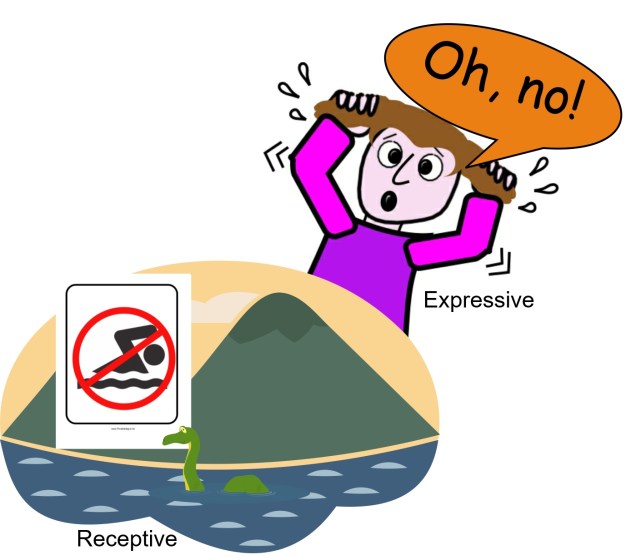
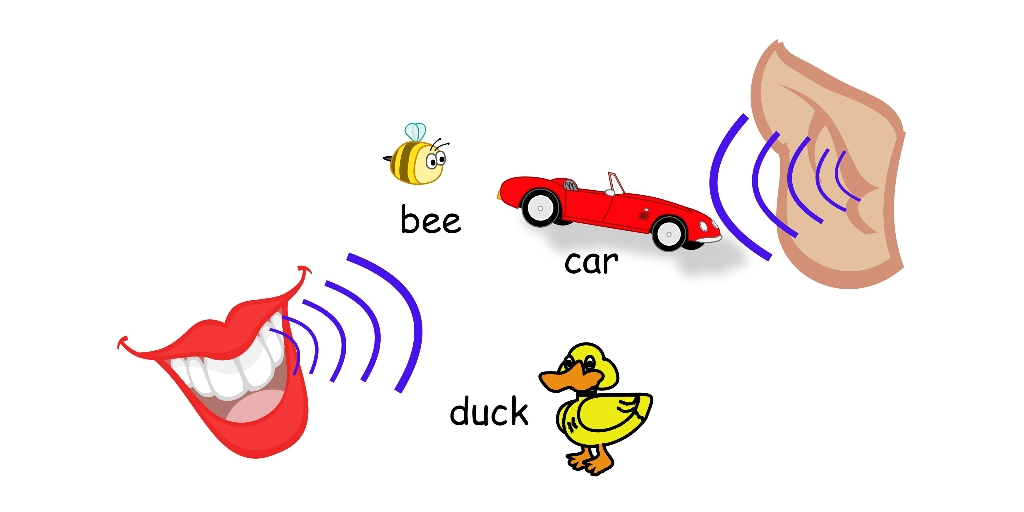
Receptive language is how we take in and understand language; it is what we hear, see and read. This also includes body language and environmental clues. All these elements help us to interpret a situation and give it its meaning, so that we can understand what is being communicated. We do not need to be able to produce language to receive and understand it, so infants and toddlers understand far more than they can express (expressive language).
Expressive language is our ability to put our thoughts, needs and wants into words and sentences in a way that makes sense and is grammatically correct. A baby’s expressive language to begin with is based on cries and gestures and then moves to sound making, gestures and body language signals. We use this expressive language when we speak and write. When babies and toddlers move to speaking words, they have a limited vocabulary which is why they can get frustrated when we do not understand them.
Good word awareness (receptive and expressive language) is a key pre- phonics skill.
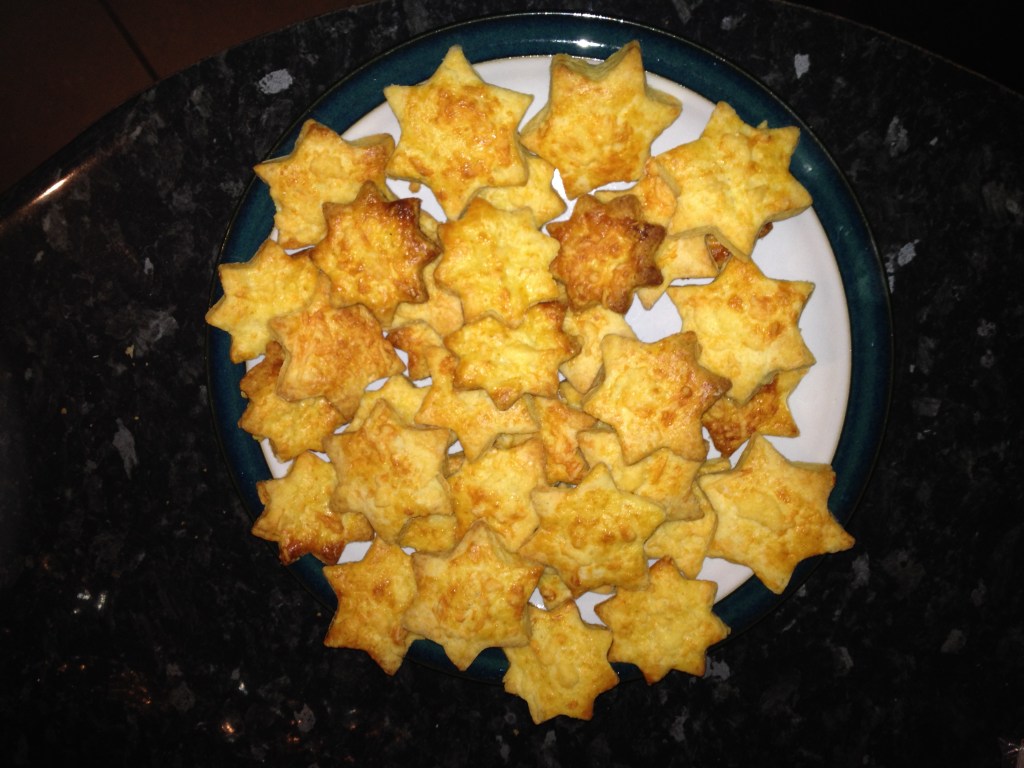
Cooking is a great, fun way introduce new vocabulary to your child especially those related to touch, texture, actions and instructional language. Words such as: cold, warm, soft, hard, smooth, rough, gritty, roll, squeeze, squash and pull, mix, stir, blend, whisk etc… So why not try our tasty savoury Christmas baking treat! Go to our ‘More fun handwriting activities’ page: https://teachhandwriting.co.uk/more-activities.html for the recipe and just download the pdf (https://teachhandwriting.co.uk/assets/pdfs/christmas-cooking-cheesy-stars.pdf )
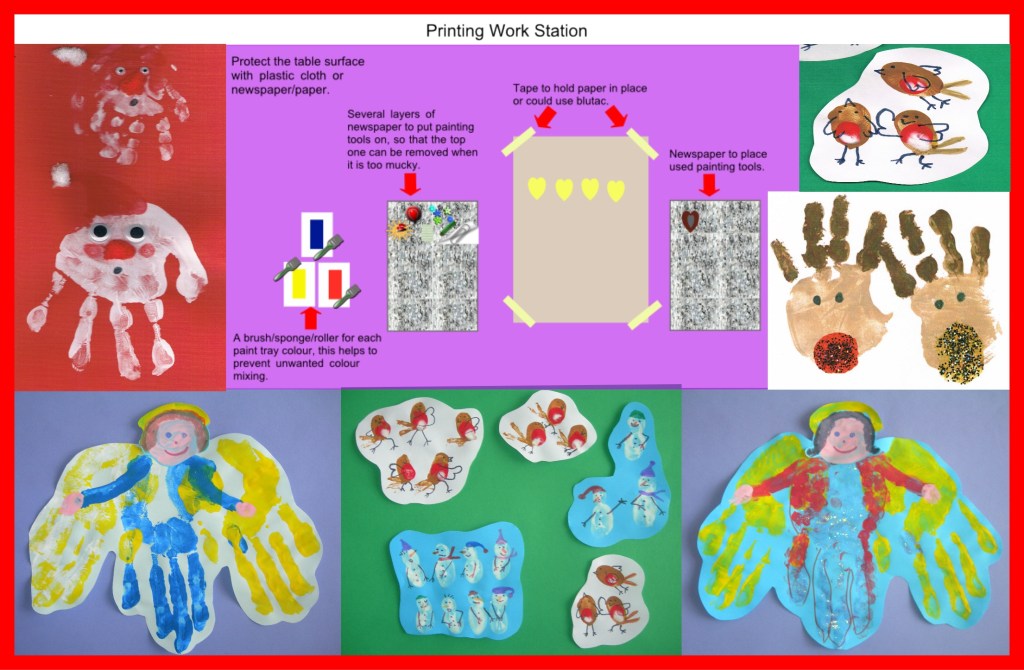
Hand and finger printing can be a fun way of getting your child used to touching, using different textured mediums and descriptive language associated with it. Such as: slimy, smooth, slippery, squidgy, wet, dry, squelch, ooze, press, push down, harder, softer, gentle, lift, light and dark. Printing activities also help your child to start to become aware of how to control the amount of pressure they use and to develop a vocabulary to describe the different range of pressures required. Learning to control the amount of pressure exerted and how it feels can be very difficult for some children and it takes time and a range of experiences to develop these skills. There are some fabulous printing ideas out on the internet; one of my favourite art resources is The Usborne Art Idea Books. Hand and finger printing can create some amazing artwork which can be used to make wonderful personalised Christmas cards, tags and paper. Who could not be charmed by these fun thumb and fingertip snowmen or robins or delighted by a hand print angel or Father Christmas? For other useful tips on printing and setting up a printing work station, check out our ‘More fun handwriting activities’ in our Parents section of our teachhandwriting.co.uk website under Learning Through Play: https://teachhandwriting.co.uk/more-activities.html
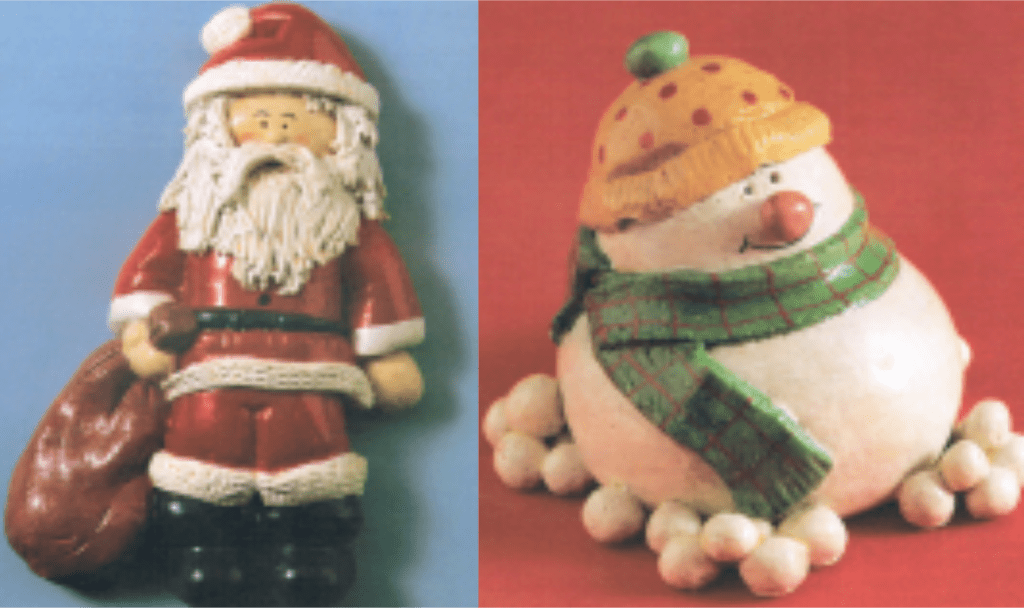
Learning new words (vocabulary) and their meaning begins with earlier play opportunities. Activities, that use play-dough type modelling materials, are great for developing the language knowledge relating to touch, texture, actions and instructional language. Words such as: cold, warm, soft, hard, smooth, rough, gritty, roll, squeeze, squash and pull. An added benefit to these types of activities is that they also support your child in developing their hand and finger strength, bilateral coordination, sensory perception and for learning and perfecting different grips for using tools. Salt Dough So, why not make some great salt dough Christmas gifts and tree decorations with your child. Not only will they melt the hearts of those who receive them but you will be developing your child’s fine motor skills (needed for good handwriting) while having fun; can’t be bad! For a salt dough recipe that I have found good to use with children go to our Go to our ‘More fun handwriting activities’ page: https://teachhandwriting.co.uk/more-activities.html and just download the ‘Salt Dough Modelling’ pdf (https://teachhandwriting.co.uk/assets/pdfs/Salt%20Dough%20Modelling.pdf )
Print Awareness to Develop Understanding of Reading Conventions
Print Awareness is knowing that print (words) has meaning, including noticing print around them in the environment (posters & street signs) and understanding how to handle the conventions for reading a book. We can often assume that all young children or pre-readers (as not always young children) will develop print awareness naturally. However, research suggests that 95% of their visual attention is directed towards pictures, which in themselves hold a great deal of meaning and often tell the story very effectively.
Pictures/ illustrations in story books and pure picture books are powerful ways to engage children and adults with books, storytelling and reading. This is not to say that pictures are any easy way to interpret a storyline as they can hold a great deal of meaning, from simple obvious interpretation to more sophisticated symbolic representation.
Young children and pre-readers need opportunities to explore print and be helped to understand that the written word (print) has meaning. Once they start to see print they will begin to notice it everywhere not just in books but on posters, food packets, menus and street signs.
Again we can often assume that a child or pre-reader knows how to handle a book, however this is not always the case and can be due to a lack of experience with books or different cultural reading conventions. So it is important to check and teach these reading conventions for reading English:
Front cover opens to the left and we read it from the front to the back.
Print on a page is read left to right.
Usually print is read from the top of the page across and down (this may differ slightly in some children’s books).
Supporting Print Awareness:
Through Play
Use takeaway menus or create your own as part of role playtime, they could have their own café serving up all sorts of interesting dishes for you. A blackboard can be very useful for this, allowing you or your child to write up their own menu for the day.
Travel brochures or leaflets from your local tourist information office are great for role play encouraging new language as well as a different way to explore print as they often have maps and timetables.
Use sticky labels or post it notes to label items or furniture as part of a ‘can you see or find’ game.
Through Drawing/Writing
Making lists of things to do or a shopping list. Their version of the list may be just squiggles and dots (so don’t rely on this for your shopping trip) but it is the beginning. I would keep the list and get them to tick off things done or items purchased as part of the experience so that it has a genuine purpose (children really like this).
For slightly older children making simple invitations and thank you cards can be fun. Try not to make the messages too long or to write too many as they will get bored and see it as a chore not as fun.
Making and drawing their own story book.
Through Songs/Nursery Rhymes
Showing the printed words to songs and rhymes.
Through Talk
Point out signs, logos and labels when out and about as well as at home.
A lot of print awareness skills are developed through the sharing of books and appropriate on-line material.
Through Book Sharing
What books to choose?
Books that have writing as part of the story;
Books that have writing as part of the picture;
Story books; all types;
Factual (non-fiction) books; all types;
Comics;
Children’s magazines and newspapers.
Book Sharing Tips
Remember babies will chew and bash the pages of the book as you read. This is normal and part of their learning experience so go with it.
Encourage and let your child turn the pages.
Point to the words of the title as you say them
Explain what the author and illustrator do as you say their names.
Point to words or repeated phrases as you say them or as your child says them. This will also help your child to develop the skill of reading from left to right and from the top of the page down (English).
Point to words of interest and explain how words have spaces between them and why.
To help your child understand how to handle a book use the word ‘front’ and ‘back’ of the book. If you are handed a book upside down or with the ‘back’ cover facing you explain that you have to turn it around or over so that you can read it.
Explain that page numbers help you to find things in the book as well as to help make sure you do not miss any part of the story.
Explain that content pages in story books show the chapters and in factual (non-fiction) they show different subject areas, as well as giving the page numbers on which to find them.
Explain how the index page in non-fiction books work.
Last week we explained the importance of developing your child’s word awareness skills here are some further games ideas to encourage them to use this new language.
Playing tapes or CDs of nursery rhymes and children’s song are good for helping your child to make the distinction between the music and words (language used) in them. It is a good idea to practise this skill when there are no other noise distractions.
When your child points at something tell them the name of the object, for example if they point at an apple, say “Apple”.
Try to use the new word in context regularly as repetition of the word will help your child to remember it and reinforce the meaning of the word.
Try playing some action songs and rhymes to help your child learn the actions for the rhyme, then let them have a go on their own. Watch them to see if they can do some of the actions at the right time in the song, to see if they are listening for the right cue words. If they are struggling, explain they have to wait for certain words and show them what to do and when to do it.
If they are trying to say a word, let them finish and then say it back to them clearly and correctly. Do not make them repeat it back to you, they may choose to do so but make it their choice.
Repeat and expand on what your child says, so if they say “Dog!” you may say “A big dog!” This also helps them to develop an understanding of sentence structure.
Finger rhymes, such as ‘Round and Round the Garden’, ‘Pat-a-cake’ and ‘Incy Wincey Spider’ and action songs encourage your child to interact with words, the sounds within them and the rhythms they create. ‘Row, Row Your Boat’ is a lovely whole body movement song that encourages a rhythmic whole-body motion, which babies and toddler enjoy (as well as the adults).
Sharing and talking about the books you are reading helps to build word knowledge, as you point to the pictures, picking out different objects. Reading out aloud helps to introduce your child to words that they may not experience in their everyday talk. This helps to expose them to new vocabulary and the sounds to be found in those words.
Introducing and playing sorting games helps your child to build a mental filing cabinet system of categories, this helps them to remember and learn the meaning of words. Start by introducing simple categories of everyday items like food or clothes as their vocabulary increases categories such as colour, size and texture become more appropriate.


 teachphonics.blog