Reading with Your Child Can Be Fun!

The importance of reading to, and with, your child from a very early age can’t be over emphasized. The more your child is exposed to words and enjoys the reading experience the quicker they will learn to read for themselves.

Reading with your child enables you to introduce them to new words and language structures which they will not come across in their everyday interactions. You can explain these words, through reading with your child, and help them to develop an understanding of their meaning. If a child likes the sound and rhythm of these new words or language structures they will, over time, start to use them in conversations with others and during imaginative play.

Reading to, and with, your child is such an important activity, however knowing how to keep it fun and to get the most out of the experiences is not always clear. This is why we are re-running our popular six-week series on ‘Developing and Supporting Your Child’s Reading Journey’

Each week we will look at a different reading skill element, giving example games and activities you can use to support and develop your child through:

  • Play
  • Drawing/Writing
  • Book Sharing
  • Talk & Song

‘Developing and Supporting Your Child’s Reading Journey’ Series:

  • Week 1. How to develop a child’s interest in books and reading.
  • Week 2. Phonological awareness skills required for reading.
  • Week 3. Vocabulary development for comprehension.
  • Week 4. Print awareness to develop understanding of reading conventions.
  • Week 5. Narrative skills to support the understanding of different writing styles.
  • Week 6. Letter knowledge.

Why Poor Eye Tracking and Spatial Awareness Skills Affect #Reading

Eye tracking is the ability to control and coordinate the fine eye movements that allows us to:

  • Read a line of print by moving our eyes from left to right, without moving the head.
  • To focus and move the eyes to follow an object, without moving the head, in all directions.
  • To track/follow objects near and far.
  • To focus on one object without moving the eyes.

Eye tracking difficulties can have a dramatic effect on a child’s ability to read fluently and with ease due to the fact that they do not see the print in the same way as people with good eye tracking skills.

Typical problems due to poor eye tracking skills:

  • They lose their place, skip words or transpose them.
  • They use a finger to help keep their place.
  • Some will turn their head sideways to read or write.
  • Others may cover one eye to read.
  • They hold their head close to the table when looking at things, reading, writing and drawing.

Activities that help to build these strengths and skills are: Swing Ball, target games and catching games.

Game idea: Goal post skittles

You need: Posts/marker, large plastic drink bottles/skittles and a range of ball sizes.

How to do it:

Place the posts about 2 metres away from the start position and about half a metre apart. Place the skittles about half a metre behind the posts but directly between them. The child starts by rolling a large ball through the posts to knock the skittles over. Before they roll the ball explain to get a maximum score, they need to knock all the skittles over in one roll and that the best way to do this is to look directly ahead through the posts at the skittles, NOT at the ball or their hand.

It may take a little practise, as they improve, they can use a different size ball or move the skittles so that they form different patterns which means they have to be more accurate with the roll.

This game can also be used as a foot and eye activity, the same rules apply, they must look to where they want the ball to end up not at their feet or the ball, tricky!

Good spatial awareness enables us to be aware of the space around us and our position in that space, as well as the relationship between ourselves and objects. This also includes our ability to see and understand the spacing of text and pictures on a page, to distinguish between paragraphs, sentences, words and individual letters.

Spatial awareness difficulties can have a dramatic effect on a child’s ability to read fluently and with ease due to the fact that they do not see the print in the same way as people with good spatial awareness skills.

Typical problems due to poor spatial awareness skills:

  • They lose their place, skip lines and words or transpose them.
  • They use a finger to help keep their place.
  • Comprehension can be difficult as text is mis-read.

Games idea: Pattern making

You need: Beads, building blocks, Lego or shapes.

How to do it:

Talk through the process of making the same pattern as shown on a card or already produced; for instance, the red square goes on the right of the blue square and the yellow square is below the blue square. Ask the child to verbalise what they see and are doing to recreate the pattern.

Patterns can be created and copied with all sorts of items – beads, building blocks, Lego and shapes.

As skill levels improve tessellation (a pattern of shapes that fit perfectly together) activities and square or patterned paper for colouring and creating their own pattern designs are enjoyable.

The Impact of Poor Visual Memory Skills on #Reading

Good visual memory skills enable us to recall information that has been previously visually presented.

Visual memory difficulties can hinder a child’s ability to read fluently and with ease due to the fact that they cannot always remember what the word looks like, even though it may be a very common sight word which has been taught to them many times before.

 Typical problems due to poor visual memory skills:

  • Difficulty in recognising some letters and numbers, especially those they may not use very often, for example some of the capital letters.
  • Have problems learning sight words, or remembering what a word is, from one page to another.
  • Reading is slow and stilted, making comprehension difficult.

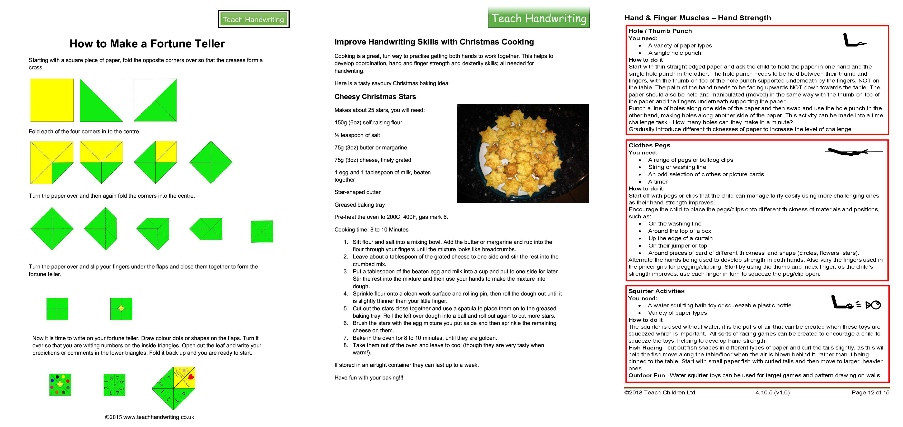
For games and activities ideas to support and develop this skill use this links: https://teachhandwriting.co.uk/handwriting-motor-skills.html

Homonyms & Homophones!

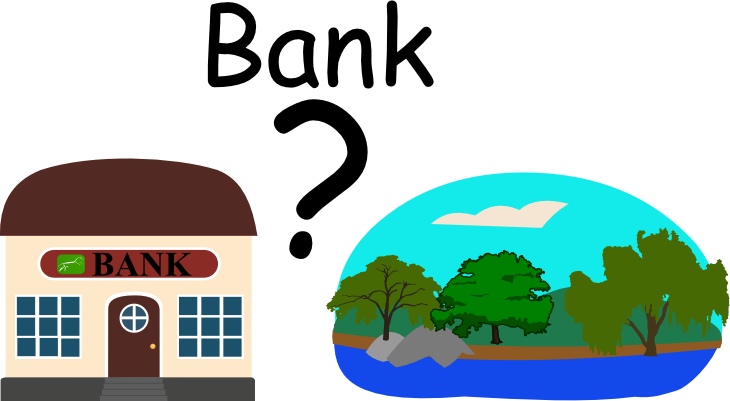
Homonyms and homophones need to be heard or read within a specific context if we are to understand what the word means, for instance, if I say the word ‘bank’ and do not give any other verbal or written clues what do I mean?

The word on its own could mean a couple of things the bank of a river or sand bank or a bank where I can collect money. If it is not put into a context its meaning is unclear. The word ‘bank’ is classed as a homonym.

Homonyms are words which are pronounced and spelt the same; therefore, their meaning can only be truly understood when the context in which the word is being used is made clear. For instance, the word ‘bark’ can be used to mean the bark on a tree or the noise a dog makes.

Homophones are words which are pronounced (sound) the same but have a different meaning and are spelt differently such as, ‘their’ and ‘there’, ‘one’ and ‘won’ or ‘two’, ‘to’ and ‘too’.

To view more examples, scroll down the page of this link:  http://bit.ly/2BcUa8N

Letter & Sound Relationships That Break the #Phonics Rules

Back in September we explained that Phonics is very useful as a decoding tool used for developing reading skills and an encoding tool for spelling. It is the simple process of linking sounds to letters, its complexity comes from how many sounds (phonemes) to letter combinations (graphemes) there are.

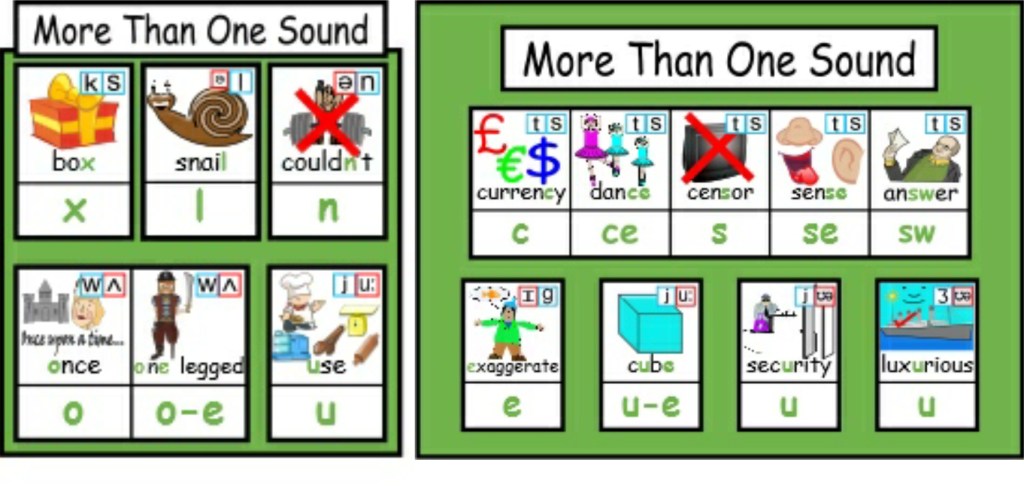
Some letter and sound associations just don’t follow the normal phonics rule of a single sound being associated to a letter or letter combination. A few letters represent two sounds, such as the letter ‘u’ which in the word ‘cupid’ represents the two sounds /y,(j)/ and /oo,(uː)/.

A more common one letter two sound relation is that of the letter ‘x’ representing the two sounds /k,(k)/ and /s,(s)/ as in the words: six and box.

Here are some other examples of single letters and split digraphs making two sounds instead of the usual phonics rule of only making one sound:

What is #phonics and #phonemic awareness?

With the new school year well under way many new parents are being introduced to the world of phonics and all the technical language associated with it. So, we thought we would take this opportunity to demystify some of that technical language.

Phonics is the association of sounds (phonemes) to written alphabet letters (graphemes). For reading (decoding) the phonics coding system is used to convert the written word into sounds. For spelling (encoding) the same phonics coding system is used to covert sounds heard into letters to form written words.

Phonemic awareness is our ability to split words into their smallest sound units (individual phonemes) and to manipulate these sounds through segmentation, blending, substitution, re-ordering and deletion. This is based on what we hear and say, not the written word.

Good phonemic awareness is the vital skill required before phonics can be introduced successfully as a tool for learning to read and spell.

  • Segmentation – being able to split words into their individual sounds, for example ‘cat’ into c-a-t.
  • Blending – being able to blend individual sounds together to say a word, for example d-o-g into dog.
  • Substitution – being able to swap one sound for another in a word, for example swapping the /k,(k)/ sound in the word ‘cat’ with a /h,(h)/ sound to say the word ‘hat’.
  • Reordering – being able to swap the sounds around to create a new word, for example changing the order of the letters in the word ‘cat’ to form the new word ‘act’.
  • Deletion (omission) – being able to remove a sound from a word to create a new word, for example removing the /t,(t)/ sound from the word ‘cart’ to say the new word ‘car’.

These are developed further when phonics is introduced, sound to letter association.

Watch our ‘Single Word Reading’ animation to see these manipulation skills in action: bit.ly/20JAHSa

The Importance of Using Letter Names for Developing Handwriting, Phonics and Reading Skills

Here at Teach Children we have always promoted the importance and power of teaching the correct letter names to begin with; through our Teach Handwriting website, Schemes and Teach Phonics website. Unfortunately, some schools, teacher and parents still seem to be concerned that this is not consistent with the teaching of phonics, which is just not correct.

A myth which became popular, in the early years of introducing synthetic phonics into schools, is that children should not be taught the alphabet letter names as they find it too confusing. However, in recent years this has started to change as phonics schemes have adjusted some of their approaches to teaching phonics to include the use of letter names.

Learning the unique letter names of the alphabet is a pre-phonics skill; as well as an early learning goal. It has to be remembered that a letter is a shape which only represents a sound when it is placed within a word or sentence (has a context). Also, a letter or combination of letters can represent more than one sound and so the only unique way of identifying alphabet letters when we talk about them is to use their names.

It is important to remember that just because a child can correctly recite the ‘Alphabet’ song it does not mean they know the letters of the alphabet. It is surprising how many children can do this but when shown letters from the alphabet cannot name them at all. They may be able to tell you the sound the letter makes but have no idea of the letters name.

Learning the correct letter names helps to reinforce that when talking about the letter ‘a’ (ay) for example it has a set shape regardless of the sound that it will be representing in the word. This further supports children’s handwriting development as the communication of your requirements is unambiguous.

Teaching the correct letter names is important when supporting handwriting as this can in turn affect a child’s phonics understanding later on. For example, it can seem very easy when explaining to a child which letter to write when they ask which one is making a ‘kuh’ sound in a word such as cat to say a ‘curly kuh’. There is no such letter in the alphabet called ‘curly kuh’ it is the letter ‘c’ (cee). By adding the ‘kuh’ sound to the letter it reinforces incorrect phonics knowledge. The letter ‘c’ does not make a ‘kuh’ sound in words such as: city, circle, cycle and centre.

Some children will then only ever refer to the letter ‘c’ as ‘curly kuh’ and the letter ‘k’ as’ kicking kuh’. As I say these are not letter names of the alphabet and also devalue the power of phonics at the same time.

How can the education establishment get hot under the collar about not using the correct terminology in the teaching of English in schools such as: phonemes, graphemes, digraphs, modal verbs etc… yet still refer to the letter’s ‘c’ and ‘k’ as ‘curly or kicking kuh’!

Phonics is a powerful decoding and encoding tool. However, so is the alphabet letter naming system. Both need to working side by side to support our children, especially in those early years of their educational journey.

The English phonic system is very complex but this is why our language is so rich. Young children need to use letter names as an additional tool, as it takes many years for them to be introduced to the more complex phonics coding system.

Alphabet Name animation (scroll to the bottom of the page): https://www.teachphonics.co.uk/phonics-graphemes.html

Homonyms & Homophones

Homonyms and homophones need to be heard or read within a specific context if we are to understand what the word means, for instance, if I say the word ‘bank’ and do not give any other verbal or written clues what do I mean?

The word on its own could mean a couple of things the bank of a river or sand bank or a bank where I can collect money. If it is not put into a context its meaning is unclear. The word ‘bank’ is classed as a homonym.

Homonyms are words which are pronounced and spelt the same; therefore, their meaning can only be truly understood when the context in which the word is being used is made clear. For instance, the word ‘bark’ can be used to mean the bark on a tree or the noise a dog makes.

Homophones are words which are pronounced (sound) the same but have a different meaning and are spelt differently such as, ‘their’ and ‘there’, ‘one’ and ‘won’ or ‘two’, ‘to’ and ‘too’.

To view more examples, scroll down the page of this link:  http://bit.ly/2BcUa8N

Developing and Supporting Your Child’s Reading Journey – Week 6

Letter Knowledge

Letter knowledge is understanding;

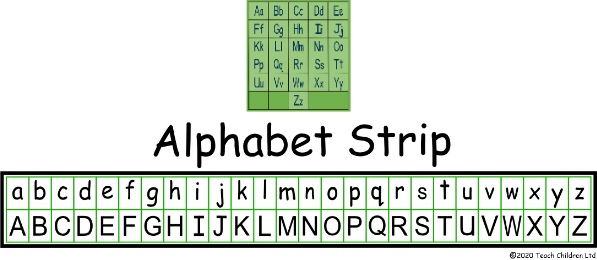
  • That the same letter can look different, for example, a lower-case letter ‘b’ looks different from a capital letter ‘B’. Letters will also look different depending on which font type is being used or if it is handwritten, for example, an Arial font letter ‘g’ looks different from a Calibri font ‘g’.
  • That letters have names and the same name is used for that letter even when they look different, so the lower-case letter ‘a’ and its capital letter form ‘A’ are both called ‘ay’.
  • That letters (graphemes) are used to represent sounds (phonemes) in words. Teaching the unique letter names of the alphabet is an important pre-phonics skill. A letter or combination of letters can represent more than one sound and so the only way of identifying alphabet letters when we talk about them is to use their unique names.

Developing Letter Knowledge:

Through Play:

  • Sorting and Matching Games- use plastic or wooden letters, alphabet letter flash cards; can they group all the lower-case letters together, or all the capital letters or all the different letter ‘ay’s’ together.
  • Kim’s Games – use plastic or wooden letters, alphabet letter flash cards. Using a few letters at a time, place 5 to 10 on a tray and let your child look at them and talk through which letters are there. Cover with a tea towel and ask your child to look away, then remove 1 or 2 of the letters. Then ask your child to look back and remove the tea towel. Can they spot which letters are missing.
  • Detective Games– focus on identifying individual letters of the alphabet and naming them, this can be played at home or when out and about.
  • Leap Frog – use the letters of the alphabet on home-made paper lily pads. Use the letter names to identify the target lily pad for your child to either jump onto or to throw a bean bag/soft toy on to.
  • Skittles and Throwing Games – use letters of the alphabet on the targets and use the letter names as a way of identifying which of the targets your child is aiming for.

Through Drawing/Writing:

  • Making lists of things to do or a shopping list. Their version of the list may be just squiggles and dots (so don’t rely on this for your shopping trip) but it is the beginning. I would keep the list and get them to tick off things done or items purchased as part of the experience so that it has a genuine purpose (children really like this).
  • Making and drawing their own story book.
  • Learning to write letters correctly (see our Teach Handwriting Website: http://bit.ly/2F9P7cI)

Through Songs/Nursery Rhymes:

  • Singing Alphabet Songs, try singing it to different tunes.
  • Make up Your Own Rap – point to the letters as the rap is said.

Through Talk:

  • Talk about letters as being shapes made up of straight, curves and diagonal lines.
  • Look at the letters in your child’s name, talk about the fact that the first letter in their name is always a capital letter and that normally the other letters are lower-case letters.
  • Point out, especially for slightly older children, that lower-case letters are about half the size of the capital letters.
  • Compare letters looking at what is the same and different about them.
  • When taking about letters use the letter name as well as the sound it is making in the word, remember a letter is often used to represent more than one sound. The letter ‘a’ can be used to represent different sounds in the following words: ant, apron, was, and any (just 4 of the eight sounds it is used to represent).

Through Book Sharing:

What books to choose?

  • Books with shapes
  • Books where you have to find things (like I spy)
  • Alphabet books
  • Books which use different font styles in the pictures and text.

Book Sharing Tips:

  • Alphabet books do not need to be read from cover to cover. Let your child choose which letters they want to look at.
  • Trace the letters with your finger or let your child trace it (make sure you trace the letter using the correct formation orientation, encourage your child to do the same).
  • Talk about the pictures in alphabet books before focusing on the letter, its name and the sound it can make.
  • Show your child the first letter in their name and then look for that letter in the book.
  • Show and talk about how some letters are in their capital form and others in their lower-case form. Can they find other examples of the letters?
  • Choose two letters to talk about: How do they look alike? How do they look different? What shapes/line styles are they made up of?

Developing and Supporting Your Child’s Reading Journey – Week 5

Narrative Skills to Support the Understanding of Different Writing Styles

Narrative skills are based on understanding and using expressive language. This is the kind of language we use to describe things and feelings, to tell events in order and to recall and tell stories.

Children develop their narrative skills over time taking prior knowledge, what they already know, and building on this through:

  • Conceptual thinking; the development of concepts such as shape, colour, the passing of time; as well as developing and using strategies for problem solving and prediction (thinking skills).
  • Content knowledge; what they already know about the topic/situation; the ability to relate situations to their own experiences, the ability to sequence events in a logical order as well as to sequence processes such as getting dressed or making things.
  • Understanding that different genres are set out in different ways, story structure such as that used in fairy tales is different from that used for poetry or informational text (explaining things) or instructional text (how to do something) such as a recipe.

Developing Narrative Skills:

Through Play:

  • Role play different situations; doctor’s, school, office, shops etc.
  • Dramatic and imaginative play; acting out stories together using props and/or puppets and toys.
  • Matching and sorting games to develop understanding of concepts such as colour, shape and size.
  • Puzzles for developing problem solving skills.

Through Drawing/Writing:

  • Ask your child to draw pictures for a story and you write the words
  • Ask your child to draw or write (make mind maps) of the things they already know about something.
  • Ask them to draw different shapes in different sizes and to use specific colours for them.
  • With older children make and draw charts and graphs for classifying objects.

Through Songs/Nursery Rhymes:

Children’s songs and nursery rhymes cover a wide range of concepts:

  • Everyday sequences such as in the nursery rhyme ‘Here we go Round the Mulberry Bush’ which uses the phrase ‘This is the way we…’ to order the event of getting up in the morning.
  • Introduce concepts such as size, colours, shapes and numbers such as “One, two, three, four, five once I caught a fish alive…”
  • Tell stories for example ‘Baa Baa Black Sheep’ or ‘We’re going on a Bear Hunt’ by Michael Rosen & Helen Oxenbury.

Through Talk:

  • As your child explores objects, describe them and their uses; compare and contrast objects.
  • Remember to give your child time to work things out, or to solve a problem. It can take a child several minutes sometimes to process what they have heard and to formulate a response.
  • Talk about concepts such as shape, colour, size, texture.
  • Explain and use language that explains where things are in relation to each other (spatial awareness) such as above, below, on top of, next to, first, etc.
  • Help your child to develop an awareness of time, not just the here and now but what happened in the past and might happen in the future.
  • Put processes into sequence using things like recipes, making things or how plants grow, the passing of time, weeks, months, seasons etc.
  • Encourage your child to recount their day or to re-tell a story.
  • Encourage your child to tell you what they know about something as well as sharing what you know.
  • When sharing information explain how you learned about it; read it in a book or on the internet or heard it on the TV or radio.
  • Encourage your child to guess and predict what might happen.
  • Encourage your child to solve problems or resolve conflicts; if you do it for them explain what you did and why.
  • Embed conversation into everyday routines such as getting dressed, meal times and bed time.

Through Book Sharing:

What books to choose?

  • Books that tell a cumulative tale
  • Books with a natural sequence
  • Books with a repeated phrase or repetition as part of the story
  • Poetry books
  • Non-fiction books

Book Sharing Tips

  • Read books on topics that interest your child.
  • Ask your child to tell you what they know about the book you are reading.
  • Encourage your child to join in while sharing a book, saying repeated phrases for example.
  • Read with expression.
  • Encourage your child to re-tell the story.
  • Re-read books so that your child can become familiar with the story, making it easier to re-tell the story.
  • Relate what is happening in the story to your own child’s experiences or ask then to tell you how it might relate to them.
  • Use props to tell the story to help your child remember the sequence of the story. They may find using props a great way to re-tell you the story.
  • Encourage your child to talk about the pictures. Take their lead and try to ask open-ended question (those that cannot be answered by yes or no).
  • Talk about the books you like and what you like about them.
  • If your child loses interest, try again another time.
  • Talk about the pictures in a book or sections of a story and let your child tell you their thoughts about what is happening and might happen next.