Letter & Sound Relationships That Break the #Phonics Rules

Back in September we explained that Phonics is very useful as a decoding tool used for developing reading skills and an encoding tool for spelling. It is the simple process of linking sounds to letters, its complexity comes from how many sounds (phonemes) to letter combinations (graphemes) there are.

Some letter and sound associations just don’t follow the normal phonics rule of a single sound being associated to a letter or letter combination. A few letters represent two sounds, such as the letter ‘u’ which in the word ‘cupid’ represents the two sounds /y,(j)/ and /oo,(uː)/.

A more common one letter two sound relation is that of the letter ‘x’ representing the two sounds /k,(k)/ and /s,(s)/ as in thewords: six and box.

Here are some other examples of single letters and split digraphs making two sounds instead of the usual phonics rule of only making one sound:

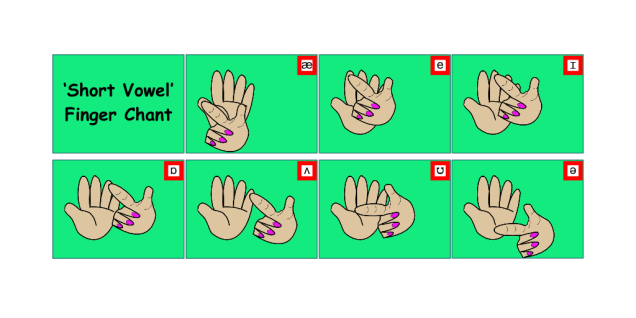
How Many ‘Short Vowel’ Sounds Do You Know?

There are 7 ‘short’ vowel sounds, although children are usually only introduced to the 5 which are most commonly heard in simple CVC (consonant, vowel, consonant) words:

  • /a,(æ)/    cat, ant
  • /e,(e)/     peg, egg
  • /i,(I)/       pin, pig
  • /o,(ɒ)/     hot, orange
  •  /u,(ʌ)/     hut, bus  

The other two ‘short’ vowel sounds are:

  • /oo(u),(Ʊ)/                bull or could
  • /uh,(ǝ or schwa)/  zebra, doctor, corner

Our ‘Short Vowel’ Finger Chant can help you, and your child, to learn and remember the 7 ‘short vowel’ sounds: https://www.teachphonics.co.uk/phonics-resources.html

What is the difference between #phonics and #phonemic awareness?

With the new school year well under way many new parents are being introduced to the world of phonics and all the technical language associated with it. So, we thought we would take this opportunity to demystify some of that technical language.

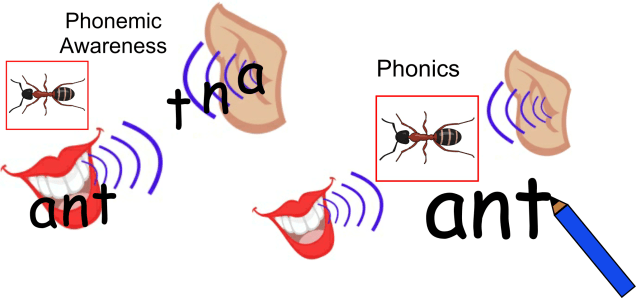
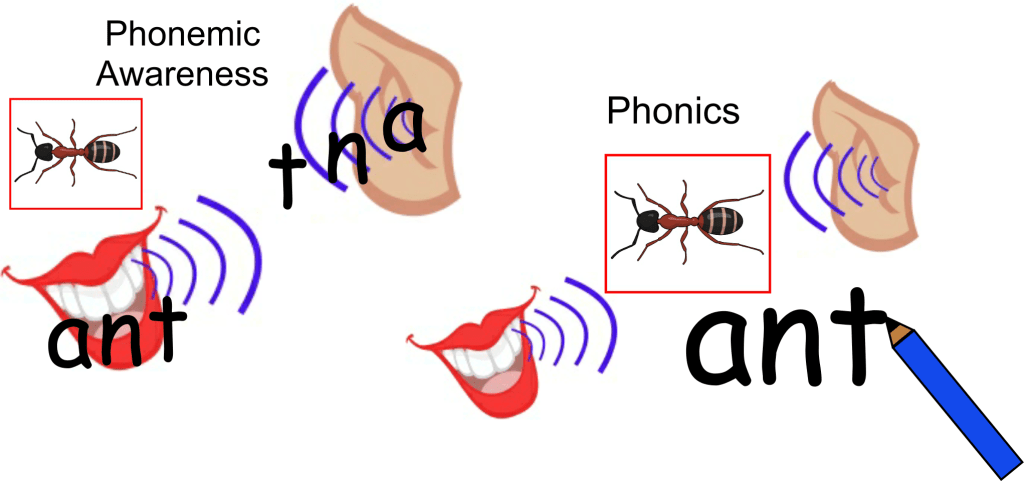
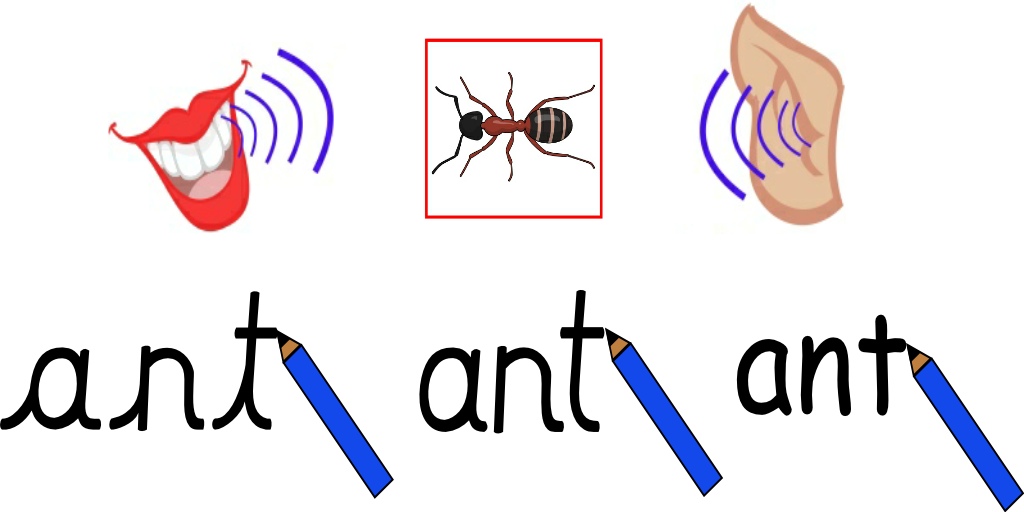
Phonics is the association of sounds (phonemes) to written alphabet letters (graphemes). For reading (decoding) the phonics coding system is used to convert the written word into sounds. For spelling (encoding) the same phonics coding system is used to covert sounds heard into letters to form written words.

Phonemic awareness is our ability to split words into their smallest sound units (individual phonemes) and to manipulate these sounds through segmentation, blending, substitution, re-ordering and deletion. This is based on what we hear and say, not the written word.

Good phonemic awareness is the vital skill required before phonics can be introduced successfully as a tool for learning to read and spell.

  • Segmentation – being able to split words into their individual sounds, for example ‘cat’ into c-a-t.
  • Blending – being able to blend individual sounds together to say a word, for example d-o-g into dog.
  • Substitution – being able to swap one sound for another in a word, for example swapping the /k,(k)/ sound in the word ‘cat’ with a /h,(h)/ sound to say the word ‘hat’.
  • Reordering – being able to swap the sounds around to create a new word, for example changing the order of the letters in the word ‘cat’ to form the new word ‘act’.
  • Deletion (omission) – being able to remove a sound from a word to create a new word, for example removing the /t,(t)/ sound from the word ‘cart’ to say the new word ‘car’.

These are developed further when phonics is introduced, sound to letter association.

Watch our ‘Single Word Reading’ animation to see these manipulation skills in action: https://www.teachphonics.co.uk/phonics-reading-lesson-plans.html

Back to School – Ways to Support Your Child’s Phonics Knowledge

After such a long break from school it is good to take some time to check your child has not slipped back.

Playing some simple letter name and sound games can really help get your child (and you) back into school mode.

Some simple game ideas:

  • You can use words in books, cards, on labels or signs when out and about.  Ask your child to point to a particular letter in the word using the letter name. Then ask your child to say the word, or you can say it. Then ask them to tell you what sound the letter is making in that word.
  • Pick a card at random, using lower-case and capital letter flash cards (you can make your own); show your child and ask them to tell you the name of the letter on the card, and to give you a sound the letter makes. Ask older children to give you the other sounds the letter can make. For older children you can also use cards that have common digraphs (two letters representing one sound) and trigraphs (three letters representing one sound) on.
  • Play Pelmanism (Memory Game). How to Play:
    • You will need two sets of flash cards. The cards are thoroughly mixed and spread face down on the table or floor. They can be arranged in a regular pattern or randomly, but they must not overlap.
    • One player turns over a card, leaving it in the same place, they say what it is (letter name and/or sound) and then turn over another saying what it is. If the two cards match then the player keeps them and has another go. If the cards do not match then the cards are turned back over in the same location as before and it is the next players turn.
    • The game is finished when all the cards have been matched and the winner is the one with the most pairs.

If you are not sure of all the sounds a letter, or combination of letters, can represent then use our Alphabet Keyboard to help you find the sounds (phonemes):  https://www.teachphonics.co.uk/phonics-alphabet-chart.html

How to Develop a Child’s Interest in Books and Reading

Research suggests that children who enjoy books are more likely to want to learn to read and will keep trying even when they find it hard. Therefore, it is important to keep their interaction around books a positive one.

Through Play

Books come in all shapes and sizes and are made from various materials.

  • Have a few bath books. even if most of the time your baby or toddler just chews on them, they will be handling a book and possibly turning the pages. Giving you the opportunity to talk about the pictures with them.
  • Try to have a range of cloth, hard books and suitable picture books around the house and in your child’s play area so they can pick them up at any time. This way they can explore them for themselves, (even if it is to give them a quick chew on) not as an adult sharing activity.

Through Drawing & Writing

Drawing and making your own simple story book can be a great way of getting your child interested in books and reading. Children love to hear stories about them. Simple homemade books about them can be a great way of introducing children to books and reading. This can be a very effective approach to encourage reluctant readers.

  • Draw simple pictures with, or for, your child and talk through what you are drawing, for example; a picture of a house with matchstick people. The pictures could be telling the events of the day for example going to the park or walking the dog.
  • If drawing is not your thing (like me) use fuzzy felt instead to make a picture to share the story of their day.

Through Songs and Nursery Rhymes

Children’s songs and nursery rhymes cover a wide range of concepts such as going through every day sequences in the nursery rhyme ‘Here we go Round the Mulberry Bush’ which uses the phrase ‘This is the way we…’ to order the event of getting up in the morning. Some introduce concept such as size, numbers, colours and shapes. While others tell stories for example ‘Baa Baa Black Sheep’ or ‘We’re going on a Bear Hunt’ by Michael Rosen & Helen Oxenbury.

Sharing books that enable you and your child to sing along (retell) their favourite songs and nursery rhymes means that the child knows what to expect and that they are going to have fun and enjoy the experience. Over time you will then be able to introduce books with new songs and nursery rhymes, building on your child’s positive experience of other book sharing sessions with you. Remember you may have to revert back to the old favourite time and time again, but stick with it.

Through Book Sharing

What books should you choose?

  • Pick children’s books you enjoy
  • Pick books your child enjoys
  • Give your child time to choose and look at books (your local library is a great place for this).
  • Follow your child’s interests
  • Use ‘true’ books and stories (not those specifically written for developing phonics knowledge or rigidly structured reading scheme books for teaching and learning to read, these will come from school and serve a different purpose).

Book Sharing Tips

  • Remember that a child’s age personality, mood and stage of development will affect how they interact with the book.
  • Keep the interaction around the book positive and fun, if you are not enjoying it your child will pick up on this.
  • Keep your child involved, remember you do not have to read the book word for word, it is the positive sharing experience that is important.
  • If your child does not seem interested in reading or sharing books, start slowly by sharing /reading one or two pages at a time. Keep the interaction positive and over time their interest will grow.
  • If your child is showing no interest then try again another time.
  • When reading a book with your child that you really like then tell them that you like the book or story. Your child may not agree with you and insist on their favourite book which after reading for the 500th time you may be bored with but keep with it, there will be another favourite book!
  • Try to share books throughout the day not just at nap and bed times. I found having a couple of books in my bag really useful as I could then share a book with one of my girl’s while the other was swimming or with them both while waiting for the bus or sharing tea and cake in a café.
  • Read with your child every day. There are some days where this just seems impossible to manage. Remember one minute is better than no minutes and it does not have to be a book you are reading, there are lots of environment reading matter you could use such as paintings/pictures, posters, advertisements, road signs and maps.

Are your child’s #phonics skills good for their age?

With more and more expected of our pre-school and 4 to 7 year old children it can be difficult to know what the realistic age appropriate skills are in relation to phonics.

In fact, phonics is only part of the story starting at stage 8 of a child’s phonological awareness development.

Stages 1 to 7 of a child’s phonological awareness, what we refer to as pre-phonics skills, are the continual development of their understanding and knowledge of our spoken language as well as other communication forms, such as gestures, facial expressions, body language and social conventions.

Stages 8 to 10 of a child’s phonological awareness, the phonics reading and writing stages are the continual development of their understanding and knowledge for learning to reading and write.

As a child’s phonological awareness skills build on each stage, the age at which a child reaches them varies making it difficult to know how your child is doing.

We recognise this variation and use age ranges as a rough guide to help you understand where your child is in their phonological awareness skills.

By clicking on the various stages of phonological awareness you will find appropriate age range information, advice and activities to support your child. Try not to jump a stage as each one is important in unlocking the knowledge and skills for the stage above.

Stages 1 to 7 (Pre-phonics skills): https://www.teachphonics.co.uk/phonological-development.html

Stages 8 to 10 (Phonics): https://www.teachphonics.co.uk/phonological-development-phonics.html

What is the difference between #phonics and #phonemic awareness?

With the new school year well under way many new parents are being introduced to the world of phonics and all the technical language associated with it. So, we thought we would take this opportunity to demystify some of that technical language.

Phonics is the association of sounds (phonemes) to written alphabet letters (graphemes). For reading (decoding) the phonics coding system is used to convert the written word into sounds. For spelling (encoding) the same phonics coding system is used to covert sounds heard into letters to form written words.

Phonemic awareness is our ability to split words into their smallest sound units (individual phonemes) and to manipulate these sounds through segmentation, blending, substitution, re-ordering and deletion. This is based on what we hear and say, not the written word.

Good phonemic awareness is the vital skill required before phonics can be introduced successfully as a tool for learning to read and spell.

  • Segmentation – being able to split words into their individual sounds, for example ‘cat’ into c-a-t.
  • Blending – being able to blend individual sounds together to say a word, for example d-o-g into dog.
  • Substitution – being able to swap one sound for another in a word, for example swapping the /k,(k)/ sound in the word ‘cat’ with a /h,(h)/ sound to say the word ‘hat’.
  • Reordering – being able to swap the sounds around to create a new word, for example changing the order of the letters in the word ‘cat’ to form the new word ‘act’.
  • Deletion (omission) – being able to remove a sound from a word to create a new word, for example removing the /t,(t)/ sound from the word ‘cart’ to say the new word ‘car’.

These are developed further when phonics is introduced, sound to letter association.

Watch our ‘Single Word Reading’ animation to see these manipulation skills in action: https://www.teachphonics.co.uk/phonics-reading-lesson-plans.html

Back to School – What is Phonics?

With the new school year under way or starting soon, some of you will have been introduced to phonics for the first time.

Phonics is the simple process of linking sounds to letters, its complexity comes from how many sound (phoneme) to letter (grapheme) combinations there are. So, to be good at phonics a child needs to know the 44 sounds and numerous letter and letter combinations of English and then learn the associations between the two.

Children can communicate orally from an early age; it is when they move to the written word that they need to learn how to decode text, to turn the letters into words they already know.  

Using phonics knowledge for reading entails:

  1. Identify the letter or letter combination, in a word, that represent a sound
  2. Associate the letter or letter combination to one of the 44 sounds
  3. Blend each of the sounds together to form the word
  4. Recognise the now oral word to extract its meaning

The theory supporting the teaching of reading using phonics, especially synthetic phonics, is that if a child can decode a word by associating individual sounds to a letter or combination of letters, they will then be able to blend those sounds together to form and say the word.

Once a word has been spoken, they will extract its meaning by using their far more extensive spoken language comprehension. Children are therefore using the same mental processes to understand written text and speech.

Developing and Supporting Your Child’s Reading Journey – Week 2

Phonological Awareness Games and Book Sharing Ideas

Phonological awareness relates to our sensitivity and understanding of the sound structures of our oral language. It enables us to progress from our awareness of large sound units (words in sentences) to smaller sound units (phonemes in words).

Our phonological awareness develops over time and the depth of that awareness is based on the range of experiences we have. Research suggests that our phonological awareness begins in the womb at about 24 weeks and is continually built upon throughout our lives. We tend to think of children going through ten distinct phonological stages (https://www.teachphonics.co.uk/phonological-development.html ); the later stages being related to phonics (https://www.teachphonics.co.uk/phonological-development-phonics.html ). 

Children are taught to read in schools through phonics; the association between sounds (phonemes) to written alphabet letters (graphemes).

Phonics reading is the process of firstly segmenting the written word into letters, or letter combinations, then associating known sounds to those letters and finally blending the sounds together to form words (decoding). If a child is weak in any of the phonological awareness stages before those relating to phonics, then they will struggle with learning to read.

Because of the nature of how we develop our phonological awareness games and activities cannot easily be split into categories. Playing, drawing, writing, singing and book sharing all require you to talk with your child highlighting sounds, words and rhythms of language.

Here are some games and activities to help you:

  • Singing and sharing nursery rhymes is a great way to help children hear sounds in words because the words are drawn out and the sounds highlighted or exaggerated.
  • Clapping, bouncing or tapping to songs and rhymes helps to highlight the syllables of the words. A syllable is the largest phonological unit (one or a group of sounds) of a word and is like the rhythmic beat of the word.
  • Pointing out the sounds you hear, such as animal or environmental noises, and explaining what is making that noise.
  • Playing games or singing songs where you and your child can make noises such as animal sounds (Old MacDonald had a farm) or vehicle noises (The Wheels on the Bus).
  • Drawing animals or other everyday objects that have a distinct sound, naming them and making the sound they produce.

Book Sharing

What books should you choose?

  • Books with sounds of animals and other objects that make sounds
  • Nursery Rhymes
  • Books formatted from songs
  • Books with rhyme and alliteration
  • Poetry books
  • Any book really, remember your local library can help you to choose a good range of books to share with your child if you are not sure.

Book Sharing Tips

  • Don’t be shy, make animal and object noises. If you are self-conscious about it your child will pick up on this. No one thinks twice about an adult making what may appear to be strange noises if they are sharing them with a child (it’s when you forget they are not with you and you do it that they tend to look at a you a bit funny).
  • Talk about whether the words in a book rhyme or not. Point out the rhyming words, make up other rhyming words for any of the words in the book. Remember they do not have to be real words they can be silly funny words that pick up the rhyming sounds in the original word.
  • It is important to remember for some children saying a word that rhymes with one you have given can be very difficult, if not impossible. So, don’t stress them out with this, it is often easier for them to recognise a rhyme than to make one. You could ask them to tell you if two words you give rhyme or not. If they find this easy try giving them three words with only two that rhyme and ask them to identify the rhyming words.
  • After sharing the book pick out words that you can clap out the syllables for. You could make this into a jumping or hopping game instead. With older children ask then to tell you how many syllables the word has and then to check their answer by counting the number of claps or jumps they make.
  • Play an ‘I Spy’ game using the pictures in the book looking for rhyming words for instance by giving clues such as; “It is red and rhymes with the word sock.” The answer is clock.

Reading with Your Child Can Be Fun!

The importance of reading to, and with, your child from a very early age can’t be over emphasized. The more your child is exposed to words and enjoys the reading experience the quicker they will learn to read for themselves.

Reading with your child enables you to introduce them to new words and language structures which they will not come across in their everyday interactions. You can explain these words, through reading with your child, and help them to develop an understanding of their meaning. If a child likes the sound and rhythm of these new words or language structures they will, over time, start to use them in conversations with others and during imaginative play.

Reading to, and with, your child is such an important activity, however knowing how to keep it fun and to get the most out of the experiences is not always clear. This is why we are re-running our popular six-week series on ‘Developing and Supporting Your Child’s Reading Journey’

Each week we will look at a different reading skill element, giving example games and activities you can use to support and develop your child through:

  • Play
  • Drawing/Writing
  • Book Sharing
  • Talk & Song

‘Developing and Supporting Your Child’s Reading Journey’ Series:

  • Week 1. How to develop a child’s interest in books and reading.
  • Week 2. Phonological awareness skills required for reading.
  • Week 3. Vocabulary development for comprehension.
  • Week 4. Print awareness to develop understanding of reading conventions.
  • Week 5. Narrative skills to support the understanding of different writing styles.
  • Week 6. Letter knowledge.