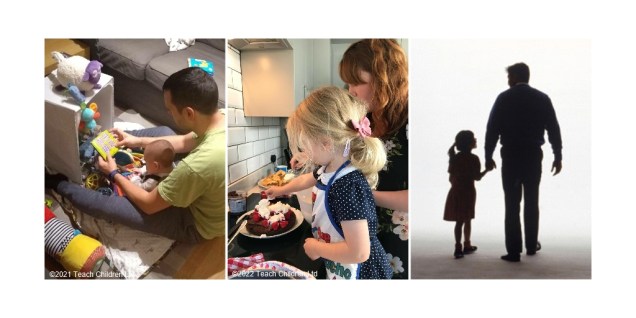
Learning the conventions of conversation start from birth, as parents we do not really think about it in this way but it is what we tend to do naturally.
Sometime though we all need a few pointers to help us, so here are some ideas to help you develop and encourage your child to talking skills:
From Birth to 1 Years Old
- To encourage cooing and babbling. Get yourselves comfortable in a face-to-face interaction position, babies often like lying on their back or on your lap looking up at you.
- Start by talking to your child while gently tickling their tummy or neck.
- Anytime they make a sound you imitate or match the sound as best you can. It is best to wait until they have finished before you try (one of the conventions of conversation).
- Try changing or adding a new sound to the one your child has made, so if they say ‘ah’ you might say ‘ah-ooh’, this will help to keep the game interesting.
- Show that you are excited by the sound they make – smile and laugh, if you are enjoying the interaction, they will be excited by it too.
- Vocal play works best when it occurs naturally, such as playing with farm animals, for instance sheep go baa, baa or cows make a moo, moo sound.
1 to 2 Years Old
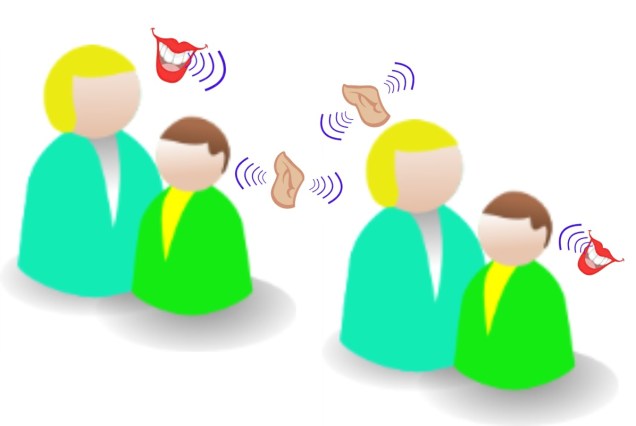
- Talk directly to your baby/toddler so they can see your facial expressions and how your lips move, as this is the beginnings of learning the conventions of communicating, listening and responding (something they cannot get from the TV, iPad or overheard conversations – indirect talk).
- Talk through everyday events, such as getting dressed; what is happening, where you are going and what the plan is for the day.
- Use your body language, expressions and gestures to help reinforce and develop your child’s neurological pathways to support understanding and comprehension.
- Share books with your baby/toddler, they may not understand what you are saying to begin with but they will be listening to the different sounds that the words make. By reading aloud you are probably using words that will introduce new sounds that your child may not be picking up from your normal day to day conversations. As they get older you are developing and increasing the range of their vocabulary.
- Babies and young children love to hear you singing and saying rhymes, this is because the language is slowed down, allowing them to hear the small units of sounds and patterns which are often repeated several times in a short time lapse. Again, the language used is often different from your day-to-day talk.
- To encourage and help your child to generate and play with sound, repeat the sounds that they make.
- Using familiar objects and toys make the noises associated with them for example a toy car, broom, broom or a toy bumble bee buzz, buzz.
- When you are out and about talk about what you can see and about the sounds they make, a cat goes meow or a train Choo, Choo, for example.
- You can use other onomatopoeic words to describe sounds, such as wooden spoons on saucepans could be bang, bang or blocks being knocked together could be click, clack.
2 to 5 Years Old
- When playing, talking and sharing new words it is important to get down to your child’s level so they can see your face and how your mouth and lips move to form the words or sounds being explored.
- Remember toddlers learn to listen best when they are taking an active role in what they are doing, especially when you or others join in eagerly with them to play the games.
- Give your child thinking and response time, this may seem like a long pause but it is worth waiting, be sure your child has finished what they wanted to say before you respond.
- Try not to finish off your child’s sentence, yes sometimes it may be quicker but just give them a little moment longer and they will get there. If it is clear they cannot think of the word they want then that is of course different.
- Before a child can really take part in meaningful interactions with others, they need to learn how to take turns. It is one of the basic elements of communication, when we are talking to someone, we leave a gap/pause so that the other person has the opportunity to respond, taking turns. Turn taking skills need to be modelled and taught to help your child develop and understand this element of communicating with others.
- To encourage your child to keep talking try nodding, smiling and using comments such as; wow, really or acknowledging something they have said by repeating rather than always asking them questions.
- We are all guilty of half-listening, especially when we are busy trying to cook dinner for example. If it is obvious that what your child wants to tell you is really important then make it clear that you are interested by saying “Just let me finish this and then I can listen to you more carefully.”



 teachphonics.blog