The Key to Good Phonics Skills – Week 10 – Developing Word Awareness

A good word awareness (receptive and expressive language) is a key phonics skill.

Helping a child build their vocabulary (word awareness – receptive & expressive language) is vital if they are to continue to develop good communication skills. Talking, explaining, sharing and playing are all important as well as making sure that you pronounce words clearly and correctly for a child to hear. A child may not have developed all the skills needed to copy you accurately but they will store the sound pattern information for later use. The more they hear the correct sound patterns the sooner they will start to use them themselves.

Click the link for ‘Tips to Help Develop Word Awareness (Receptive & Expressive Language)’:

https://teachphonics.co.uk/word-awareness.html

Pre-phonics – Phonological Awareness Stage 2 – (1 year – 2+ years)

Your child will start to isolate individual words in a speech flow, engage in sound play and recognise that sentences are made up of individual words.

By about 18 months old your toddler’s receptive language* skills have grown to understanding anything from 200-500 words, with their understanding based on the simple phrases and words they hear a lot. So, the more you talk, repeat, show, model and explain to your child the greater the opportunities they have for extending and developing their receptive language skills.

As your child’s receptive language (ability to hear and understand words) develops so will their ability to isolate key words in a sentence. For instance, they will initially pick up on the word ‘biscuit’ when asked “Do you want a biscuit?” Word awareness allows them to focus on just the relevant information they are interested in.

Continue talking to your child as much as possible, but once they are about 10-12 months old reduce the use of ‘Parentese’ and instead use clearly pronounced, more simplified language patterns.

During this stage they are starting to respond to familiar requests such as “Come here!”; understand simple questions “Where is Daddy?”; follow simple instructions “Give the ball to Mummy!” and recognize and point to familiar objects when you ask them to.

For your child to reach these milestones in their speech, language and communication abilities they need to learn and develop their listening skills. Your child needs to learn how to pay attention – being able to focus on a particular sound/voice (filtering out other noises); they need to develop their stamina – concentrating on the sound/voice to take in the information; and they need to develop their comprehension – interpreting the sound/voice to extract meaning.

Although your child’s receptive language is developing well, their expressive language is far more limited, with them only being able to say around 20 words. The frustration of understanding but not being able to communicate leads to what is commonly known as ‘The Terrible Twos’. Sign language can be a very powerful tool to help you and your child to manage and lessen these communication frustrations.

Around the age of 2 years old many children use more than 50 single words and are beginning to put 2 or 3 words together to form short phrases and to ask simple questions “what that?” or “who that?”.  They are beginning to recognize that sentences are made up of individual words and are able to pick out more than one key word in a simple sentence such as “Put your shoes and coat on!”.

Helping your child to build their vocabulary (word awareness) and the meaning of these words is vital if your child is to continue to develop good communication skills. Talking, explaining, sharing and playing are all important as well as making sure that you pronounce words clearly and correctly for your child to hear. Your child will not have developed all the skills needed yet, to copy you accurately, but they will store the sound pattern information for later use.

Playing sound detection games is a fun way of helping your child to build their sensitivity to sounds as well as helping them to develop their listening and attention abilities.

Toddlers continue to engage in sound play as they keep on building their sound knowledge and ability to distinguish between environmental sounds and those of language. They will play with words to make up rhymes and nonsense words as a way of learning how to generate new sounds, rather than for expressing their thoughts and understanding.  It is a good gauge of your child’s sensitivity to sounds in words.

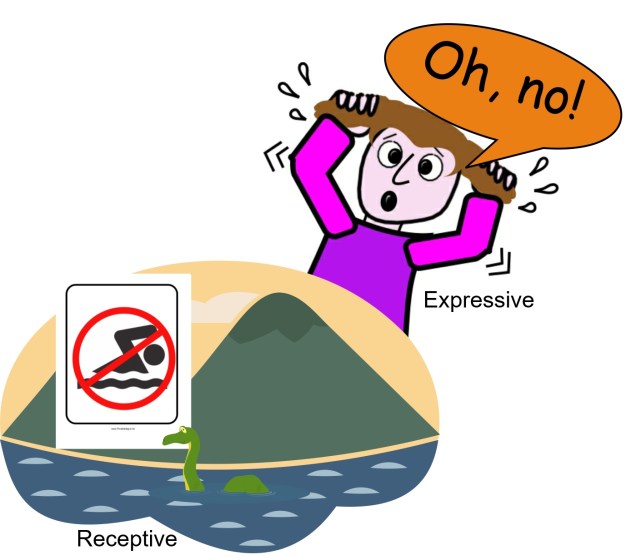
* Receptive language is how we take in and understand language; it is what we hear, see and read. This also includes body language and environmental clues. All these elements help us to interpret the situation and give meaning, so that we can understand what is needed or required of us. We do not need to be able to produce language to receive and understand it, so infants and toddlers understand far more than they can express (expressive language**).

Our understanding through receptive language enables us to communicate, socialize and comprehend instructions, different situations and scenarios.

** Expressive language is our ability to put our thoughts, needs and wants into words and sentences in a way that makes sense and is grammatically correct. A baby’s expressive language to begin with is based on cries and gestures moving to sound making, combined with gestures and their body language.

We use this expressive language when we speak and write. Even when babies and toddlers move to speaking words, they have a limited vocabulary which is why they can get frustrated when we do not understand them.
The Key to Good Phonics Skills – Part 10

Developing #Listening & #Speaking Skills – Developing Word Awareness

A good word awareness (receptive and expressive language) is a key phonics skill.

Helping a child build their vocabulary (word awareness – receptive & expressive language) is vital if they are to continue to develop good communication skills. Talking, explaining, sharing and playing are all important as well as making sure that you pronounce words clearly and correctly for a child to hear. A child may not have developed all the skills needed to copy you accurately but they will store the sound pattern information for later use. The more they hear the correct sound patterns the sooner they will start to use them themselves.

Click the link for ‘Tips to Help Develop Word Awareness (Receptive & Expressive Language)’:

https://teachphonics.co.uk/word-awareness.html

The Key to Good Phonics Skills – Part 7

Developing #Listening & Speaking Skills – Different Types of Talk

There are different types of talk:

  • Business Talk – this is when we use more everyday instructional and informational kinds of vocabulary and sentence structures.
  • Play Talk/Rich Talk – this is more conversational, informal and descriptive.
  • Small Talk – this is everyday chatter or conversations, informal and often less descriptive and more factual.
  • Parentese – this research has shown is how babies prefer you to talk to them using regular words (normal adult vocabulary) in a slightly higher pitched and more sing-song way.

It is important that a child is exposed to the different types of talk as it helps them to build their vocabulary (word awareness – receptive & expressive language) this is vital if they are to continue to develop good communication skills.

The Difference Between Receptive and Expressive Language

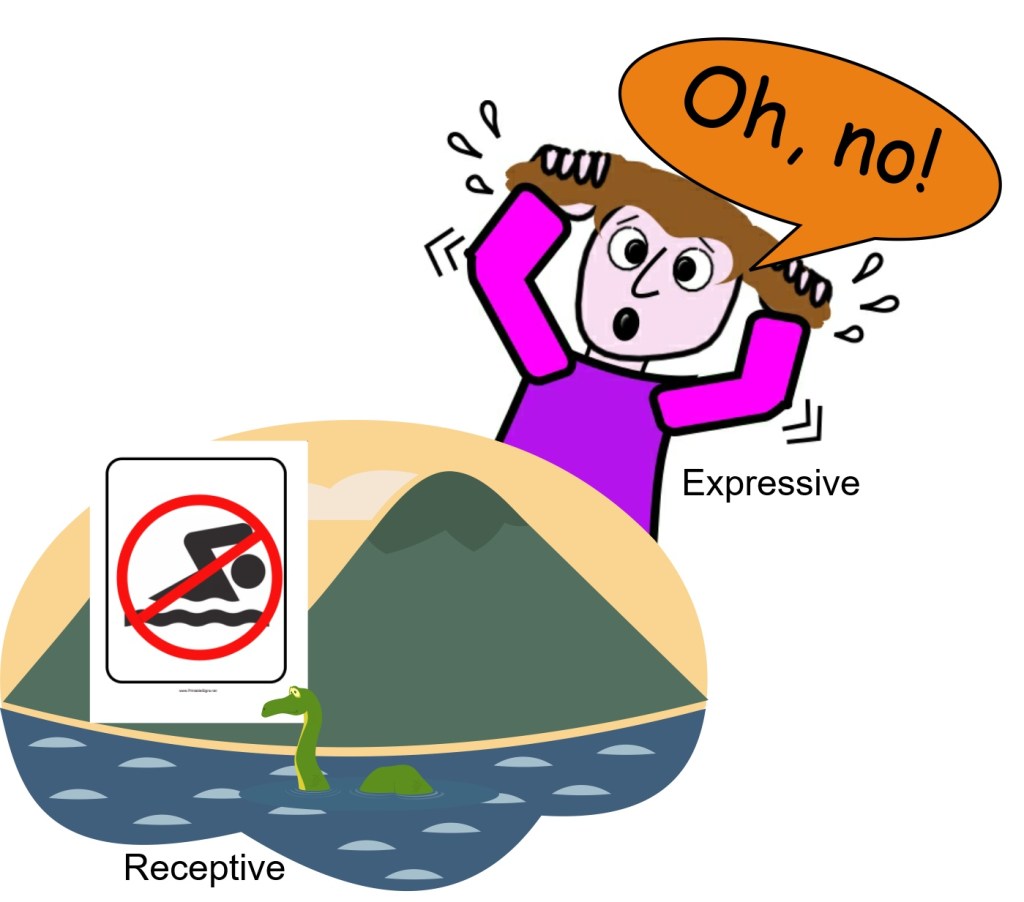
Receptive language is how we take in and understand language; it is what we hear, see and read. This also includes body language and environmental clues. All these elements help us to interpret a situation and give it its meaning, so that we can understand what is being communicated. We do not need to be able to produce language to receive and understand it, so infants and toddlers understand far more than they can express (expressive language).

Expressive language is our ability to put our thoughts, needs and wants into words and sentences in a way that makes sense and is grammatically correct. A baby’s expressive language to begin with is based on cries and gestures and then moves to sound making, gestures and body language signals. We use this expressive language when we speak and write. When babies and toddlers move to speaking words, they have a limited vocabulary which is why they can get frustrated when we do not understand them.
Good word awareness (receptive and expressive language) is a key pre- phonics skill.

Click the link for ‘Tips to Help Develop Word Awareness (Receptive & Expressive Language)’: https://www.teachphonics.co.uk/word-awareness.html

Developing #Listening & #Speaking Skills – Word Awareness

A good word awareness (receptive and expressive language) is a key phonics skill.

Receptive language is how we take in and understand language; it is what we hear, see and read. This also includes body language and environmental clues. All these elements help us to interpret a situation and give it its meaning, so that we can understand what is being communicated. We do not need to be able to produce language to receive and understand it, so infants and toddlers understand far more than they can express (expressive language).

Expressive language is our ability to put our thoughts, needs and wants into words and sentences in a way that makes sense and is grammatically correct. A baby’s expressive language to begin with is based on cries and gestures and then moves to sound making, gestures and body language signals. We use this expressive language when we speak and write. When babies and toddlers move to speaking words, they have a limited vocabulary which is why they can get frustrated when we do not understand them.

Helping a child build their vocabulary (word awareness – receptive & expressive language) is vital if they are to continue to develop good communication skills. Talking, explaining, sharing and playing are all important as well as making sure that you pronounce words clearly and correctly for a child to hear. A child may not have developed all the skills needed to copy you accurately but they will store the sound pattern information for later use. The more they hear the correct sound patterns the sooner they will start to use them themselves.

Click the link for ‘Tips to Help Develop Word Awareness (Receptive & Expressive Language)’: https://www.teachphonics.co.uk/word-awareness.html

Different Types of Talk

There are different types of talk:

  • Business Talk – this is when we use more everyday instructional and informational kinds of vocabulary and sentence structures.
  • Play Talk/Rich Talk – this is more conversational, informal and descriptive.
  • Small Talk – this is everyday chatter or conversations, informal and often less descriptive and more factual.
  • Parentese – this research has shown is how babies prefer you to talk to them using regular words (normal adult vocabulary) in a slightly higher pitched and more sing-song way.

It is important that a child is exposed to the different types of talk as it helps them to build their vocabulary (word awareness – receptive & expressive language) this is vital if they are to continue to develop good communication skills.

The Difference Between Receptive and Expressive Language

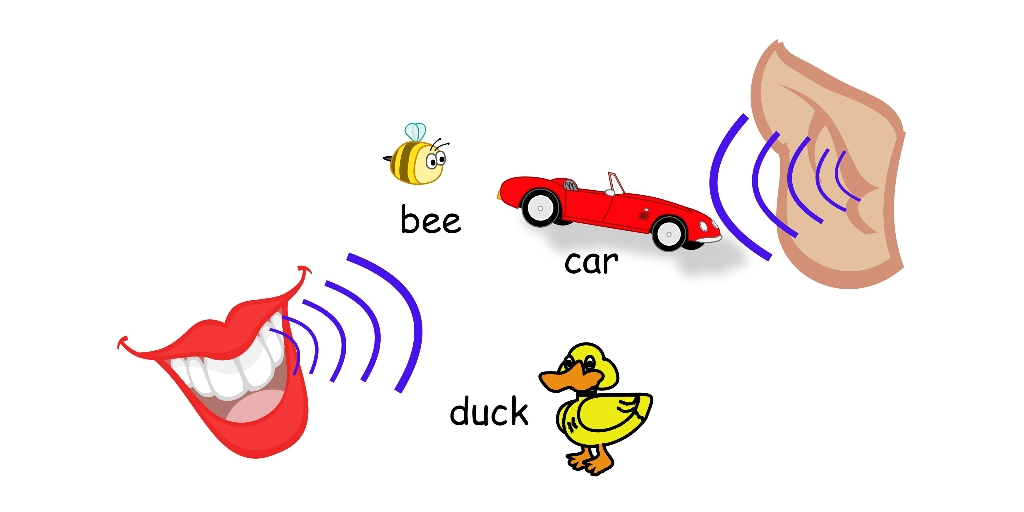
Receptive language is how we take in and understand language; it is what we hear, see and read. This also includes body language and environmental clues. All these elements help us to interpret a situation and give it its meaning, so that we can understand what is being communicated. We do not need to be able to produce language to receive and understand it, so infants and toddlers understand far more than they can express (expressive language).

Expressive language is our ability to put our thoughts, needs and wants into words and sentences in a way that makes sense and is grammatically correct. A baby’s expressive language to begin with is based on cries and gestures and then moves to sound making, gestures and body language signals. We use this expressive language when we speak and write. When babies and toddlers move to speaking words, they have a limited vocabulary which is why they can get frustrated when we do not understand them.
Good word awareness (receptive and expressive language) is a key pre- phonics skill.

Click the link for ‘Tips to Help Develop Word Awareness (Receptive & Expressive Language)’: https://www.teachphonics.co.uk/word-awareness.html

The Importance of Small Talk & Conversational Turn Taking – Week 1

Don’t underestimate the importance of everyday chatter or conversation (‘Small Talk’), children develop and learn a great deal through ‘Small Talk’ with adults and other children.

What do we mean by ‘Small Talk’?

With babies it is the kind of talk that explains what we are doing, what they are doing, where we are going and what we can see.  As they get older our verbal exchanges increase as we support their receptive and expressive vocabulary development. Through these exchanges we also support their general language development and understanding of how words are pronounced, basic sentence structure and using the correct tense.

When we talk with a child we demonstrate and model the use of language in real time so that it has meaning. For instance, a child may point and say “cat” and we would respond with “Yes, the cat is sleeping.” Or we may correct the child and say “That is a dog.” If we could we would point to a cat and explain the difference. We also correct mispronunciation of words and correct tense issues in the same way; repeating the word or sentence using the correct pronunciation or tense back to the child.

For more tips and advice try our tips page: http://bit.ly/2ncjzYn

The Communication Trust has a link to a free downloadable booklet called Small Talk which is a very useful guide for understanding how your child learns to talk from birth to age 5:

https://www.thecommunicationtrust.org.uk/resources/resources/resources-for-parents/small-talk.aspx

Conversational Turn Taking

We covered this a couple of weeks ago but I think it is useful to recap the main points again here as it supports the development of ‘Small Talk’:

Children need to learn when to talk and when to listen; for this to happen they need to do the following:

  • Actively Listen to the other person. This means:
    • Concentrate on the words being said, by blocking out other environmental noises and voices.
    • For most children and adults this also means looking at the person, watching their facial expression and body language.
    • Listening for the verbal cues and/or changes in the tone of voice that signifies that the person has finished speaking.
    • Recognising that it is either your turn to respond by formulating a reply or not.
  • Formulate a Response. This means:
    • Extracting meaning – taking understanding from the words that have been spoken.
    • Mentally searching for words to compile a grammatically correct set of sentences.
    • In young children this can take time, not because they do not have the answer, because they just take longer to recall and formulate their responses. This is due to the constant acquisition of new language and understanding of the grammatical conventions that need to be applied.
  • Communicate Response. This means
    • Speaking clearly, pronouncing words correctly in coherent sentences.
    • Using socially appropriate facial expressions and body language to accompany the response.
    • Using the appropriate verbal cues and/or changes in the tone of voice that allow the other person to understand it is now their turn.
  • Wait. This means giving time for the other person to formulate their response.
  • Actively Listen to the other person.

The Difference Between Receptive and Expressive Language

Receptive language is how we take in and understand language; it is what we hear, see and read. This also includes body language and environmental clues. All these elements help us to interpret a situation and give it its meaning, so that we can understand what is being communicated. We do not need to be able to produce language to receive and understand it, so infants and toddlers understand far more than they can express (expressive language).

Expressive language is our ability to put our thoughts, needs and wants into words and sentences in a way that makes sense and is grammatically correct. A baby’s expressive language to begin with is based on cries and gestures and then moves to sound making, gestures and body language signals. We use this expressive language when we speak and write. When babies and toddlers move to speaking words, they have a limited vocabulary which is why they can get frustrated when we do not understand them.

A good word awareness (receptive and expressive language) is a key phonics skill.

Helping a child build their vocabulary (word awareness – receptive & expressive language) is vital if they are to continue to develop good communication skills. Talking, explaining, sharing and playing are all important as well as making sure that you pronounce words clearly and correctly for a child to hear. A child may not have developed all the skills needed to copy you accurately but they will store the sound pattern information for later use. The more they hear the correct sound patterns the sooner they will start to use them themselves.

Click the link for ‘Tips to Help Develop Word Awareness (Receptive & Expressive Language)’: http://bit.ly/29LajVk

Developing and Supporting Your Child’s Reading Journey – Week 5

Narrative Skills to Support the Understanding of Different Writing Styles

narrative 1

Narrative skills are based on understanding and using expressive language. This is the kind of language we use to describe things and feelings, to tell events in order and to recall and tell stories.

Children develop their narrative skills over time taking prior knowledge, what they already know, and building on this through:

  • Conceptual thinking; the development of concepts such as shape, colour, the passing of time; as well as developing and using strategies for problem solving and prediction (thinking skills).
  • Content knowledge; what they already know about the topic/situation; the ability to relate situations to their own experiences, the ability to sequence events in a logical order as well as to sequence processes such as getting dressed or making things.
  • Understanding that different genres are set out in different ways, story structure such as that used in fairy tales is different from that used for poetry or informational text (explaining things) or instructional text (how to do something) such as a recipe.

Developing Narrative Skills:

Through Play:

  • Role play different situations; doctor’s, school, office, shops etc.
  • Dramatic and imaginative play; acting out stories together using props and/or puppets and toys.
  • Matching and sorting games to develop understanding of concepts such as colour, shape and size.
  • Puzzles for developing problem solving skills.

Through Drawing/Writing:

  • Ask your child to draw pictures for a story and you write the words
  • Ask your child to draw or write (make mind maps) of the things they already know about something.
  • Ask them to draw different shapes in different sizes and to use specific colours for them.
  • With older children make and draw charts and graphs for classifying objects.

Through Songs/Nursery Rhymes:

Children’s songs and nursery rhymes cover a wide range of concepts:

  • Everyday sequences such as in the nursery rhyme ‘Here we go Round the Mulberry Bush’ which uses the phrase ‘This is the way we…’ to order the event of getting up in the morning.
  • Introduce concepts such as size, colours, shapes and numbers such as “One, two, three, four, five once I caught a fish alive…”
  • Tell stories for example ‘Baa Baa Black Sheep’ or ‘We’re going on a Bear Hunt’ by Michael Rosen & Helen Oxenbury.

Through Talk:

  • As your child explores objects, describe them and their uses; compare and contrast objects.
  • Remember to give your child time to work things out, or to solve a problem. It can take a child several minutes sometimes to process what they have heard and to formulate a response.
  • Talk about concepts such as shape, colour, size, texture.
  • Explain and use language that explains where things are in relation to each other (spatial awareness) such as above, below, on top of, next to, first, etc.
  • Help your child to develop an awareness of time, not just the here and now but what happened in the past and might happen in the future.
  • Put processes into sequence using things like recipes, making things or how plants grow, the passing of time, weeks, months, seasons etc.
  • Encourage your child to recount their day or to re-tell a story.
  • Encourage your child to tell you what they know about something as well as sharing what you know.
  • When sharing information explain how you learned about it; read it in a book or on the internet or heard it on the TV or radio.
  • Encourage your child to guess and predict what might happen.
  • Encourage your child to solve problems or resolve conflicts; if you do it for them explain what you did and why.
  • Embed conversation into everyday routines such as getting dressed, meal times and bed time.

Through Book Sharing:

What books to choose?

  • Books that tell a cumulative tale
  • Books with a natural sequence
  • Books with a repeated phrase or repetition as part of the story
  • Poetry books
  • Non-fiction books

Book Sharing Tips

  • Read books on topics that interest your child.
  • Ask your child to tell you what they know about the book you are reading.
  • Encourage your child to join in while sharing a book, saying repeated phrases for example.
  • Read with expression.
  • Encourage your child to re-tell the story.
  • Re-read books so that your child can become familiar with the story, making it easier to re-tell the story.
  • Relate what is happening in the story to your own child’s experiences or ask then to tell you how it might relate to them.
  • Use props to tell the story to help your child remember the sequence of the story. They may find using props a great way to re-tell you the story.
  • Encourage your child to talk about the pictures. Take their lead and try to ask open-ended question (those that cannot be answered by yes or no).
  • Talk about the books you like and what you like about them.
  • If your child loses interest, try again another time.
  • Talk about the pictures in a book or sections of a story and let your child tell you their thoughts about what is happening and might happen next.

The difference between receptive and expressive language

Receptive & Expressive 2

Receptive language is how we take in and understand language; it is what we hear, see and read. This also includes body language and environmental clues. All these elements help us to interpret a situation and give it its meaning, so that we can understand what is being communicated. We do not need to be able to produce language to receive and understand it, so infants and toddlers understand far more than they can express (expressive language).

Expressive language is our ability to put our thoughts, needs and wants into words and sentences in a way that makes sense and is grammatically correct. A baby’s expressive language to begin with is based on cries and gestures and then moves to sound making, gestures and body language signals. We use this expressive language when we speak and write. When babies and toddlers move to speaking words, they have a limited vocabulary which is why they can get frustrated when we do not understand them.
A good word awareness (receptive and expressive language) is a key phonics skill.

Helping a child build their vocabulary (word awareness – receptive & expressive language) is vital if they are to continue to develop good communication skills. Talking, explaining, sharing and playing are all important as well as making sure that you pronounce words clearly and correctly for a child to hear. A child may not have developed all the skills needed to copy you accurately but they will store the sound pattern information for later use. The more they hear the correct sound patterns the sooner they will start to use them themselves.

Click the link for ‘Tips to Help Develop Word Awareness (Receptive & Expressive Language)’: http://bit.ly/29LajVk