The ‘Long Vowel’ Sounds

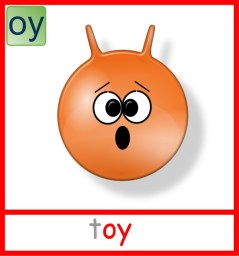
Tree animation   Toy animation

There are 13 ‘long vowel’ sounds in total; 7 ‘long vowel’ sounds and 6 ‘long ‘R’ controlled vowel’ sounds.

The 7 ‘long vowel’ sounds are so called due to the length of their pronunciation; these can often be held without distorting their sound.

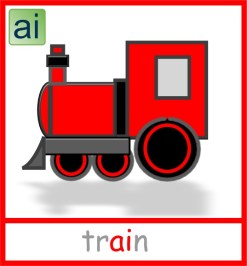
 The /ai,(eI)/ sound found in the words: train, tray, cake and break.

The /oa,(ǝƱ)/ sound found in the words: boat, hotel, toe and bone.

The /oi,(ɔI)/ sound found in the words: boy, coin and buoy.

The /ow,(aƱ)/ sound found in the words: owl, house, drought and hour.

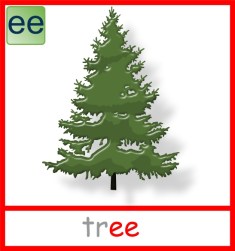
The /ee,(іː)/ sound found in the words: tree, pea, me, and pony.

The /I,(aI)/ sound found in the words :iron, fly, pie and light.

The /oo,(uː)/ sound found in the words: spoon, blue, screw and you.

The 6 ‘long ‘R’ controlled vowel’ sounds are so called because of the slight /r,(r)/ sound quality that can be heard in them along with the length of their pronunciation; these can often be held without distorting their sound.

The /ar,(ɑː)/ sound found in the words: car, father (southern UK accent) and art.

The /or,(ɔː)/ sound found in the words: fork, door, walk and sauce.

The /ear,(Iǝ)/ sound found in the words: ear, here, deer and pier.

The /er,(ɜː)/ sound found in the words: bird, kerb, nurse and worm.

The /re,(Ʊǝ)/ sound found in the words: manure, tour and mature.

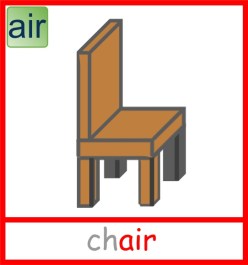
The /air,(eǝ)/ sound found in the words: chair, pear, square and where.
 

How Many ‘Short Vowel’ Sounds Do You Know?


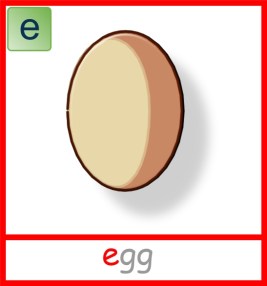
Egg animation   Ant picture card

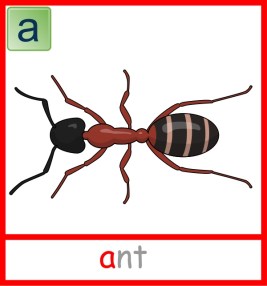
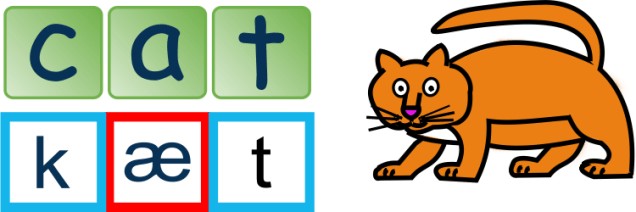
There are 7 ‘short vowel’ sounds, although children are usually only introduced to the 5 which are most commonly heard in simple CVC (consonant, vowel, consonant) words: /a,(æ)/ in cat, /e,(e)/ in peg, /i,(I)/ in pin, /o,(ɒ)/ in hot, /u,(ʌ)/ in bus.

The other two ‘short vowel’ sounds are: /oo(u),(Ʊ)/ in bull or could and /uh,(ǝ or schwa)/ heard  as the final sound in the words: zebra, doctor and corner.

Our ‘Short Vowel’ Finger Chant can help you, and your child, to learn and remember the 7 ‘short vowel’ sounds: https://www.teachphonics.co.uk/free-resources-phonics.html

English (UK) Vowel Sounds

Toy animation   Tree animation

Learning to hear and differentiate the vowel sounds from consonant sounds is an important skill in understanding how words are formed. Every word in the English Language has to have a vowel sound in it and every syllable in a word also has to have a vowel sound within it. This knowledge is an important element in developing our phonemic awareness and phonics knowledge as we start to learn how to read and spell words.

There are 20 vowel sounds in the English (UK) Language, usually (in the UK Education System) split into two main categories based on sound quality:

  • ‘Short’ vowel sounds, due to the short duration of the sound being made, the sound cannot be held onto without becoming distorted
  • ‘Long’ vowel sounds, due to the length of their pronunciation, these can often be held without distorting their sound.

Here at Teach Phonics we split the ‘long’ vowel sounds category into ‘long’ vowel sounds and ‘long ‘R’ controlled’ vowel sounds. The ‘long ’R’ controlled’ vowel sounds are so called because of the slight /r,(r)/ sound quality that can be heard in them.

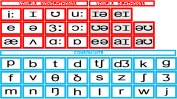
The English Phoneme Chart, which uses the unique symbols of the International Phonetic Alphabet (IPA), splits the 20 vowel sound into two groups based on mouth position:

  • Monophthongs which have one mouth position throughout the sound
  • Diphthongs, where the mouth position changes, giving a 2 sound quality to the phoneme.

The Consonant Sounds with Their Most Common Letter and Letter Combinations


Bin     Girl

There are 24 consonant sounds in the English language. A consonant sound is made (produced) when the air flow is being restricted in some way, which means that the mouth doesn’t open as wide and so the jaw doesn’t drop noticeably, which is different from vowel sounds.

Here is a list of just some of the most commonly seen letter and letter combinations used to represent the 24 consonant sounds. For a more comprehensive lists check out our English Phoneme Chart or Alphabet Keyboard which can be found on our ‘Phonemes’ page: bit.ly/1Qgc9dA

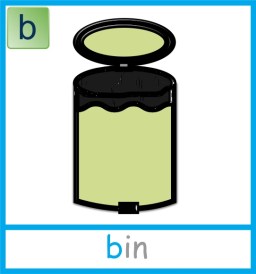
  • /b,(b)/ bin, rabbit
  • /k,(k)/ cat, key, duck, queen, anchor, broccoli
  • /ch,(ʧ)/ church, watch
  • /d,(d)/ dog, ladder, towed
  • /f,(f)/  fish, puffin, phone, laugh
  • /g,(g)/ girl, digger, ghost
  • /h,(h)/ hen, who
  • /j,(ʤ)/  jigsaw, giant, bridge
  • /l,(l)/   lion, llama
  • /m,(m)/  man, hammer, lamb
  • /n,(n)/   nest, penny, knife, gnome
  • /ng,(ŋ)/ king, sink
  • /p,(p)/    panda, hippo
  • /r,(r)/   robin, lorry, wrist
  • /s,(s)/  sun, dress, city, geese, castle
  • /sh,(ʃ)/  ship, chef, delicious, initials, sugar
  • /t,(t)/   tent, butterfly, jumped
  • /th,(θ)/  thumb
  • /th,(ð)/ feather, breathe
  • /v,(v)/ van, sleeve, of
  • /w,(w)/ well, whale, penguin
  • /y,(j)/ yo-yo, euro
  • /z,(z)/  zero, puzzle, sneeze, cheese, is
  • /zh,(Ʒ)/ measure, television

Sounds in the English (UK) Language

Phonics Chart with Phonemes
Received Pronounced English (UK) Phonetic Alphabet 

The English Language is created through the different combinations of 44 sounds (phonemes), 20 vowels and 24 consonants. Vowel sounds allow the air to flow freely, causing the chin to drop noticeably, whilst consonant sounds are produced by restricting the air flow.

Vowel sounds are usually (in the UK Education System) split into two main categories based on sound quality:

  • ‘Short’ vowel sounds, due to the short duration of the sound being made. The sound cannot be held onto without becoming distorted
  • ‘Long’ vowel sounds, due to the length of their pronunciation. These can often be held without distorting their sound.

Consonant sounds are made (produced) when the air flow is being restricted in some way, for example, changes in tongue position resulting in the mouth not opening as wide. This means that the jaw doesn’t drop noticeably, which is different to vowel sounds.

Because the English language is so rich and diverse it is very difficult to create a ‘phonics’ system that caters for all. Every region that speaks the English language has its own accent with variations in the way that a word is pronounced.

Across England we all spell words the same but we certainly do not say them all the same even though we all use the same 44 sounds. In the English language the 44 sounds can be represented by over 280 letter combinations.

So accents have arisen from regions applying different phonemes (sounds) to graphemes (letters) when they pronounce words. The regions still use the same sounds and letters, they just associate them differently.

However, for general educational and learning purposes the English language’s phonics system has been standardized, this is known as the ‘Received Pronounced’ (RP) English, and is used in comprehensive English dictionaries and translation dictionaries. The RP is based on a southern accent, sound to letter relationships basis.

This can make teaching phonics a little tricky; the key is to teach the sound to letter relationships which best suit the children being taught in relation to their regional accent. It is important to remember that children’s knowledge of the sounds that make words is based on how you speak to them naturally and not a strict standardized set of sounds.

What are Graphemes?

Train picture card    Chair picture card

Date Originally Posted: 19/10/17

Graphemes are the alphabet letters, or letter combinations, that represent a single sound in a written word.

An example of a single letter representing a single sound (a grapheme) can be seen in the following words: sat, pat and dog.

Some sounds are represented by two letters and are called digraphs such as the ‘ch’ in ‘chip’ or ‘sh’ in ‘shop’ or ‘ea’ in ‘head’ and the ‘ai’ in ‘rain’.

Other sounds can be represented by 3 (trigraphs) or 4 (quadgraph) letter combinations such as ‘igh’ in ‘light’ and ‘eigh’ in ‘eight’.

What are Phonemes?

Phonics Chart with Phonemes

Date Originally Posted: 12/10/17

Phonemes are the smallest units of sound of a language; which we blend together to form words.

The English Language has 44 phonemes, 24 consonants and 20 vowels, represented by the unique symbols of the International Phonetic Alphabet (IPA).

The 44 phonemes of English are represented by more than 280 letter or letter combinations. Most letters therefore never make just one sound and that sound can be made by more than one letter or letter combination.

We have created over 1,000 videos that split words into their individual phonemes, showing which letters are making which sound in each word. You can access these videos in two ways:

  • If you want to know which letter or letter combination represents a sound, click on the relevant phoneme button on the English Phoneme Chart;
  • If you want to know what sound a letter or letter combination makes, click on the relevant letter or letter combination on the Alphabet Keyboard.

We hope you find these useful.

Letter Names & Phonics

Phonics Assessment Pages

Date Originally Posted: 14/9/17

As part of our Teach Handwriting Scheme children are taught the letter names. Some schools and parents still seem to be concerned that this is not consistent with the teaching of phonics.

A myth which seems to have become popular, since the introduction of phonics into schools; is that children should not be taught the alphabet letter names as they find it too confusing; however, there is no evidence to suggest this is true. The Independent review of the teaching of early reading, final report, Jim Rose March 2006 states:

“The teaching of letter names is often left until after the sounds of the letters have been learned, in the belief that it can be confusing for children to have to learn both together. However, research indicates that children often learn letter names earlier than they learn letter sounds and that five year olds who know more letter names also know more letter sounds. The reason for this are not fully understood by researchers’

Given that children will meet many instances outside, as well as within, their settings and schools where letter names are used, it makes sense to teach them within the programme of early phonic work.

It appears that the distinction between a letter name and a letter sound is easily understood by the majority of children.” (Page 26)

Rose, cites Professor Morag Stuart who suggests that:

‘…children expect things to have names and are accustomed to rapidly acquiring the names of things.’ (Independent review of the teaching of early reading’ final report, Jim Rose March 2006, page 27.)

Learning the unique letter names of the alphabet is a pre-phonics skill; as well as an early learning goal. It has to be remembered that a letter is a shape which only represents a sound when it is placed within a word or sentence. Also a letter or combination of letters can represent more than one sound and so the only unique way of identifying alphabet letters when we talk about them is to use their names.

Learning the correct letter names helps to reinforce that when talking about the letter ‘a’ (ay) for example it has a set shape regardless of the sound that it will be representing in the word. This further supports children’s handwriting development as the communication of your requirements is unambiguous.


Back to School – What is Phonics?

Blog Phonics

Date Originally Posted: 07/09/17

With the new school year under way some of you will have been introduced to phonics for the first time. Phonics is a very useful decoding tool used for developing reading skills and as an encoding tool for spelling.

Phonics is the simple process of linking sounds to letters, its complexity comes from how many sound (phoneme) to letter (grapheme) combinations there are. So to be good at phonics a child needs to know the 44 sounds and numerous letter and letter combinations of English and then learn the associations between the two.

Children can communicate orally from an early age; it is when they move to the written word that they need to learn how to decode text, to turn the letters into words they already know.

Using phonics knowledge for reading entails:

  1. Identify the letter or letter combination, in a word, that represent a sound
  2. Associate the letter or letter combination to one of the 44 sounds
  3. Blend each of the sounds together to form the word
  4. Recognise the now oral word to extract its meaning

The theory supporting the teaching of reading using phonics, especially synthetic phonics, is that if a child can decode a word by associating individual sounds to a letter or combination of letters they will then be able to blend those sounds together to form and say the word.

Once a word has been spoken they will extract its meaning by using their far more extensive spoken language comprehension. Children are therefore using the same mental processes to understand written text and speech.