Language of Drawing

Sharing and showing your child how to draw shapes and make pictures is a great opportunity for you to help them practice and develop known and new vocabulary.

Your child does not have to actually draw and can just watch, if that is what they prefer to start with. In doing so they may ask you to draw different things in the picture, use certain colours, or want to help you colour or draw things.

You can explain what you are doing as you draw, for instance, if you are drawing a straight line or a wavy line to make a shape or pattern.

Other language you may use:

Straight, short, long, diagonal, up towards …, down towards …, across, curvy, wavey, zig zag, squiggly, swirling, dots, dashes.

A couple of weeks ago we talked about placement (preposition) and directional vocabulary which would also be great to use here as part of drawing activities.

Not all children enjoy drawing and colouring and it can be difficult to encourage them. There are a number of reasons why some children seem reluctant to draw, paint or colour. For instance, some will not like the smell of the paint or crayons, while others may find the pencils, brushes or crayons too thin, long or heavy. Others may be reluctant due to past negative experiences. It can be tricky to work out exactly why a child doesn’t want to draw or write.

For some tips and ideas that may help you get them started, check out this week’s Teach Handwriting Blog: https://teachhandwriting.blog

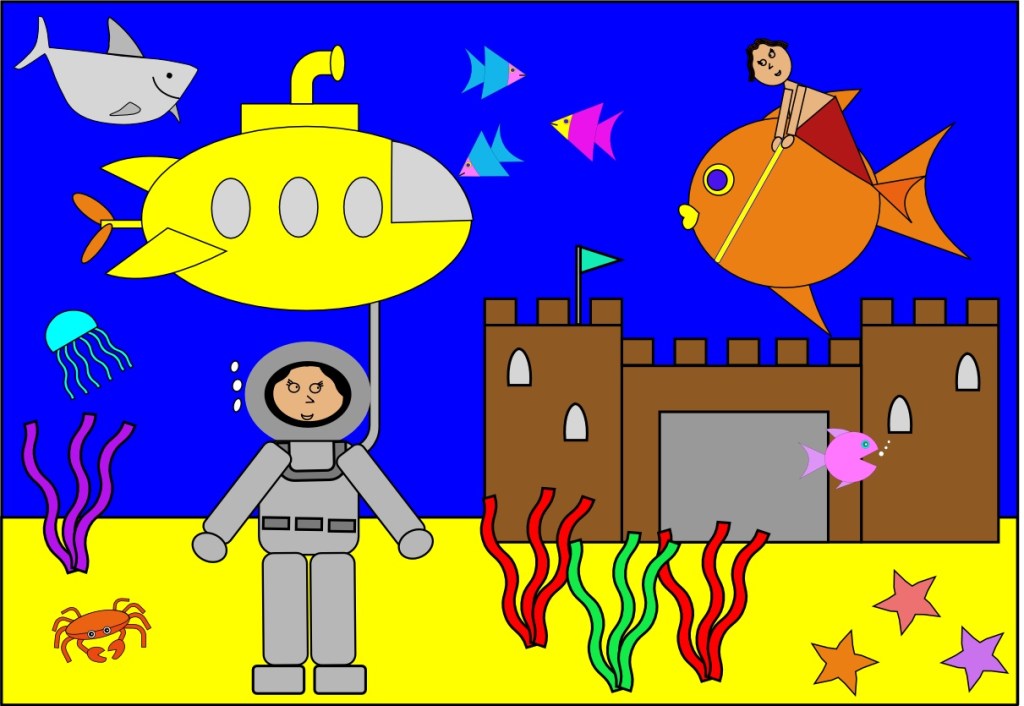
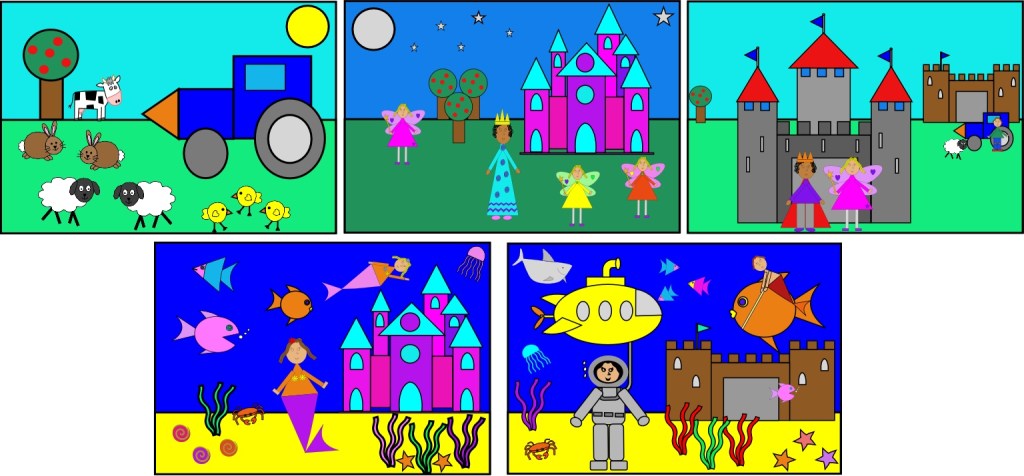
We have created some new drawings using simple shapes which you may find helps you to get started. Follow this link and scroll down the page a little you will find them under the ‘Activities to help hand development’:  https://teachhandwriting.co.uk/more-activities.html

Pancake Making – Word Play

Pancake Day (Tuesday 21st February 2023) will soon be upon on us, and a great time to share some cooking time with your child.

It is amazing the number of different noises that occur when we cook, providing an ideal opportunity to use and introduce your child to the wonderfully descriptive world of onomatopoeic words. These are words that imitate the sounds being described such as bang, crash, whoosh, clip and clop.

So, we have created a list of onomatopoeic words which you could use and share with your child as you describe the sounds, potential chaos and fun that comes from shared cooking time with your child.

Bang, crash, rattle, clang, clank, clatter, clink, plop, slap, crack, splish, splash, splosh, hiss, sizzle, fizzle, crackle, squeal, giggle, smack, splat, gobble, scrap.

A Traditional English Pancake Batter Mix

For a thin pancake batter mix:

  • 100g plain flour
  • Pinch of salt
  • 1 egg
  • 270ml of milk or milk and water

Method:

  1. Sift the flour and salt together.
  2. Make a well in the flour and add the egg and enough milk (milk/water) to make a sticky mixture.
  3. Beat well, then gradually whisk in the remaining milk (milk/water).
  4. Keep in a cool place until ready to use, always whisk the batter before using.

An American Style Pancake Batter Mix

For a thick, sweet pancake batter mix:

  • 150g plain flour
  • 1 tea spoon baking powder
  • 3 pinches of salt
  • 1 egg
  • 150ml of milk
  • 30g caster sugar

Method:

  1. Sift the flour, baking powder and salt together.
  2. Stir in the caster sugar
  3. In another bowl, whisk the egg and milk together.
  4. Pour the egg and milk mixture into the flour and beat with a wooden spoon.
  5. If the mixture is left to stand for about half an hour the pancakes tend to have a lighter texture.

Have fun and enjoy!

Why Placement (Preposition) and Directional Vocabulary is Important!

Teaching your child the vocabulary related to placement (preposition) and direction is import in supporting them to understand and follow instructions, as well as sharing information themselves, such as; ‘put your cup on the table’ or to say ‘teddy in car’.

We also use this placement (preposition) and directional language to explain how to draw shapes, patterns and write letters and numbers. We have created three sets of picture cards and games to help you support your child in developing and using positional (preposition) and directional vocabulary

You can find these free resources on our Phonics website by following this link: https://www.teachphonics.co.uk/phonics-resources.html

What are prepositions?

A word used with a noun or pronoun to show place, position, time or means, e.g. at home, in the hall, on Sunday, by train.” Definition from Oxford School Dictionary, third edition 2002.

Here are just some preposition and directional phrases you might like to use:

On the … On top of the … Above the … Over the…

Under the… Below the … Beneath … Underneath …

Behind the …

In front of the…

Next to …Beside the … On the right of … To the right of … On the right-hand side … On the left of … To the left of … On the left-hand side… Before the … After the …

In the…  Inside the …

Out of the … Outside of the …

Between the … In between the … In the middle … In the center …

Going up the ….  Going down the … Going towards the… Going away from …

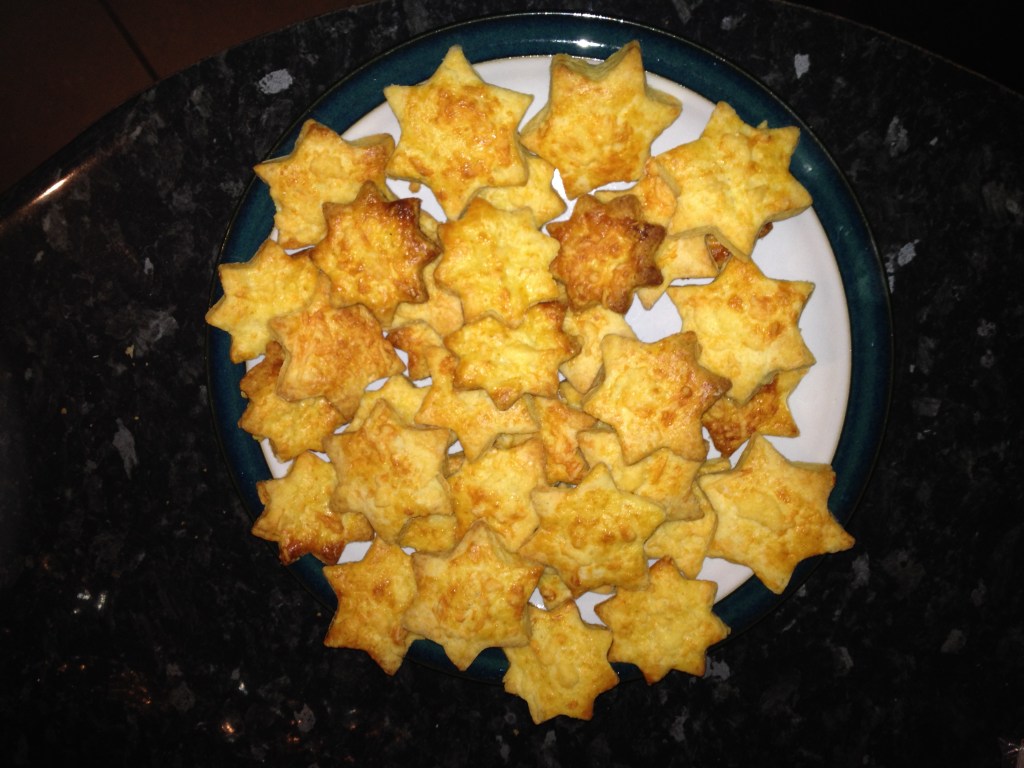
How do Cheesy #Christmas Stars Improve Vocabulary Skills?

Cooking is a great, fun way introduce new vocabulary to your child especially those related to touch, texture, actions and instructional language. Words such as: cold, warm, soft, hard, smooth, rough, gritty, roll, squeeze, squash and pull, mix, stir, blend, whisk etc…
So why not try our tasty savoury Christmas baking treat!
Go to our ‘More fun handwriting activities’ page: https://teachhandwriting.co.uk/more-activities.html for the recipe and just download the pdf (https://teachhandwriting.co.uk/assets/pdfs/christmas-cooking-cheesy-stars.pdf )

Christmas Finger Printing a Fun Way to Support Language Development

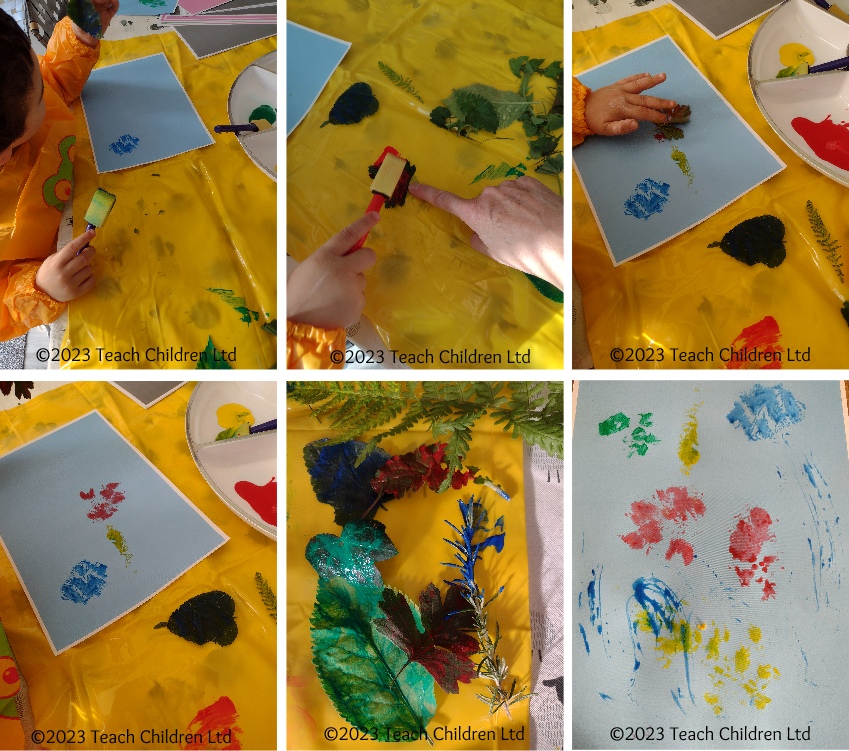
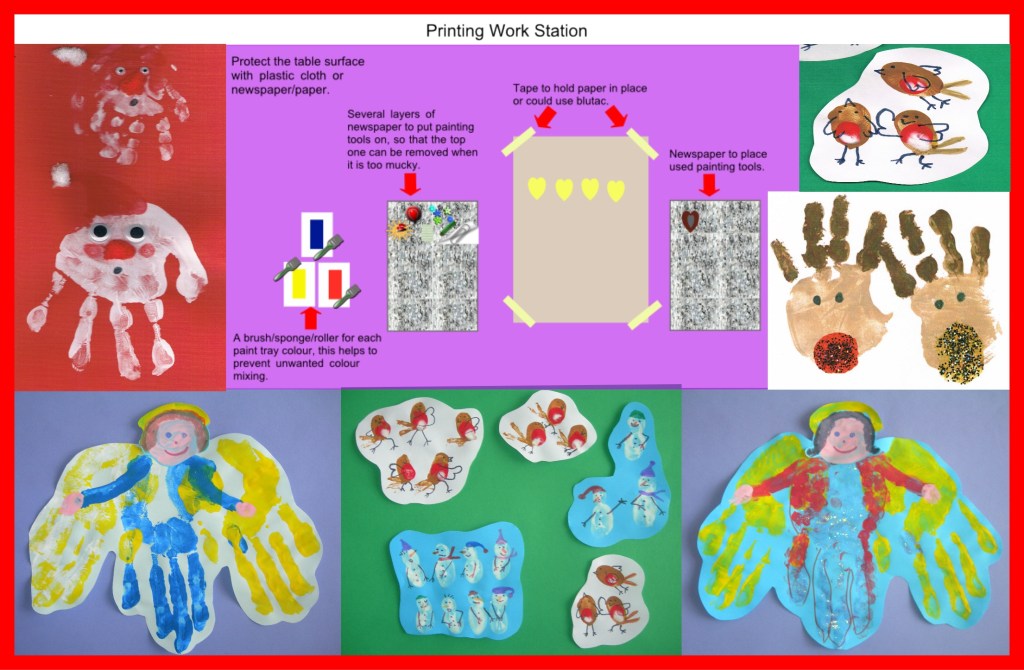
Hand and finger printing can be a fun way of getting your child used to touching, using different textured mediums and descriptive language associated with it. Such as: slimy, smooth, slippery, squidgy, wet, dry, squelch, ooze, press, push down, harder, softer, gentle, lift, light and dark.
Printing activities also help your child to start to become aware of how to control the amount of pressure they use and to develop a vocabulary to describe the different range of pressures required. Learning to control the amount of pressure exerted and how it feels can be very difficult for some children and it takes time and a range of experiences to develop these skills.
There are some fabulous printing ideas out on the internet; one of my favourite art resources is The Usborne Art Idea Books. Hand and finger printing can create some amazing artwork which can be used to make wonderful personalised Christmas cards, tags and paper.
Who could not be charmed by these fun thumb and fingertip snowmen or robins or delighted by a hand print angel or Father Christmas?
For other useful tips on printing and setting up a printing work station, check out our ‘More fun handwriting activities’ in our Parents section of our teachhandwriting.co.uk website under Learning Through Play: https://teachhandwriting.co.uk/more-activities.html

Christmas Fun to Develop Vocabulary Skills

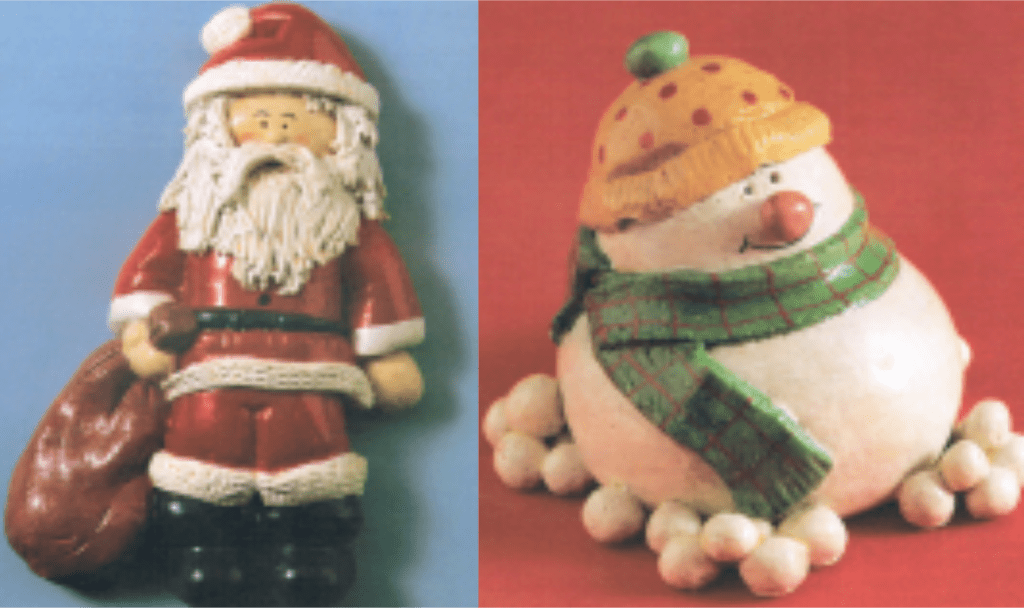
Learning new words (vocabulary) and their meaning begins with earlier play opportunities. Activities, that use play-dough type modelling materials, are great for developing the language knowledge relating to touch, texture, actions and instructional language. Words such as: cold, warm, soft, hard, smooth, rough, gritty, roll, squeeze, squash and pull.
An added benefit to these types of activities is that they also support your child in developing their hand and finger strength, bilateral coordination, sensory perception and for learning and perfecting different grips for using tools.
Salt Dough
So, why not make some great salt dough Christmas gifts and tree decorations with your child. Not only will they melt the hearts of those who receive them but you will be developing your child’s fine motor skills (needed for good handwriting) while having fun; can’t be bad!
For a salt dough recipe that I have found good to use with children go to our Go to our ‘More fun handwriting activities’ page: https://teachhandwriting.co.uk/more-activities.html and just download the ‘Salt Dough Modelling’ pdf (https://teachhandwriting.co.uk/assets/pdfs/Salt%20Dough%20Modelling.pdf )

Developing and Supporting Your Child’s Reading Journey – Week 5

Narrative Skills to Support the Understanding of Different Writing Styles

Narrative skills are based on understanding and using expressive language. This is the kind of language we use to describe things and feelings, to tell events in order and to recall and tell stories.

Children develop their narrative skills over time taking prior knowledge, what they already know, and building on this through:

  • Conceptual thinking; the development of concepts such as shape, colour, the passing of time; as well as developing and using strategies for problem solving and prediction (thinking skills).
  • Content knowledge; what they already know about the topic/situation; the ability to relate situations to their own experiences, the ability to sequence events in a logical order as well as to sequence processes such as getting dressed or making things.
  • Understanding that different genres are set out in different ways, story structure such as that used in fairy tales is different from that used for poetry or informational text (explaining things) or instructional text (how to do something) such as a recipe.

Developing Narrative Skills:

Through Play:

  • Role play different situations; doctor’s, school, office, shops etc.
  • Dramatic and imaginative play; acting out stories together using props and/or puppets and toys.
  • Matching and sorting games to develop understanding of concepts such as colour, shape and size.
  • Puzzles for developing problem solving skills.

Through Drawing/Writing:

  • Ask your child to draw pictures for a story and you write the words
  • Ask your child to draw or write (make mind maps) of the things they already know about something.
  • Ask them to draw different shapes in different sizes and to use specific colours for them.
  • With older children make and draw charts and graphs for classifying objects.

Through Songs/Nursery Rhymes:

Children’s songs and nursery rhymes cover a wide range of concepts:

  • Everyday sequences such as in the nursery rhyme ‘Here we go Round the Mulberry Bush’ which uses the phrase ‘This is the way we…’ to order the event of getting up in the morning.
  • Introduce concepts such as size, colours, shapes and numbers such as “One, two, three, four, five once I caught a fish alive…”
  • Tell stories for example ‘Baa Baa Black Sheep’ or ‘We’re going on a Bear Hunt’ by Michael Rosen & Helen Oxenbury.

Through Talk:

  • As your child explores objects, describe them and their uses; compare and contrast objects.
  • Remember to give your child time to work things out, or to solve a problem. It can take a child several minutes sometimes to process what they have heard and to formulate a response.
  • Talk about concepts such as shape, colour, size, texture.
  • Explain and use language that explains where things are in relation to each other (spatial awareness) such as above, below, on top of, next to, first, etc.
  • Help your child to develop an awareness of time, not just the here and now but what happened in the past and might happen in the future.
  • Put processes into sequence using things like recipes, making things or how plants grow, the passing of time, weeks, months, seasons etc.
  • Encourage your child to recount their day or to re-tell a story.
  • Encourage your child to tell you what they know about something as well as sharing what you know.
  • When sharing information explain how you learned about it; read it in a book or on the internet or heard it on the TV or radio.
  • Encourage your child to guess and predict what might happen.
  • Encourage your child to solve problems or resolve conflicts; if you do it for them explain what you did and why.
  • Embed conversation into everyday routines such as getting dressed, meal times and bed time.

Through Book Sharing:

What books to choose?

  • Books that tell a cumulative tale
  • Books with a natural sequence
  • Books with a repeated phrase or repetition as part of the story
  • Poetry books
  • Non-fiction books

Book Sharing Tips

  • Read books on topics that interest your child.
  • Ask your child to tell you what they know about the book you are reading.
  • Encourage your child to join in while sharing a book, saying repeated phrases for example.
  • Read with expression.
  • Encourage your child to re-tell the story.
  • Re-read books so that your child can become familiar with the story, making it easier to re-tell the story.
  • Relate what is happening in the story to your own child’s experiences or ask then to tell you how it might relate to them.
  • Use props to tell the story to help your child remember the sequence of the story. They may find using props a great way to re-tell you the story.
  • Encourage your child to talk about the pictures. Take their lead and try to ask open-ended question (those that cannot be answered by yes or no).
  • Talk about the books you like and what you like about them.
  • If your child loses interest, try again another time.
  • Talk about the pictures in a book or sections of a story and let your child tell you their thoughts about what is happening and might happen next.

Developing Speaking and Listening Skills: Play – the great starting point!

Developing good speaking and listening skills along with a wide vocabulary knowledge is an important part of your child’s phonological awareness development and phonics pre-skills base. So, it is not surprising that if a child has a weakness in these areas, they may struggle in learning to read and write.

How do we start to working on supporting a child to develop the skill sets needed for learning to read?

PLAY!!!

A couple of weeks ago we looked at the importance of different types of play. By giving your child the opportunity to experience the different types of play you will also be supporting them to build their speaking and listening skills as well as broadening their vocabulary.

Developing these skills is not all about paper and pencil worksheet activities (though this helps later on).

For fun game ideas go to our ‘Big to small’ (https://teachhandwriting.co.uk/big-to-small.html) or games (https://teachhandwriting.co.uk/games.html) sections.

All these can be found in our Learning Through Play in the new parents’ area of the website: https://teachhandwriting.co.uk/parents.html

Different Types of Play and their Importance

We are always being shown how important play is in the development of young animals’ survival and hunting skills. How many times have you thought how cute or lovely when watching kittens, puppies or polar bears playing?

Humans are also animals which thrive and develop through play; in fact, play is so important the United Nations High Commission for Human Rights state it as a right for every child (Ginsburg, 2013).

We often think of play as a frivolous pastime rather than a practical and meaningful one. However, here at Teach Children we see play as a vital part of a child’s physical, emotional, social and intellectual growth and well-being.

There has been considerable research over the years on play, which supports our point of view, with the consensus being that children need to experience five different types of play (Dr.D Whitebread, 2012). These five types of play are roughly based on the developmental opportunities they provide, especially if it is child driven rather than adult lead:

Physical Play – active exercise (running, jumping, skipping etc..), rough & tumble and fine motor skills activities to develop whole body and hand and eye co-ordination strength and endurance. The outdoor element of such play develops independence, resourcefulness and self-regulation while the fine motor skills activities support the development of concentration and perseverance.

Play with Objects – starts as soon as a child can grasp and hold an object; mouthing, biting, turning, stroking, hitting and dropping. It’s how we all learn through the exploration of our senses (sensory-motor play). This type of play develops our abilities to; physically manipulate items, think, reason and problem solve, to set challenges and goals as well as to monitor our own progress.

Symbolic Play – refers to the development of spoken language, visual symbols such as letters and numbers, music, painting, drawing and other media used for communication of thought and ideas. This type of play allows children to develop the abilities to express and reflect on experiences, ideas and emotions. Sound and language play develops phonological awareness required for literacy, while number play that relates to real life situations supports numeracy skills.

Pretence/socio-dramatic Play – Pretend play provides the opportunity to develop cognitive, social, self-regulatory and academic skills. This kind of play means children have to learn and pick up on unspoken rules of interaction, taking on the role of a character and playing within the expected confines of that role.

Games with Rules – physical games such as chase, hide & seek, sport, board and computer games. Develop social skills and the emotional skills of taking turns, winning and losing as well as other people’s perspectives.

                                                             So, to play is to learn!

Bibliography

Kenneth R. Ginsburg, MD, MSEd, 25/07/2013; ‘The Importance of Play in Promoting Healthy Child Development and Maintaining Strong Parent-Child Bonds’: THE AMERICAN ACADEMY OF PEDIATRICS: http://pediatrics.aappublications.org/content/119/1/182.full

Dr.D. Whitebread, April 2012: ‘The Importance of Play’; Commissioned for the Toy Industries of Europe:  http://www.importanceofplay.eu/IMG/pdf/dr_david_whitebread_-_the_importance_of_play.pdf                            

Half-term Fun – Clothes Peg Games

Some fun indoor activities may be the order of the day for this half term as the weather is not so hot.

This is a very simple idea which children love because they can take greater ownership of it. The aim of the activity is to help build up hand and finger strength through using the pegs; however, it can have a dual purpose, helping to keep track of the week by using it as a timetable or for learning spellings or maths activities, as well as supporting the development of language skills.

You do not need anything fancy, just some string (for the washing line), clothes pegs and pieces of paper or card to peg onto the washing line. The washing line can be a permanent fixture or you can just pop it up when you need to use it.

The clothes line needs to be at a height suitable for your child to peg things on to (placed against a wall is a safe option so that no-one can walk into it by accident and hurt themselves).

There are a whole range of games that can be played using this simple washing line and pegs concept:

Memory games – Get your child to peg up 5 to 10 different pictures or items on the line. Then give them 1 minute to remember the items. Once the time is up ask them to look away, or close their eyes, and then you remove one or more of the items. Get them to look back at the line. Can they work out what is missing?

  • You could try just moving one or two of the items around. Can they figure out which ones are in the wrong place and put them back in their correct place?
  • Try swapping an item for something new, which your child did not hang up on the line. Can they work out which is the new item on the line?

Odd One Out – Hang pictures on the line that belong together. Can they pick out the odd item on the line and explain why it is the odd one out.

  • They could all be pictures of fruit with a picture of some clothing
  • They could be shapes with straight sides and one with curves
  • They could all be animals but all are wild with only one being domestic

Sorting – Ask your child to sort all the pictures or items from a selection and to hang all the identical things on the washing line. They could all be the same;

  • Colour
  • Shape
  • Type

Pattern Work – Using pictures, different colour and shaped paper or items create different patterns. The patterns can be based on colour, size or type of object. You can create a pattern sequence on the washing line and then ask your child to try and copy the sequence. Can they explain the pattern and create their own for you to copy and explain?

Pairing or What is the Same? – Hang a range of pictures or items on the line, making sure that some of the items can be paired together because they are exactly the same. They could match because;

  • They are exactly the same e.g., a pair of socks
  • Match numbers to a picture with the same number of items on
  • Match capital to lower-case letters

Or have items that can be put together because they are both from the same set, for example they are types of fruit or are the same