
Developing #Listening & #Speaking Skills week 8 – Music Fun

These games are designed to help a child learn about the different levels of sound, pitch, tone and volume.

Music Fun

  • Skittle Band – Use, or make, a drum stick (wooden spoons are good for this) and explore with your child the different sounds the drum stick makes against objects made of different materials, such as steel saucepan, another wooden spoon, plastic bottles etc. Choose items that are safe and you are happy for them to play with. You could photograph the objects, record the sounds they make, or video (on your phone), to play back and talk about later on. Try moving the activity outside for a different sound quality experience.
  • Orchestral Conductor – Once your child is happy and enjoys playing and making sounds, with different objects and instruments, try the conductor game. You can use your hands or a baton to point and encourage them to play certain sounds just like an orchestral conductor does, but make sure you have a clear stop gesture which your child will understand (you may need to say stop at the same time as the gesture to begin with, but they will soon get the idea). Then swap places and you become the musician and they the conductor; it may not be a classic you create but it is great fun. As your child develops their skills you can add new elements and hand gestures to make the sound louder or softer.
  • Musical Bottles – Use plastic bottles with different amounts of water/sand in them and different things as a beater. Talk about how:
    • Low/deep or high pitched a sound is compared with another.
    • Using different beaters can change the quality of the sound when used on the same bottle.
    • Using different amounts of pressure to hit the bottle makes the sound louder (harsher) or quieter (softer).

Try organizing the bottles in order of pitch to create a musical instrument and using this as part of the Orchestral Conductor game. You could number each bottle or use a different picture on the bottle as a way of encouraging your child to play the bottles in different orders (making music).
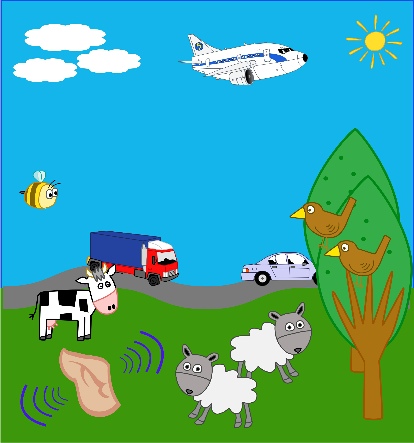

Developing #Listening & #Speaking Skills week 7 – Sound Scanning Games

These games are designed to help a child learn how to block out ambient noises so that they focus and concentrate on one particular sound.

Games

The idea is to identify and talk about different sounds in different locations; in the park or at home in different rooms. Ask the child to listen for a moment (timed activity 30 seconds to start with then increase) and to pick out different sounds they can hear. Some will be close and easier to identify; other sounds may be further away and require more focused concentration to work out what they may be.

  • Sound Scanning Questions to help:
  • What can you hear that is far away?
  • What can you hear that is close by?
  • What can you hear that is loud?
  • What can you hear that is quiet?
  • What can you hear that makes a high-pitched sound?
  • What can you hear that makes a low-pitched sound?
  • What can you hear that sounds big?
  • What can you hear that sounds small?
  • Listening Walk Activities- You could record some of the sounds heard and talked about on the walk. Try changing the ‘What can you …?’ questions to ‘What did you…?’ Depending on your child’s age they may be able to draw a sound scape picture showing all the things they heard on the walk.
  • Where is the Sound? – The aim of the game is finding out where the sound is coming from. Start by using something that makes a good clear sound.  Ask your child to cover their eyes (can use a blindfold) and have them sit or stand in the middle of the room. Move around the room, starting not too far away from them and make the sound. Pause between each sound to give your child time to settle and focus on it before you make the next sound. Try to keep an even, slow pace. The aim is for your child to point in the direction they believe the sound is coming from. Gradually move further away, maintaining the same sound level. Swap places with your child, so you have to guess where the sound is coming from.

To make it more challenging:

  • Change the volume of the noise.
  • Change the object that is making the noise.
  • Change the speed (rhythm), as well as the location, at which the sounds are made.

Have Fun!

The Key to Good Phonics Skills – Part 4

Developing #Listening Skills – Music Fun

These games are designed to help a child learn about the different levels of sound, pitch, tone and volume.

Music Fun

  • Skittle Band – Use, or make, a drum stick (wooden spoons are good for this) and explore with your child the different sounds the drum stick makes against objects made of different materials, such as steel saucepan, another wooden spoon, plastic bottles etc. Choose items that are safe and you are happy for them to play with. You could photograph the objects, record the sounds they make, or video (on your phone), to play back and talk about later on. Try moving the activity outside for a different sound quality experience.
  • Orchestral Conductor – Once your child is happy and enjoys playing and making sounds, with different objects and instruments, try the conductor game. You can use your hands or a baton to point and encourage them to play certain sounds just like an orchestral conductor does, but make sure you have a clear stop gesture which your child will understand (you may need to say stop at the same time as the gesture to begin with, but they will soon get the idea). Then swap places and you become the musician and they the conductor; it may not be a classic you create but it is great fun. As your child develops their skills you can add new elements and hand gestures to make the sound louder or softer.
  • Musical Bottles – Use plastic bottles with different amounts of water/sand in them and different things as a beater. Talk about how:
    • Low/deep or high pitched a sound is compared with another.
    • Using different beaters can change the quality of the sound when used on the same bottle.
    • Using different amounts of pressure to hit the bottle makes the sound louder (harsher) or quieter (softer).

Try organizing the bottles in order of pitch to create a musical instrument and using this as part of the Orchestral Conductor game. You could number each bottle or use a different picture on the bottle as a way of encouraging your child to play the bottles in different orders (making music).