Pre-phonics Skills – Phonological Awareness: Stage 4 – (3 years – 5 years)

Phonological awareness relates to our sensitivity and understanding of the sound structures of our oral language. It enables us to progress from our awareness of large sound units (words in sentences) to smaller sound units (phonemes in words). It also incorporates the ways in which we communicate through speech, body language and written forms.

As your child interacts more with the world and those around them so their language and communications skills increase and the “Why?” stage is upon you. Yes! It can drive you insane at times but their brains are like a sponge, absorbing all sorts of information.

It is at this stage that your child can easily misunderstand your explanations and develop misconceptions as they try to find reasons and meanings for themselves. So, it can be useful to talk through some things again later, to check what they have understood or think about something. A good way of doing this is to ask them to tell someone else who was not there, perhaps Dad or an older brother/sister for instance. This way you can help them to develop a better understanding of the meaning of the word or concept. You can also broaden their experiences, on which to draw understanding, by setting up play scenarios or other activities.

Syllables

At about 4 years old your child is starting to split words into syllables, this allows them to break down words into manageable sound lengths. A syllable is the largest phonological unit (one or a group of sounds) of a word and is like the rhythmic beat of the word.

Your child is starting to refine their sound unit detection skills, moving them on from the previous stage of hearing and detecting articulatory gestures or features in rhymes, to recognizing them in syllables. They start to hear these sound units in different parts of a word, not just as the final sound unit of a word.

Spoken syllables are organized around the vowel sounds, making counting them easy, as the jaw drops when the vowel sound is spoken in the syllable. Try placing your hand under your jaw with your mouth closed before you say a word. Start with ‘cat’; you will notice the jaw drops once; this is because it is a one syllable (monosyllabic) word. Now try the same thing with the word ‘sunset’; your jaw drops twice as this is a two syllable (disyllabic) word, then try saying ‘important’; your jaw drops three times as this is a three syllable word (trisyllabic). Words that have more than three syllables such as hippopotamus are called polysyllabic words.

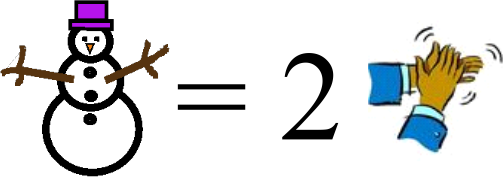
Most children will find it easier to identify syllables in compound words to start with. A compound word is formed by two words (root words) put together such as: sunset, hotdog, snowman and postman. They find it easier because the jaw tends to drop quite distinctly as we say the vowel sound in each of the root words and the slow speed at which we tend to say the word.
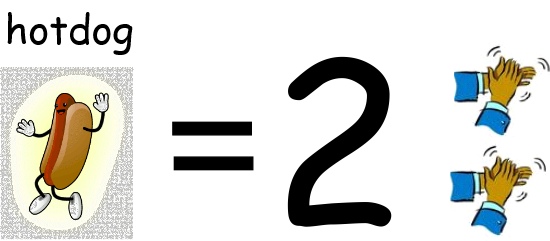
Children love to clap out the number of syllables in a word. It is important to say the word at a normal speed rather than really slowly as this can distort the word and make it difficult to hear the syllables. To start with your child does not need to be able to count the number of syllables in a word but just be able to recognize them by clapping, stamping or jumping for each syllable of a word. It is thought only about 50% of children can count out the syllables by the age of 4, so you can do the counting for them.

Being able to instinctively break down words into their syllables is the next step in breaking them into smaller logical sound chunks and an important skill set needed later on when your child is developing their reading and spelling strategies.

How we identify syllables in speech is slightly different from how we use syllables to de-code for reading and as a spelling strategy, but we need to talk and hear it first before moving to the written form.
The Key to Good Phonics Skills – Part 13

Developing #Listening & #Speaking Skills – Syllable Awareness & Counting (Word Play)

At about the age of 4 years old children start to develop an understanding that words can be split into sound parts (syllables) and that these parts give the word its rhythm.  A syllable is the largest phonological unit (one or a group of sounds) of a word and is like the rhythmic beat of the word.

They should be able to orally blend syllables together to form words and segment words into syllables (https://www.teachphonics.co.uk/phonological-awareness-stage-4.html).

A fun activity to help develop syllable understanding:

How Many Syllables?     

Children love to clap out the number of syllables in a word. It is important to say the word at a normal speed rather than really slowly as this can distort the word and make it difficult to hear the syllables. To start with a child just needs to be able to recognize them by clapping, stamping or jumping for each syllable of a word; they don’t need to be able to count them. It is thought that only about 50% of children can count out the syllables by the age of 4, so you can do the counting for them.

Spoken syllables are organised around the vowel sounds, making counting them easy; as the jaw drops when the vowel sound is spoken in the syllable. Try placing your hand under your jaw with your mouth closed before you say a word. Start with ‘cat’ you will notice the jaw drops once; this is because it is a one syllable (monosyllabic) word.

Most children will find it easier to identify syllables in compound words to start with. A compound word is formed by two words (root words) put together such as: sunset, hotdog, snowman and postman. They find it easier because the jaw tends to drop quite distinctly as we say the vowel sound in each of the root words and because we tend to say these words slowly.

The Key to Good Phonics Skills – Part 13

Developing #Listening & #Speaking Skills – Syllable Awareness & Counting (Word Play)

At about the age of 4 years old children start to develop an understanding that words can be split into sound parts (syllables) and that these parts give the word its rhythm.  A syllable is the largest phonological unit (one or a group of sounds) of a word and is like the rhythmic beat of the word.

They should be able to orally blend syllables together to form words and segment words into syllables (https://www.teachphonics.co.uk/phonological-awareness-stage-4.html).

A fun activity to help develop syllable understanding:

How Many Syllables?     

Children love to clap out the number of syllables in a word. It is important to say the word at a normal speed rather than really slowly as this can distort the word and make it difficult to hear the syllables. To start with a child just needs to be able to recognize them by clapping, stamping or jumping for each syllable of a word; they don’t need to be able to count them. It is thought that only about 50% of children can count out the syllables by the age of 4, so you can do the counting for them.

Spoken syllables are organised around the vowel sounds, making counting them easy; as the jaw drops when the vowel sound is spoken in the syllable. Try placing your hand under your jaw with your mouth closed before you say a word. Start with ‘cat’ you will notice the jaw drops once; this is because it is a one syllable (monosyllabic) word.

Most children will find it easier to identify syllables in compound words to start with. A compound word is formed by two words (root words) put together such as: sunset, hotdog, snowman and postman. They find it easier because the jaw tends to drop quite distinctly as we say the vowel sound in each of the root words and because we tend to say these words slowly.

Developing #Listening & Speaking Skills – Syllable Awareness & Counting (Word Play)

At about the age of 4 years old children start to develop an understanding that words can be split into sound parts (syllables) and that these parts give the word its rhythm.  A syllable is the largest phonological unit (one or a group of sounds) of a word and is like the rhythmic beat of the word.

They should be able to orally blend syllables together to form words and segment words into syllables.

A fun activity to help develop syllable understanding:

How Many Syllables?     

Children love to clap out the number of syllables in a word. It is important to say the word at a normal speed rather than really slowly as this can distort the word and make it difficult to hear the syllables. To start with a child just needs to be able to recognize them by clapping, stamping or jumping for each syllable of a word; they don’t need to be able to count them. It is thought that only about 50% of children can count out the syllables by the age of 4, so you can do the counting for them.

Spoken syllables are organised around the vowel sounds, making counting them easy; as the jaw drops when the vowel sound is spoken in the syllable. Try placing your hand under your jaw with your mouth closed before you say a word. Start with ‘cat’ you will notice the jaw drops once; this is because it is a one syllable (monosyllabic) word.

Most children will find it easier to identify syllables in compound words to start with. A compound word is formed by two words (root words) put together such as: sunset, hotdog, snowman and postman. They find it easier because the jaw tends to drop quite distinctly as we say the vowel sound in each of the root words and because we tend to say these words slowly.

Word Play – Syllable Awareness & Counting

At about the age of 4 years old children start to develop an understanding that words can be split into sound parts (syllables) and that these parts give the word its rhythm.  A syllable is the largest phonological unit (one or a group of sounds) of a word and is like the rhythmic beat of the word.

They should be able to orally blend syllables together to form words and segment words into syllables.

A fun activity to help develop syllable understanding:

How Many Syllables?    

Children love to clap out the number of syllables in a word. It is important to say the word at a normal speed rather than really slowly as this can distort the word and make it difficult to hear the syllables. To start with a child just needs to be able to recognize them by clapping, stamping or jumping for each syllable of a word; they don’t need to be able to count them. It is thought that only about 50% of children can count out the syllables by the age of 4, so you can do the counting for them.

Spoken syllables are organised around the vowel sounds, making counting them easy; as the jaw drops when the vowel sound is spoken in the syllable. Try placing your hand under your jaw with your mouth closed before you say a word. Start with ‘cat’ you will notice the jaw drops once, this is because it is a one syllable (monosyllabic) word.

Most children will find it easier to identify syllables in compound words to start with. A compound word is formed by two words (root words) put together such as: sunset, hotdog, snowman and postman. They find it easier because the jaw tends to drop quite distinctly as we say the vowel sound in each of the root words and because we tend to say these words slowly.

Word Play – Syllable Awareness & Counting

syllables 1

At about the age of 4 years old children start to develop an understanding that words can be split into sound parts (syllables) and that these parts give the word its rhythm.  A syllable is the largest phonological unit (one or a group of sounds) of a word and is like the rhythmic beat of the word.

They should be able to orally blend syllables together to form words and segment words into syllables.

A fun activity to help develop syllable understanding:

How Many Syllables?     

Children love to clap out the number of syllables in a word. It is important to say the word at a normal speed rather than really slowly as this can distort the word and make it difficult to hear the syllables. To start with a child just needs to be able to recognize them by clapping, stamping or jumping for each syllable of a word; they don’t need to be able to count them. It is thought that only about 50% of children can count out the syllables by the age of 4, so you can do the counting for them.

Spoken syllables are organised around the vowel sounds, making counting them easy; as the jaw drops when the vowel sound is spoken in the syllable. Try placing your hand under your jaw with your mouth closed before you say a word. Start with ‘cat’ you will notice the jaw drops once, this is because it is a one syllable (monosyllabic) word.

Most children will find it easier to identify syllables in compound words to start with. A compound word is formed by two words (root words) put together such as: sunset, hotdog, snowman and postman. They find it easier because the jaw tends to drop quite distinctly as we say the vowel sound in each of the root words and because we tend to say these words slowly.

Word Play – Syllable Awareness & Counting

syllables 1

At about the age of 4 years old children start to develop an understanding that words can be split into sound parts (syllables) and that these parts give the word its rhythm.  A syllable is the largest phonological unit (one or a group of sounds) of a word and is like the rhythmic beat of the word.

They should be able to orally blend syllables together to form words and segment words into syllables.

A fun activity to help develop syllable understanding:

How Many Syllables?     

Children love to clap out the number of syllables in a word. It is important to say the word at a normal speed rather than really slowly as this can distort the word and make it difficult to hear the syllables. To start with a child just needs to be able to recognize them by clapping, stamping or jumping for each syllable of a word; they don’t need to be able to count them. It is thought that only about 50% of children can count out the syllables by the age of 4, so you can do the counting for them.

Spoken syllables are organised around the vowel sounds, making counting them easy; as the jaw drops when the vowel sound is spoken in the syllable. Try placing your hand under your jaw with your mouth closed before you say a word. Start with ‘cat’ you will notice the jaw drops once, this is because it is a one syllable (monosyllabic) word.

Most children will find it easier to identify syllables in compound words to start with. A compound word is formed by two words (root words) put together such as: sunset, hotdog, snowman and postman. They find it easier because the jaw tends to drop quite distinctly as we say the vowel sound in each of the root words and because we tend to say these words slowly.

Developing and Supporting Your Child’s Reading Journey – Week 2

Word Awareness

Phonological Awareness Games and Book Sharing Ideas

Phonological awareness relates to our sensitivity and understanding of the sound structures of our oral language. It enables us to progress from our awareness of large sound units (words in sentences) to smaller sound units (phonemes in words).

Our phonological awareness develops over time and the depth of that awareness is based on the range of experiences we have. Research suggests that our phonological awareness begins in the womb at about 24 weeks and is continually built upon throughout our lives. We tend to think of children going through ten distinct phonological stages; the later stages being related to phonics.

Children are taught to read in schools through phonics; the association between sounds (phonemes) to written alphabet letters (graphemes).

Phonics reading is the process of firstly segmenting the written word into letters, or letter combinations, then associating known sounds to those letters and finally blending the sounds together to form words (decoding). If a child is weak in any of the phonological awareness stages before those relating to phonics then they will struggle with learning to read.

Because of the nature of how we develop our phonological awareness games and activities cannot easily be split into categories. Playing, drawing, writing, singing and book sharing all require you to talk with your child highlighting sounds, words and rhythms of language.

Here are some games and activities to help you:

  • Singing and sharing nursery rhymes is a great way to help children hear sounds in words because the words are drawn out and the sounds highlighted or exaggerated.
  • Clapping, bouncing or tapping to songs and rhymes helps to highlight the syllables of the words. A syllable is the largest phonological unit (one or a group of sounds) of a word and is like the rhythmic beat of the word.
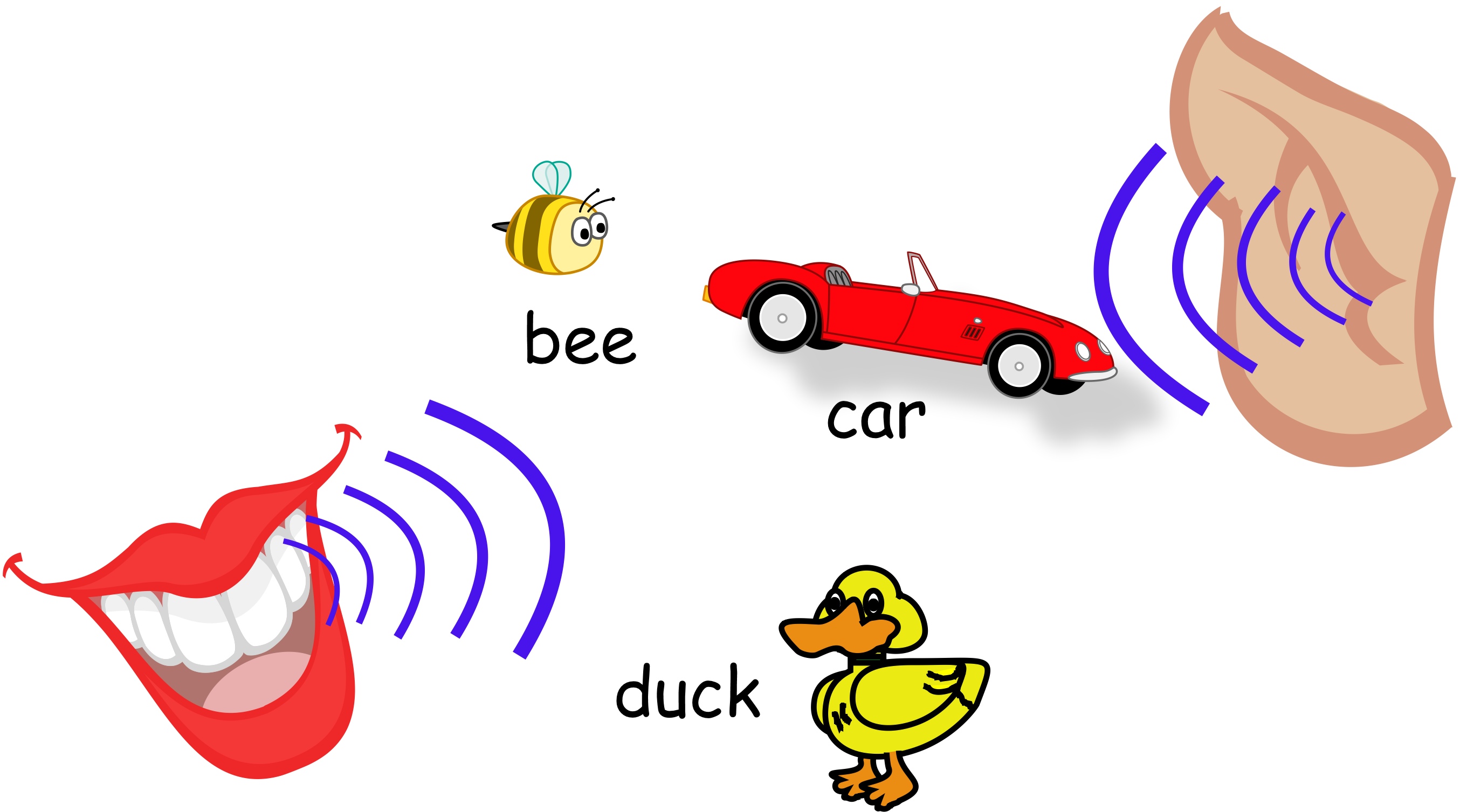
  • Point out the sounds you hear such as animal or environmental noises and explain what is making that noise.
  • Play games or sing songs where you and your child can make noises such as animal sounds (Old MacDonald had a farm) or vehicle noises (The Wheels on the Bus).
  • Draw animal or other every day objects that have a distinct sound, name them and make the sound they produce.

Book Sharing

What books should you choose?

  • Books with sounds of animals and other things
  • Nursery Rhymes
  • Book formatted from songs
  • Books with rhyme and alliteration
  • Poetry books
  • Any book really, remember your local library can help you to chose a good range of books to share with your child if you are not sure.

Book Sharing Tips

  • Don’t be shy, make animal and object noises. If you are self-conscious about it your child will pick up on this. No one thinks twice about an adult making what may appear to be strange noise if they are sharing them with a child (its when you forget they are not with you and you do it that they tend to look at a you a bit funny).
  • Talk about whether a book rhymes or not. Point out the rhyming words, make up other rhyming words for any of the words in the book. Remember they do not have to be real words they can be silly funny words that pick up the rhyming sounds in the original word.
  • It is important to remember for some children saying a word that rhymes with one you have given can be very difficult if not impossible. So, don’t stress them out with this, it is often easier for them to recognise a rhyme than to make one. You could ask them to tell you if two words you give rhyme or not. If they find this easy try giving them three words with only two that rhyme and ask them to identify the rhyming words.
  • After sharing the book pick out words that you can clap out the syllables for. You could make this into a jumping or hopping game instead. With older children ask then to tell you how many syllables the word has and then to check their answer by counting the number of claps or jumps they make.
  • Play an ‘I Spy’ game using the pictures in the book looking for rhyming words for instance by giving clues such as; “It is red and rhymes with the word sock.” The answer is clock.

Syllable Awareness & Counting

Syllables snowman

At about the age of 4 years old children start to develop an understanding that words can be split into parts (syllables) and that these parts give the word its rhythm.  A syllable is the largest phonological unit (one or a group of sounds) of a word and is like the rhythmic beat of the word.

They should be able to orally blend syllables together to form words and segment words into syllables.

A fun activity to help develop syllable understanding:

How Many Syllables?     

Children love to clap out the number of syllables in a word. It is important to say the word at a normal speed rather than really slowly as this can distort the word and make it difficult to hear the syllables. To start with your child just needs to be able to recognize them by clapping, stamping or jumping for each syllable of a word; they don’t need to be able to count them. It is thought that only about 50% of children can count out the syllables by the age of 4, so you can do the counting for them.

Spoken syllables are organised around the vowel sounds, making counting them easy; as the jaw drops when the vowel sound is spoken in the syllable. Try placing your hand under your jaw with your mouth closed before you say a word. Start with ‘cat’ you will notice the jaw drops once, this is because it is a one syllable (monosyllabic) word.

Most children will find it easier to identify syllables in compound words to start with. A compound word is formed by two words (root words) put together such as: sunset, hotbed, snowman and postman. They find it easier because the jaw tends to drop quite distinctly. As we say the vowel sound in each of the root words and because we tend to say these words slowly.