The Key to Good Phonics Skills – Part 6

Developing #Listening & Speaking Skills – Turn Taking Skills – Conversation

This week we will look at turn taking in conversation a skill children need to learn to take part in meaningful interaction with others. These interactions are a vital part of children’s physical, emotional, social and intellectual growth and wellbeing.

Children need to learn that in conversation they need to take turns listening and speaking.

This is more complex process than we often give it credit for as often we, especially in our busy lives, can be guilty of only listening to reply rather than listening to understand.

Children need to learn when to talk and when to listen; for this to happen they need to do the following:

Children need to learn when to talk and when to listen; for this to happen they need to do the following:

  • Actively Listen to the other person. This means:
    • Concentrate on the words being said, by blocking out other environmental noises and voices.For most children and adults this also means looking at the person, watching their facial expression and body language.Listening for the verbal cues and/or changes in the tone of voice that signifies that the person has finished speaking.
    • Recognising that it is either your turn to respond by formulating a reply or not.
  • Formulate a Response. This means:
    • Extracting meaning – taking understanding from the words that have been spoken.
    • Mentally searching for words to compile a grammatically correct set of sentences.

In young children this can take time, not because they do not have the answer, because they just take longer to recall and formulate their responses. This is due to the constant acquisition of new language and understanding of the grammatical conventions that need to be applied.

  • Formulate a Response. This means:
    • Extracting meaning – taking understanding from the words that have been spoken.
    • Mentally searching for words to compile a grammatically correct set of sentences.

In young children this can take time, not because they do not have the answer, because they just take longer to recall and formulate their responses. This is due to the constant acquisition of new language and understanding of the grammatical conventions that need to be applied.

  • Communicate Response. This means
    • Speaking clearly, pronouncing words correctly in coherent sentences.
    • Using socially appropriate facial expressions and body language to accompany the response.
    • Using the appropriate verbal cues and/or changes in the tone of voice that allow the other person to understand it is now their turn.
  • Wait. This means giving time for the other person to formulate their response.
  • Actively Listen to the other person.

Learning these skills takes time and needs to be taught as well as modelled by those around the children. It begins very early on for instance, when we talk to a baby, as if expecting an answer. As a baby starts to make cooing and babbling sounds, they begin to respond to you in those gaps, their first conversations.

Something that is worth remembering:

“When you talk, you are only repeating what you already know. But if you listen, you may learn something new.” (Dalai Lama)
Indoor/Outdoor Circuits Ideas – To Support Language Development

Well, true to form, the Easter Holiday weather is a mixed bag, sunny one minute then pouring with rain the next!  

So, here are a couple of ideas to help your child burn off some of that pent-up energy. Best of all you can class it as language development homework (working on instructional, directional, body awareness vocabulary and listening skills).

An indoor/outdoor circuit training course does not have to take up much space or be messy (but it might be a good idea if indoors to move ornaments a little further out of the way).

Simple activities can be fun if they are done for short periods of time and children do love a time challenge. Make each activity last anything from 30 seconds to 1 minute.

You could record how many they did in the time and see if they have improved when you try it again.

Why not try:

  • Hopping on one leg and then the other (balance & coordination)
  • Use the bottom step of the stairs for step ups (bilateral coordination)
  • Curl ups (core strength)
  • With a cushion balanced on their head can they touch their toes without dropping the cushion (balance, coordination, bilateral coordination and core strength)
  • Star Jumps (balance & coordination)

For more fun, simple activity ideas check out our games page, it is amazing how much fun you can have just hopping, jumping, skipping and dancing on the spot: https://teachhandwriting.co.uk/games.html

If you are feeling really brave why not try building an obstacle course, a lot of the fun is in the designing and making.

Let go and have fun!!!

Treasure or Easter Egg Hunts Develop both Handwriting & Language Skills

The Easter Holidays have started, so here are some fun activities to keep children of all ages entertained whether we have rain or sunshine.

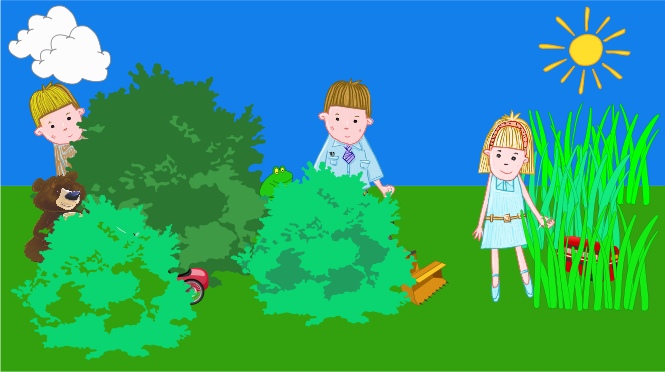
An Easter egg, or treasure, hunt is a great way to teach children directional language. Being able to understand directional and placement (prepositions) vocabulary is important for understanding everyday instructions such as ‘put your cup on the table’; ‘go along the hall and stop at the door in front of you’.

We also use this directional language to explain how to draw patterns and write letters, which is another reason why it is important for young children to be introduced to, and have a good understanding of, this kind of vocabulary.

Through Easter egg, or treasure, hunts you can introduce new directional and placement language in a fun and exciting way. There are a number of different ways to approach this:

  • You can give verbal instructions to the hidden egg/treasure.
  • You could create a map for them to follow and ask them to talk you through the map, supporting them with new language as necessary.
  • You could use a mixture of verbal and map clues.
  • For older children get them to hide the egg/treasure and give you instructions, or draw a map.
  • If you have more than one egg/treasure and they are of different sizes make the larger ones more difficult to find.

The important thing is the language shared. Words and phrases to use are: left, right, straight on, forward, backwards, about turn, turn around, up, down, higher, lower, stop, next to, in front, beside, underneath, on top of, behind, on the left of, on the right of, outside, and inside.

Easter egg, or treasure, hunts are a great whole family activity and you are never too young or too old to join in!

The ‘What’s That?’, What You Doing?’ and ‘Why?’ Stages

As children interact more with the world and those around them so their language and communications skills increase and the ‘What’s That?’, ‘What You Doing?’ and ‘Why?’ stages begin. Yes! It can drive you insane at times, but it is at these stages they are cementing their knowledge and understanding, their brains are like a sponge, absorbing all sorts of information and linking them together.

It is at these stages that a child can easily misunderstand explanations and develop misconceptions as they try to find reasons and meanings for themselves. So, it can be very useful to talk through some things again later, checking their understanding and thinking. A good way of doing this is to ask them to tell someone else who was not there, perhaps Dad or an older brother/sister for instance. This way you can help them to develop a better understanding of the meaning of the word or concept.

You can also broaden their experiences, on which to draw understanding, by setting up play scenarios or other activities.

Why Vocabulary Building with your Child is so Important!

Building your child’s vocabulary is a vital pre-reading skill. This is because schools teach what is referred to as the ‘The Simple View of Reading’:

Reading Comprehension = Decoding (Phonics) x Linguistic (Spoken Language) Comprehension  

This means that a child decodes the words using their phonics skills and their own vocabulary knowledge to help them understand the text they are reading.

So, for a child to have good reading skills they need to be able to speedily decode unknown words and recognise familiar printed words. And, understand the meaning and grammatical structure of the spoken language and then use this knowledge to understand the printed text.

This means that a child:

  • Who does not fully understand the meaning of all the words and/or the grammatical structure of the spoken language (age appropriate) will also be unable to fully understand the printed text; even if they decoded it correctly.
  • Whose ability to understand the spoken word is poor will also be unable to understand the printed text; even if they have managed to decode a few words.

Helping your child build their vocabulary is also vital, if they are to continue to develop good communication skills. Talking, explaining, sharing and playing are all important in developing your child’s vocabulary, their understanding of the words meaning in the context of the conversation and the grammatical conventions of our spoken language.

Why Placement (Preposition) and Directional Vocabulary is Important!

Teaching your child the vocabulary related to placement (preposition) and direction is import in supporting them to understand and follow instructions, as well as sharing information themselves, such as; ‘put your cup on the table’ or to say ‘teddy in car’.

We also use this placement (preposition) and directional language to explain how to draw shapes, patterns and write letters and numbers. We have created three sets of picture cards and games to help you support your child in developing and using positional (preposition) and directional vocabulary

You can find these free resources on our Phonics website by following this link: https://www.teachphonics.co.uk/phonics-resources.html

What are prepositions?

A word used with a noun or pronoun to show place, position, time or means, e.g. at home, in the hall, on Sunday, by train.” Definition from Oxford School Dictionary, third edition 2002.

Here are just some preposition and directional phrases you might like to use:

On the … On top of the … Above the … Over the…

Under the… Below the … Beneath … Underneath …

Behind the …

In front of the…

Next to …Beside the … On the right of … To the right of … On the right-hand side … On the left of … To the left of … On the left-hand side… Before the … After the …

In the…  Inside the …

Out of the … Outside of the …

Between the … In between the … In the middle … In the center …

Going up the ….  Going down the … Going towards the… Going away from …

The Importance of Small Talk & Conversational Turn Taking – Week 1

Don’t underestimate the importance of everyday chatter or conversation (‘Small Talk’), children develop and learn a great deal through ‘Small Talk’ with adults and other children.

What do we mean by ‘Small Talk’?

With babies it is the kind of talk that explains what we are doing, what they are doing, where we are going and what we can see.  As they get older our verbal exchanges increase as we support their receptive and expressive vocabulary development. Through these exchanges we also support their general language development and understanding of how words are pronounced, basic sentence structure and using the correct tense.

When we talk with a child we demonstrate and model the use of language in real time so that it has meaning. For instance, a child may point and say “cat” and we would respond with “Yes, the cat is sleeping.” Or we may correct the child and say “That is a dog.” If we could we would point to a cat and explain the difference. We also correct mispronunciation of words and correct tense issues in the same way; repeating the word or sentence using the correct pronunciation or tense back to the child.

For more tips and advice try our tips page: http://bit.ly/2ncjzYn

The Communication Trust has a link to a free downloadable booklet called Small Talk which is a very useful guide for understanding how your child learns to talk from birth to age 5:

https://www.thecommunicationtrust.org.uk/resources/resources/resources-for-parents/small-talk.aspx

Conversational Turn Taking

We covered this a couple of weeks ago but I think it is useful to recap the main points again here as it supports the development of ‘Small Talk’:

Children need to learn when to talk and when to listen; for this to happen they need to do the following:

  • Actively Listen to the other person. This means:
    • Concentrate on the words being said, by blocking out other environmental noises and voices.
    • For most children and adults this also means looking at the person, watching their facial expression and body language.
    • Listening for the verbal cues and/or changes in the tone of voice that signifies that the person has finished speaking.
    • Recognising that it is either your turn to respond by formulating a reply or not.
  • Formulate a Response. This means:
    • Extracting meaning – taking understanding from the words that have been spoken.
    • Mentally searching for words to compile a grammatically correct set of sentences.
    • In young children this can take time, not because they do not have the answer, because they just take longer to recall and formulate their responses. This is due to the constant acquisition of new language and understanding of the grammatical conventions that need to be applied.
  • Communicate Response. This means
    • Speaking clearly, pronouncing words correctly in coherent sentences.
    • Using socially appropriate facial expressions and body language to accompany the response.
    • Using the appropriate verbal cues and/or changes in the tone of voice that allow the other person to understand it is now their turn.
  • Wait. This means giving time for the other person to formulate their response.
  • Actively Listen to the other person.

Developing a Child’s Speaking and Listening Skills is Vital!

It is not just the key to literacy success but an essential social communication skill.

Sadly, with the closure of schools over the last year due to the COVID-19 situation schools are reporting ever increasing concerns over the decline in young children’s speaking and listening skills. So, over the next 7 weeks, we are looking again at the different developmental elements of speaking and listening; providing practical games and activities to help build a child’s skills. 

Week 1. The Importance of Small Talk & Conversational Turn Taking Skills

Week 2. What is Listening?

Week 3. Games to Develop Listening Skills – Sound Screen Games

Week 4. Games to Develop Listening Skills – Sound Scanning Games

Week 5. Games to develop Listening Skills – Music Fun

Week 6. Accents – Phonemic awareness & Phonics

Week 7. Games to develop Listening Skills – Phonemic Awareness

Summer Fun – Part 4 – Get Cooking!

Cooking 1

Cooking is a great fun way to practise getting both hands to work together. This helps to develop coordination, hand and finger strength and dexterity skills; all skills required for handwriting. However, it is amazing how much talk can come from this as well; not just at the time with you but when they share the day’s experience with others later on (developing their phonological awareness).

An added benefit at this time of year is that you can do ‘Pick Your Own’. Getting out and about and encouraging your child to pick their own fruit is not only great fun but another sneaky way of working on their hand and finger strength and dexterity.

There are so many recipes, especially online, for making quick easy great tasting food (make a large batch and freeze the rest).

So, if the sun is shining, or it is just not raining, get out there find your local ‘Pick Your Own’ or check out the bargains at your local shops/market and get cooking!

Summer Fun – Part 3 – Think more Play, Play and Play!!!

Play play play 2

We are nearly through the summer holidays; six weeks may have seemed like a long time but it is amazing how quickly it passes.

The last thing you and your child probably want to think about right now is handwriting or phonics and getting ready for next term; and quite right too!

So, don’t think about it in the conventional way of practise, practise and practise.

Think more play, play and play!!!

Children learn so much through just playing; developing physical, mental, communication and vocabulary strengths and skills, which all support them at school and with learning.

Once introduced to a new game or activity children will very often take it and make it their own, making new rules and introducing extra characters or challenges.

The skill as a parent is remembering to let go of your preconceived ideas about how a game should be played and letting your child take the initiative.

If you provide the opportunities it is amazing how they will take on the challenge of inventing a new game or (in their eyes) improving an existing one.

This does not have to cost a penny; use the toys they already have or make games using empty plastic bottles or cardboard tubes.

The following types of play can support and develop the key strengths and skills your child needs for handwriting and you have not had to mention school or homework.

  • The local play park is a fantastic free resource; running, jumping, crawling and climbing can all be encouraged. If your child is a little reluctant then it may well be that they are unsure how to do some of these activities. Explain when jumping that they needed to land on their feet and bend their knees as they land. Start small and as their confidence grows so does the height or distance they jump. Climbing can be scary for some children so again explain how to climb, moving one hand or foot at a time so that there are always three other points of contact.
  • If you are lucky enough to have a garden then mud play is messy but so much fun, it can be contained in a small area and will not only make you a cool adult but, if you join in, it will knock years off you (have a go, it is a great free therapy session).
  • Skittle games are always fun, extend the activity by decorating the skittles (plastic bottles or cardboard tubes) using anything from crayons, paint or even dress them up as people or animals.

Enjoy!