Homonyms & Homophones!

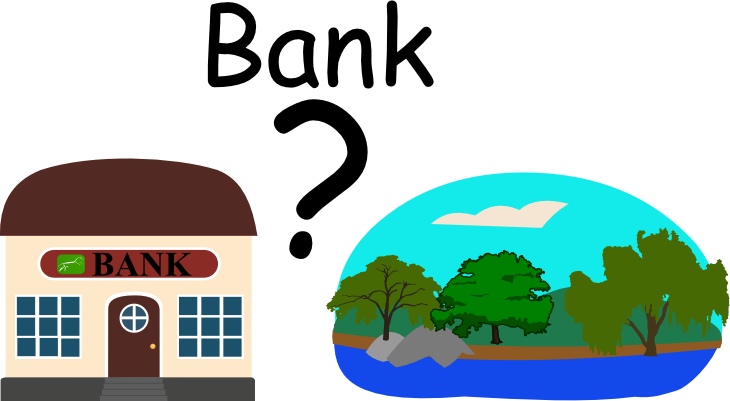
Homonyms and homophones need to be heard or read within a specific context if we are to understand what the word means, for instance, if I say the word ‘bank’ and do not give any other verbal or written clues what do I mean?

The word on its own could mean a couple of things the bank of a river or sand bank or a bank where I can collect money. If it is not put into a context its meaning is unclear. The word ‘bank’ is classed as a homonym.

Homonyms are words which are pronounced and spelt the same; therefore, their meaning can only be truly understood when the context in which the word is being used is made clear. For instance, the word ‘bark’ can be used to mean the bark on a tree or the noise a dog makes.

Homophones are words which are pronounced (sound) the same but have a different meaning and are spelt differently such as, ‘their’ and ‘there’, ‘one’ and ‘won’ or ‘two’, ‘to’ and ‘too’.

Pre-phonics Skills – Phonological Awareness: Stage 3 – (2 years – 4 years)

Phonological awareness relates to our sensitivity and understanding of the sound structures of our oral language. It enables us to progress from our awareness of large sound units (words in sentences) to smaller sound units (phonemes in words). It also incorporates the ways in which we communicate through speech, body language and written forms.

By this stage your child’s awareness of rhyme will emerge, with them enjoying nursery rhymes, songs and stories with rhyme alliteration and repetition.

our child is starting to understand the more complex meaning of words and concepts such as positions (on, off, in, out, etc.) prepositions; size (big and small); quantity (1 and 2) and others such as hot, cold, wet, stop, go, loud, quiet, soft, heavy and colours.

Modelling and showing your child, the meaning of words and different concepts is really important if they are to truly understand and use them effectively in their speech (expressive language). For example, if you are trying to help them understand the meaning of wet, use water, show them the difference, and let them experience through touch and play what wet feels like compared with dry.

Explaining and using a word in different situations also helps your child to gain a fuller understanding of a word’s meaning, for instance the words ‘on’ and ‘off’ can be used in different situations; 1. You turn a light on and off. 2. You put the cup on the table or you can take it off the table. 3. Put your shoes on or take your shoes off.

Our language can be very confusing at times so it is important to provide as many opportunities as possible for your child to experience and play with new words and meanings in different ways, locations and times. It is important to model correctly formed sentences and the pronunciation of words. It is NOT about correcting your toddler and making them repeat what you have just said, but repeating back to them what they have said using the correct sentence structure or word pronunciation, modelling (leading by example). They may not be mature enough to pronounce words correctly yet, or form grammatically correct sentence, but it is what they need to be hearing, so they can store the information away for a later date.

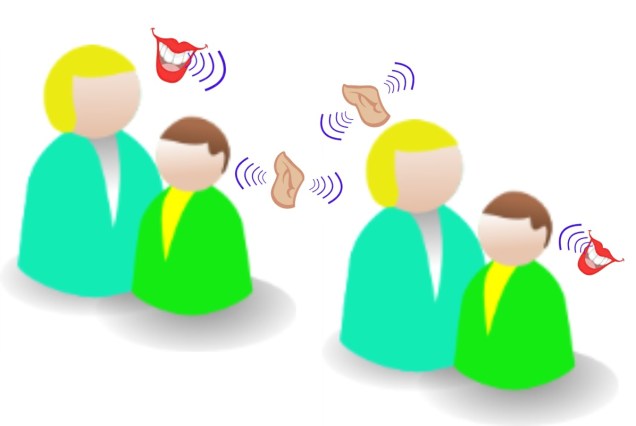
Through talking and playing your child is also continuing to develop other key communication skills such as turn taking, understanding facial expressions and body language and the all-important listening skills. Their receptive language skills are growing fast, especially when compared to those of their expressive language, so they still understand far more than they can express.

Rhyme Awareness

Your child is beginning to become more sensitive to the larger segments of sounds within words (articulatory gestures or features). In developing this awareness, they begin to hear and enjoy the rhythmic patterns of these large sound units, providing them with more varied and engaging opportunities for sound and word play.

At about 3 years old research suggests that a child starts to store sounds units into sets that have the same or similar articulatory gestures or features. There is a limited set of articulatory gestures or features in the English language which are then reorganized and positioned in hundreds of different combinations to form words.

By this stage they are enjoying hearing and participating in action and finger rhymes, joining in ones they know and quickly taking on new rhymes and actions. They will of course have favourites which they never tire of hearing or singing (even though you may be going slightly mad hearing them again).

At around the age of 2 ½ – 3 years old your toddler is beginning to recognize and produce rhyme through oral word play. They learn through rote, and imitation, to rhyme words and identify oral rhyming words using real and made-up nonsense words. They also enjoy alliteration (words that begin with the same sounds such as ‘Sammy snake slithers silently’) and repeated short phrases which they can anticipate in a story, or rhyme, which they can join in with; such as “I’ll huff and puff and blow your house down!” in the story of ‘The Three Little Pigs’.

Pre-phonics – Phonological Awareness Stage 2 – (1 year – 2+ years)

Your child will start to isolate individual words in a speech flow, engage in sound play and recognise that sentences are made up of individual words.

By about 18 months old your toddler’s receptive language* skills have grown to understanding anything from 200-500 words, with their understanding based on the simple phrases and words they hear a lot. So, the more you talk, repeat, show, model and explain to your child the greater the opportunities they have for extending and developing their receptive language skills.

As your child’s receptive language (ability to hear and understand words) develops so will their ability to isolate key words in a sentence. For instance, they will initially pick up on the word ‘biscuit’ when asked “Do you want a biscuit?” Word awareness allows them to focus on just the relevant information they are interested in.

Continue talking to your child as much as possible, but once they are about 10-12 months old reduce the use of ‘Parentese’ and instead use clearly pronounced, more simplified language patterns.

During this stage they are starting to respond to familiar requests such as “Come here!”; understand simple questions “Where is Daddy?”; follow simple instructions “Give the ball to Mummy!” and recognize and point to familiar objects when you ask them to.

For your child to reach these milestones in their speech, language and communication abilities they need to learn and develop their listening skills. Your child needs to learn how to pay attention – being able to focus on a particular sound/voice (filtering out other noises); they need to develop their stamina – concentrating on the sound/voice to take in the information; and they need to develop their comprehension – interpreting the sound/voice to extract meaning.

Although your child’s receptive language is developing well, their expressive language is far more limited, with them only being able to say around 20 words. The frustration of understanding but not being able to communicate leads to what is commonly known as ‘The Terrible Twos’. Sign language can be a very powerful tool to help you and your child to manage and lessen these communication frustrations.

Around the age of 2 years old many children use more than 50 single words and are beginning to put 2 or 3 words together to form short phrases and to ask simple questions “what that?” or “who that?”.  They are beginning to recognize that sentences are made up of individual words and are able to pick out more than one key word in a simple sentence such as “Put your shoes and coat on!”.

Helping your child to build their vocabulary (word awareness) and the meaning of these words is vital if your child is to continue to develop good communication skills. Talking, explaining, sharing and playing are all important as well as making sure that you pronounce words clearly and correctly for your child to hear. Your child will not have developed all the skills needed yet, to copy you accurately, but they will store the sound pattern information for later use.

Playing sound detection games is a fun way of helping your child to build their sensitivity to sounds as well as helping them to develop their listening and attention abilities.

Toddlers continue to engage in sound play as they keep on building their sound knowledge and ability to distinguish between environmental sounds and those of language. They will play with words to make up rhymes and nonsense words as a way of learning how to generate new sounds, rather than for expressing their thoughts and understanding.  It is a good gauge of your child’s sensitivity to sounds in words.

* Receptive language is how we take in and understand language; it is what we hear, see and read. This also includes body language and environmental clues. All these elements help us to interpret the situation and give meaning, so that we can understand what is needed or required of us. We do not need to be able to produce language to receive and understand it, so infants and toddlers understand far more than they can express (expressive language**).

Our understanding through receptive language enables us to communicate, socialize and comprehend instructions, different situations and scenarios.

** Expressive language is our ability to put our thoughts, needs and wants into words and sentences in a way that makes sense and is grammatically correct. A baby’s expressive language to begin with is based on cries and gestures moving to sound making, combined with gestures and their body language.

We use this expressive language when we speak and write. Even when babies and toddlers move to speaking words, they have a limited vocabulary which is why they can get frustrated when we do not understand them.
Are your child’s #phonics skills good for their age?

With more and more expected of our pre-school and 4 to 7 year old children it can be difficult to know what the realistic age appropriate skills are in relation to phonics.

In fact, phonics is only part of the story starting at stage 8 of a child’s phonological awareness development.

Stages 1 to 7 of a child’s phonological awareness, what we refer to as pre-phonics skills, are the continual development of their understanding and knowledge of our spoken language as well as other communication forms, such as gestures, facial expressions, body language and social conventions.

Stages 8 to 10 of a child’s phonological awareness, the phonics reading and writing stages are the continual development of their understanding and knowledge for learning to reading and write.

As a child’s phonological awareness skills build on each stage, the age at which a child reaches them varies making it difficult to know how your child is doing.

We recognise this variation and use age ranges as a rough guide to help you understand where your child is in their phonological awareness skills.

By clicking on the various stages of phonological awareness you will find appropriate age range information, advice and activities to support your child. Try not to jump a stage as each one is important in unlocking the knowledge and skills for the stage above.

Stages 1 to 7 (Pre-phonics skills): https://www.teachphonics.co.uk/phonological-development.html

Stages 8 to 10 (Phonics): https://www.teachphonics.co.uk/phonological-development-phonics.html

Summer Fun – Think more Play, Play and Play!!!

The last thing you and your child probably want to think about right now is handwriting or phonics and getting ready for next term; and quite right too!

So, don’t think about it in the conventional way of practise, practise and practise.

Think more play, play and play!!!

Children learn so much through just playing; developing physical, mental, communication and vocabulary strengths and skills, which all support them at school and with learning.

Once introduced to a new game or activity children will very often take it and make it their own, making new rules and introducing extra characters or challenges.

The skill as a parent is remembering to let go of your preconceived ideas about how a game should be played and letting your child take the initiative.

If you provide the opportunities, it is amazing how they will take on the challenge of inventing a new game or (in their eyes) improving an existing one.

This does not have to cost a penny; use the toys they already have or make games using empty plastic bottles or cardboard tubes.

The following types of play can support and develop the key strengths and skills your child needs for handwriting and you have not had to mention school or homework.

  • The local play park is a fantastic free resource; running, jumping, crawling and climbing can all be encouraged. If your child is a little reluctant then it may well be that they are unsure how to do some of these activities. Explain when jumping that they needed to land on their feet and bend their knees as they land. Start small and as their confidence grows so does the height or distance they jump. Climbing can be scary for some children so again explain how to climb, moving one hand or foot at a time so that there are always three other points of contact.
  • If you are lucky enough to have a garden then mud play is messy but so much fun, it can be contained in a small area and will not only make you a cool adult but, if you join in, it will knock years off you (have a go, it is a great free therapy session).
  • Skittle games are always fun, extend the activity by decorating the skittles (plastic bottles or cardboard tubes) using anything from crayons, paint or even dress them up as people or animals.

Water, water everywhere!  

The SUN is meant to be out which makes it time for the water fights and games to begin.

It is August so the weather should be perfect, so why not set up water squirting games in the garden. The kids are waterproof and everything else will dry out, eventually!

How can water fights and games, where you can get wet, be handwriting and phonics homework?

You will be encouraging your child to develop their hand strength, co-ordination and eye tracking skills (all handwriting skills). However, these games are also fantastic for developing sound and word awareness skills.

Try mimicking the sounds that the water makes as it drips on to the floor or hits the targets; use directional language to support your child’s aiming skills; describe how the objects move when hit: bouncing, rolling or flying and talk through the emotions evoked through playing the games.

As well as supporting your child in developing a whole range of physical and language skills you will also increase your cool adult status.

Some fun water games:

  • Try setting up a target wall, using chalk to draw the targets.
    • How many of the targets can you hit with water squirted from a water pistol or squeeze bottle in a set time.
    • How many targets can be washed off.
  • Set up a skittles range.
    • Each skittle hit with water can be worth a certain number of points, or the distance of the skittles may affect their value.
    • A time trial game to hit all the skittles. If you are using plastic bottles as skittles try making some of them a little heavier by putting sand or dirt in them to make it a bit harder to knock them over.
  • Move the object race games.
    • A light toy/ball has to be moved by squirts of water over a distance.
    • A range of objects moved in to target areas to gain points.

The only limitation is you and your child’s imagination and trust me kids never tire of finding new ways to play with water (but then again neither do many adults)!

Homework has never been so much FUN!

Developing Speaking and Listening Skills: Play – the great starting point!

Developing good speaking and listening skills along with a wide vocabulary knowledge is an important part of your child’s phonological awareness development and phonics pre-skills base. So, it is not surprising that if a child has a weakness in these areas, they may struggle in learning to read and write.

The summer holidays are the perfect time to start working on supporting your child to develop the skill sets needed for learning to read.

How do we do this?

PLAY!!!

Last week we looked at the importance of different types of play. By giving your child, the opportunity to experience the different types of play you will also be supporting them to build their speaking and listening skills as well as broadening their vocabulary.

Developing these skills is not all about paper and pencil worksheet activities (though this helps later on).

For fun game ideas go to our ‘Big to small’ (https://teachhandwriting.co.uk/big-to-small.html) or games (https://teachhandwriting.co.uk/games.html)sections.

All these can be found in our Learning Through Play in the new parents’ area of the website: https://teachhandwriting.co.uk/parents.html

Enjoy the summer break with your child and learn to play again.

Turn Taking Skills for Play

This week we will look at turn taking in play a skill children need to learn to take part in meaningful interaction with others. These interactions are a vital part of children’s physical, emotional, social and intellectual growth and wellbeing.

Children need to learn the importance of waiting for their turn when playing with others, something many find hard to understand to begin with. 

Like most skills it needs to be taught and practised and is part of our phonological awareness development as it requires us to learn an associated vocabulary along with facial and other physical cue.

A child who is taught and given lots of practise at taking turns will find interacting and playing with others easier later on.

Turn taking is easy to implement into everyday activities and play and something you probably do anyway, without even thinking about it

Here are some ideas to help you to support your child:

  • Try to use the phrase “My turn”, “Your turn” or “Daddy’s turn” (name a third person) when playing or doing an activity such as sharing a book.
  • Toddlers have a short attention span so keep the turn short to start with.
  • Physical games such as rolling and kicking a ball or running and jumping activities can help to encourage turn taking and learning to wait for your turn. Again, don’t make the turns too long and to help keep your child engaged while you have your turn, talk with them about what you are doing during your turn and when they are having theirs.
  • Count Down or Up – To help young children develop an understanding that if they wait, they will get their turn, explain that you will count to 10 and then it is time to swap and someone else has a turn, count to 10 again and return the toy or wanted object to your child. It won’t take long for them to understand that they will get their turn without a fuss.
  • Turn Time – As your child gets older try using a timer/clock to help them increase the time scale between taking turns. Try not to make the gaps between turns too long to start with, as young children find the concept of time very difficult, 1 minute might as well be an hour in their eyes. Show clearly a start point and the finish point for the time scale so your child can watch or come back and check the passing of time. Don’t be tempted to ignore the timer if it is your child’s turn, make sure they are offered the toy or turn that is due to them, otherwise they will feel cheated and some of the trust is lost.
  • As children get older, playing card and board games helps to further develop their turn taking skills.

The ‘What’s That?’, What You Doing?’ and ‘Why?’ Stages

As children interact more with the world and those around them so their language and communications skills increase and the ‘What’s That?’, ‘What You Doing?’ and ‘Why?’ stages begin. Yes! It can drive you insane at times, but it is at these stages they are cementing their knowledge and understanding, their brains are like a sponge, absorbing all sorts of information and linking them together.

It is at these stages that a child can easily misunderstand explanations and develop misconceptions as they try to find reasons and meanings for themselves. So, it can be very useful to talk through some things again later, checking their understanding and thinking. A good way of doing this is to ask them to tell someone else who was not there, perhaps Dad or an older brother/sister for instance. This way you can help them to develop a better understanding of the meaning of the word or concept.

You can also broaden their experiences, on which to draw understanding, by setting up play scenarios or other activities.

The Key to Good Phonics Skills

The key to good phonics skills is having good listening, speaking and vocabulary skills.

These are not just the elements for phonics and other literacy success but an essential for social communication skills as well.

Sadly, schools are reporting ever increasing concerns over the decline in young children’s speaking and listening skills. So, over the next 13 weeks, we are looking again at the different developmental elements of listening and speaking which in turn will support vocabulary development. Providing practical information, games and activities to help build a child’s skills. 

Week 1. What is Listening?

Week 2. Games to Develop Listening Skills – Sound Screen Games

Week 3. Games to Develop Listening Skills – Sound Scanning Games

Week 4. Games to develop Listening Skills – Music Fun

Week 5. Games to develop Listening Skills – Phonemic Awareness

Week 6. Conversational Turn Taking Skills

Week 7. Different Types of Talk

Week 8. The Importance of Small Talk

Week 9. How to Encourage Your Child to Keep Talking

Week 10.  Word Awareness

Week 11. Activities to Develop Talking & Language Skills

Week 12. Activities to Develop Rhyme & Alliteration

Week 13. Activities to Develop Syllable Awareness

The Key to Good Phonics Skills – Part 11

Developing #Listening & #Speaking Skills – Games to Encourage Talking and Language Knowledge

Last week we explained the importance of developing your child’s word awareness skills here are some further games ideas to encourage them to use this new language.

  • Playing tapes or CDs of nursery rhymes and children’s song are good for helping your child to make the distinction between the music and words (language used) in them. It is a good idea to practise this skill when there are no other noise distractions.
  • When your child points at something tell them the name of the object, for example if they point at an apple, say “Apple”.
  • Try to use the new word in context regularly as repetition of the word will help your child to remember it and reinforce the meaning of the word.
  • Try playing some action songs and rhymes to help your child learn the actions for the rhyme, then let them have a go on their own. Watch them to see if they can do some of the actions at the right time in the song, to see if they are listening for the right cue words. If they are struggling, explain they have to wait for certain words and show them what to do and when to do it.
  • If they are trying to say a word, let them finish and then say it back to them clearly and correctly. Do not make them repeat it back to you, they may choose to do so but make it their choice.
  • Repeat and expand on what your child says, so if they say “Dog!” you may say “A big dog!” This also helps them to develop an understanding of sentence structure.
  • Finger rhymes, such as ‘Round and Round the Garden’, ‘Pat-a-cake’ and ‘Incy Wincey Spider’ and action songs encourage your child to interact with words, the sounds within them and the rhythms they create. ‘Row, Row Your Boat’ is a lovely whole body movement song that encourages a rhythmic whole-body motion, which babies and toddler enjoy (as well as the adults).
  • Sharing and talking about the books you are reading helps to build word knowledge, as you point to the pictures, picking out different objects.  Reading out aloud helps to introduce your child to words that they may not experience in their everyday talk. This helps to expose them to new vocabulary and the sounds to be found in those words.
  • Introducing and playing sorting games helps your child to build a mental filing cabinet system of categories, this helps them to remember and learn the meaning of words. Start by introducing simple categories of everyday items like food or clothes as their vocabulary increases categories such as colour, size and texture become more appropriate.