The ‘What’s That?’, What You Doing?’ and ‘Why?’ Stages

As children interact more with the world and those around them so their language and communications skills increase and the ‘What’s That?’, ‘What You Doing?’ and ‘Why?’ stages begin. Yes! It can drive you insane at times, but it is at these stages they are cementing their knowledge and understanding, their brains are like a sponge, absorbing all sorts of information and linking them together.

It is at these stages that a child can easily misunderstand explanations and develop misconceptions as they try to find reasons and meanings for themselves. So, it can be very useful to talk through some things again later, checking their understanding and thinking. A good way of doing this is to ask them to tell someone else who was not there, perhaps Dad or an older brother/sister for instance. This way you can help them to develop a better understanding of the meaning of the word or concept.

You can also broaden their experiences, on which to draw understanding, by setting up play scenarios or other activities.

Beat ‘The Terrible Twos’ – Gestures & Signing

Before an infant/toddler (1 to 2 years +) can talk they will often use gestures to help them get what they want, or let you know that they want you to do something again. Quite often these gestures are only really understood by you, this makes it difficult for others to understand your child, causing them to become frustrated at the lack of response.  

Although your child’s receptive language (understanding what is being said and asked of them) is developing well, their expressive language (telling others what they want and think) is far more limited, with them only being able to say around 20 words. The frustration of understanding but not being able to communicate leads to what is commonly known as ‘The Terrible Twos’. Sign language can be a very powerful tool to help you and your child to manage and lessen these communication frustrations.

For more tips and ideas to help you and your child to develop effective gesture and signing techniques follow the link to our ‘Gesture & Signing’ page: https://www.teachphonics.co.uk/gestures-signing-babies.html

When do phonics skills start?

There are 10 stages of phonological awareness. Stages 1 to 7 are what we class as the pre-phonics skill stages (https://www.teachphonics.co.uk/phonological-development.html) and stages 8 to 10 (https://www.teachphonics.co.uk/phonological-development-phonics.html) we would class as the phonics stages.

Phonological awareness skills relate to our sensitivity and understanding of the sound structures of our spoken (oral) language. It enables us to progress from our awareness of large sound units (words in sentences) to smaller sound units (phonemes in words). It also incorporates the ways in which we communicate through speech, body language and written forms.

Research suggests that our phonological awareness (Stage 1: https://www.teachphonics.co.uk/phonological-awareness-stage-1.html) begins in the womb at about 24 weeks.  New born babies have a preference for their mother’s voice, as they have had an extended period of time hearing the voice before they are born, and so find it comforting. They do not understand the words, just the sound, rhythm and intonation of her speech pattern; more like music.

So, talk to your baby even before they are born, they will not understand what you are saying but their brain is busy; starting to store sound information that will later help them to understand language and learning to speak.

Babies initially have no language preference; they respond only to the sounds and facial gestures and mouth shapes that accompany them.

How you talk to your baby also has an impact; research has shown that babies prefer you to talk to them using regular words (normal adult vocabulary) in a slightly higher pitched and more sing-song way. Although many adults do this naturally when talking to babies it has become known as ‘Parentese’ and is very different from ‘Baby Talk’. For more information about ‘Parentese’: https://www.teachphonics.co.uk/how-to-speak-parentese.html

The Key to Good Phonics Skills – Part 12

Developing #Listening & #Speaking Skills – Rhyme & Alliteration (Word Play)

Young children develop their vocabulary and understanding of sound patterns within words through word play.

Rhyme awareness and the enjoyment of alliteration begins early, usually between the ages of 2 and 3 years old (Stage 3 of phonological awareness: https://www.teachphonics.co.uk/phonological-awareness-stage-3.html ). This develops in to an important tool, supporting a child in developing an understanding of how words are formed and the sound patterns within them. These are important pre-phonics skills a child needs to develop to support their future ability to succeed with phonics, reading and writing.

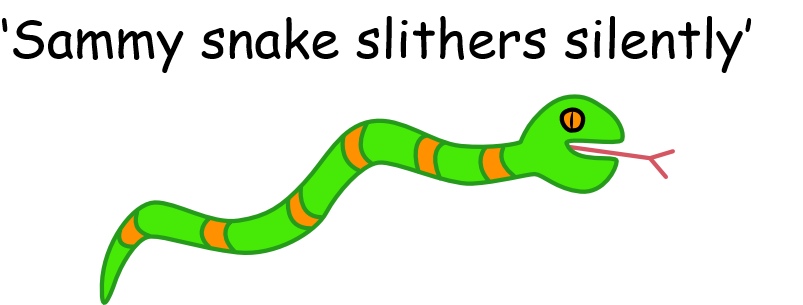
This Rhyme awareness is supported and developed through the singing of songs and nursery rhymes and finger chants. Alliteration (words that begin with the same sounds) such as ‘Sammy snake slithers silently’, which children love to hear in rhymes and stories, also supports their word knowledge and understanding of sounds in words.

Being able to repeat, and join in with, short phrases they have anticipated in a story or rhyme, is another important step in a child beginning to understand the use of words in stories and story structure; such as, “I’ll huff and puff and blow your house down!” in the story of The Three Little Pigs.

For more information on this, and other pre-phonics skills (Phonological Awareness) your child develops through from birth to 7 +years old, check out the Pre-phonics section of our website: https://www.teachphonics.co.uk/phonological-development.html