Developing a Child’s Speaking and Listening Skills is Vital!

It is not just the key to literacy success but an essential social communication skill.

Sadly, although the covid lockdowns are well behind us schools are still reporting ever increasing concerns over the decline in young children’s speaking and listening skills. So, over the next 8 weeks, we are looking again at the different developmental elements of speaking and listening; providing practical games and activities to help build a child’s skills. 

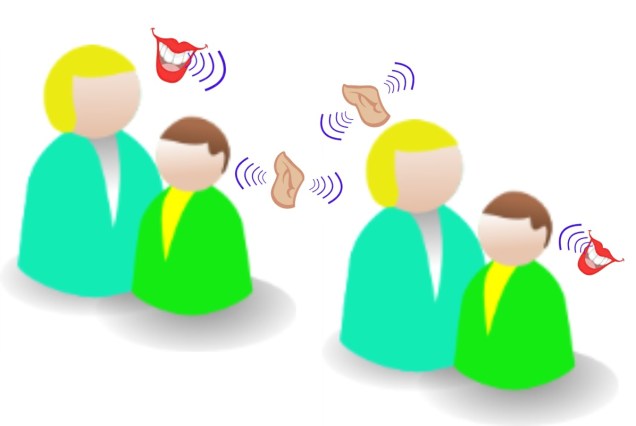
Week 1. Conversational Turn Taking Skills

Week 2. Different Types of Talk

Week 3. The Importance of Small Talk

Week 4. How to Encourage Your Child to Keep Talking

Week 5. What is Listening?

Week 6. Games to Develop Listening Skills – Sound Screen Games

Week 7. Games to Develop Listening Skills – Sound Scanning Games

Week 8. Games to develop Listening Skills – Music Fun

Treasure Hunts Develop both Handwriting & Language Skills

The Easter Holidays are here, so here are some fun activities to keep children of all ages entertained whether we have rain or sunshine.

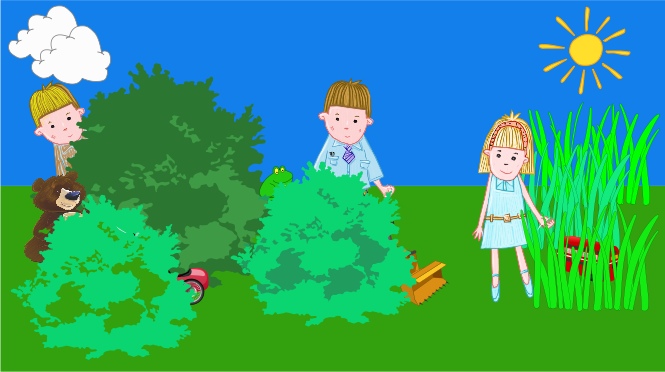
A treasure hunt is a great way to teach children directional language. Being able to understand directional and placement (prepositions) vocabulary is important for understanding everyday instructions such as ‘put your cup on the table’; ‘go along the hall and stop at the door in front of you’.

We also use this directional language to explain how to draw patterns and write letters, which is another reason why it is important for young children to be introduced to, and have a good understanding of, this kind of vocabulary.

Through treasure hunts you can introduce new directional and placement language in a fun and exciting way. There are a number of different ways to approach this:

  • You can give verbal instructions to the hidden treasure.
  • You could create a map for them to follow and ask them to talk you through the map, supporting them with new language as necessary.
  • You could use a mixture of verbal and map clues.
  • For older children get them to hide the treasure and give you instructions, or draw a map.
  • If you have more than one treasure and they are of different sizes make the larger ones more difficult to find.

The important thing is the language shared. Words and phrases to use are: left, right, straight on, forward, backwards, about turn, turn around, up, down, higher, lower, stop, next to, in front, beside, underneath, on top of, behind, on the left of, on the right of, outside, and inside.

Treasure hunts are a great whole family activity and you are never too young or too old to join in!

Spring/Easter Drawing Activity Ideas – Supporting Language & Pre-handwriting Pattern Development

The Easter holiday break is here!

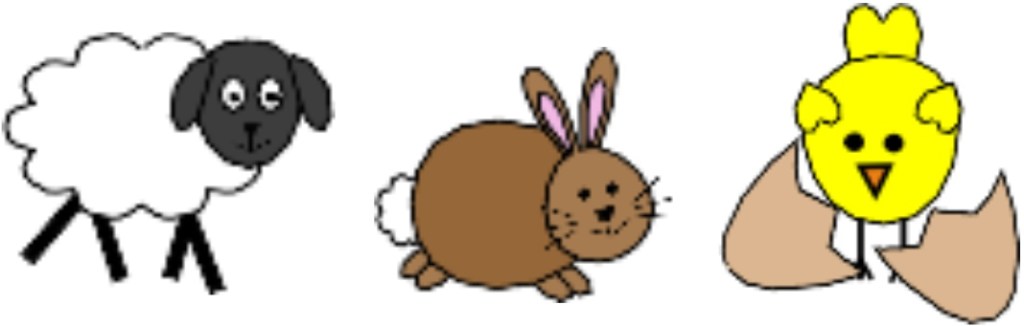
We have put together some quick step by step Easter and farm drawing ideas for you to try, using basic shapes such as circles, rectangles and triangles. It is amazing how, by using these simple shapes, you and your child can create fantastic Spring/Easter: cards, pictures mobiles or bunting. Just follow this link and scroll down the page: https://teachhandwriting.co.uk/more-activities.html

Drawing pictures is a great way to help your child develop their pre-handwriting strokes and shape forming skills. As well as supporting shape, colour, pattern and language development.

Homonyms & Homophones!

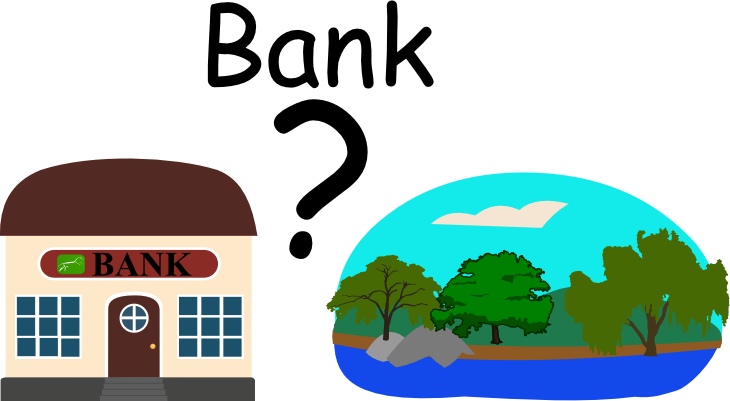
Homonyms and homophones need to be heard or read within a specific context if we are to understand what the word means, for instance, if I say the word ‘bank’ and do not give any other verbal or written clues what do I mean?

The word on its own could mean a couple of things the bank of a river or sand bank or a bank where I can collect money. If it is not put into a context its meaning is unclear. The word ‘bank’ is classed as a homonym.

Homonyms are words which are pronounced and spelt the same; therefore, their meaning can only be truly understood when the context in which the word is being used is made clear. For instance, the word ‘bark’ can be used to mean the bark on a tree or the noise a dog makes.

Homophones are words which are pronounced (sound) the same but have a different meaning and are spelt differently such as, ‘their’ and ‘there’, ‘one’ and ‘won’ or ‘two’, ‘to’ and ‘too’.

Phonics Skills – Phonological Awareness: Stage 9 & 10 – (4 years – 7+ years)

Phonics is learning the relationship between the individual sounds (phonemes) of our language and the way we represent them in writing through letters (graphemes).

Stage 9 – Phonetic reading

With the introduction of phonics into the National Curriculum children are being taught to read by using their phonics knowledge as a decoding tool to work out what words are. First, they have to recognize the letters and combinations, then attach associated sounds (phonemes) to them and finally blend the sounds together to form the word.

Children are not encouraged to focus on anything else, such as pictures or context, just the phonics element of the text. For phonics teaching schemes that haven’t taught a comprehensive range of letter to sound associations, phonics at an early stage is not sufficient and children also need to learn to recognize whole words which are not spelt phonetically, the tricky words (sight words) such as: was, want, because and like.

To emphasize this point; The National Curriculum for Year 1 Reading, as part of the statutory requirements, states that children should be taught to:

“read aloud accurately books that are consistent with their developing phonic knowledge and that do not require them to use other strategies to work out words” (DfE Sept 2014).

Stage 10 – Phonetic spelling

It is generally accepted that using phonics for spelling develops at a slower rate than that for reading; due to the child having to learn how to form the letters (handwriting) rather than just recognizing the visual association between the sounds and corresponding letters.

Children are taught to use their phonics knowledge as an encoding tool for spelling, first identifying the individual sounds (phonemes) in the word, then attaching associated letters for those phonemes and finally writing the letters and self-checking the spelling using their phonetic reading skills.

It is important that children understand, and can easily use, the letter names of the alphabet and not just make a certain sound associated to the letter. Using the letter name is the only way to distinguish between alternative spellings of the same sound. For example, ‘ph’ in the word ‘photo’ cannot be spelt out phonetically, you have to use the letter names otherwise children will spell it ‘foto’. A similar, more common, tricky spelling is the word ‘what’; you have to use the letter names to explain this spelling otherwise a child will spell it ‘wot’.

“Tricky” words

Because many phonics schemes do not teach the letter associations required for children to decode / encode high frequency words phonetically, such as: was, they, my, are. These are taught by rote.

Phonics Skills – Phonological Awareness: Stage 8 – (4 years – 7+ years)

Phonics is learning the relationship between the individual sounds (phonemes) of our language and the way we represent them in writing through letters (graphemes).

The phonics stage in phonological awareness development is being introduced to our children at a much younger age, it used to be the second term of reception class, but phonic schemes in the UK have moved to starting in the first term of Reception. This is regardless of the child’s actual phonological ability levels.

For us, as adults, this can seem a little daunting as most of us were not brought up with phonics as the main strategy for learning to read or spell.

For a child who has developed through all the pre-phonic stages 1 to 7 for good phonological awareness the phonics stage is a natural progression, allowing them to use all the segmentation, blending, substitution and deletion skills previously learnt.

It is important that your child understands that letters have names; just like they do, and just like them they make different sounds. Knowing the letter names allows them to understand which letter you are talking about when discussing letters and sounds as the letter name is the unique characteristic of the letter – as it can make more than one sound. A classic example is the word ‘was’, if spelt phonetically it would be ‘woz’.

Your child should already have been taught the names (not sounds) of the letters of the alphabet, this is an early years requirement. Sadly, some feel that if a child can recite the alphabet song, they know the names of the letters, this I just not true!

Understanding letter names is important in the teaching of phonics as children need to develop an understanding that a letter can make different sounds depending on the location and pairing with other letters.

For example, the letter ‘a’ can make a number of different sounds on its own depending on the word it is in: ant, baby, swan and with other letters as in words like day, train and car.

Phonics programs tend to teach:

The use of phonic skills to blend and segment the written forms of words (CVC words) starting with one sound – one letter correspondence such as sat, pat and dog.

Develop understanding that one sound consonant can be represented by two letters (digraph) such as ‘ch’ in ‘chip’ or ‘sh’ in ‘shop’.

Develop understanding that one vowel sound can be represented by two letters (vowel digraph) such as ‘ea’ in ‘head’, ‘ai’ in ‘rain’.

Develop understanding that some sounds are represented by 3 or 4 letter combinations such as ‘igh’ in ‘light’ and ‘eigh’ in ‘eight’.

Identifying the initial, end and medial sounds and their corresponding letter(s).

However, many phonics schemes teach high frequency words by rote as they do not teach the letter associations required for children to decode / encode them phonetically. Word such as: is, the, was, what, and any.

Pre-phonics Skills – Phonological Awareness: Stage 7 – (5 years – 7 years)

Phonological awareness relates to our sensitivity and understanding of the sound structures of our oral language. It enables us to progress from our awareness of large sound units (words in sentences) to smaller sound units (phonemes in words). It also incorporates the ways in which we communicate through speech, body language and written forms.

Your child needs to continue developing their understanding of language, its sound structure, grammatical rules and conventions through talking and playing. They need to be able to say what they think and can often only write what they can say, so they need to be able to talk it before they can write it. We cannot expect them to write well later if they cannot talk or express their thoughts and ideas through language, whether that be spoken or signed. So, you need to continue engaging them in conversation and exposing them to new vocabulary and concepts.

Phonemic Awareness – Part 2 – Phoneme substitution and deletion

Having mastered Phonemic Awareness Part 1, the next stage in the process is learning and understanding how substituting and deleting phonemes can create new words. This is still based on what we hear, not the written word.

We usually introduce this concept to children using one syllable CVC words, a word that has a Consonant followed by a Vowel and then another Consonant, such as hat, cat and mat.

Phoneme substitution

To begin with focus on helping your child to substitute the first sound in a word, for example replacing the ‘h’ sound in hat with an ‘m’ sound gives mat; or replacing with a ‘b’ sound gives bat.

Once they become comfortable with substituting the initial sound, progress to substituting the last sound in the word, for example replacing the ‘t’ sound in mat with a ‘p’ sound gives map; or replacing it with an ‘n’ sound gives man.

Then focus on the medial, or middle, sound in the word, for example substituting the ‘a’ in hat with an ‘i’ sound gives hit, or replacing it with an ‘o’ sound gives hot and with an ‘u’ sound gives hut.

Phoneme deletion

As with substitution begin by focusing on helping your child to delete the first sound in a word, for example removing the ‘s’ sound in stop gives the new word top; or deleting the ‘c’ sound in cart gives the new word art.

Once they become comfortable with deleting the initial sound, progress to removing the last sound in the word, for example deleting the ‘t’ sound in cart gives the new word car; or removing the ‘k’ sound in fork gives the new word for.

However not all children will find the concept of substitution and deletion of phonemes easy and it may be beneficial to move on to the next stage and then revisit this section, as the visual aid of letters that Stage 8 provides may help support their learning.

Research suggests that, when entering school, having good phonological skills based just on speaking and being able to hear and play with the sounds of language (Stages 1-7) is often a strong predictor of a child’s reading success later.

Pre-phonics Skills – Phonological Awareness: Stage 6 – (4 years – 6 years)

Phonological awareness relates to our sensitivity and understanding of the sound structures of our oral language. It enables us to progress from our awareness of large sound units (words in sentences) to smaller sound units (phonemes in words). It also incorporates the ways in which we communicate through speech, body language and written forms.

Talking, listening, sharing, playing and modelling are still vital parts of your child’s physical, emotional and academic development.

Your child is now reaching the pre-school/school stage and the extent of their receptive vocabulary and understanding of the meaning of words and sound units in those words can have a real impact on their ability to cope with the new demands that pre-school and school will place on them.

Phonemic Awareness – Part 1

Phonemic awareness is learning how to split words into their smallest sound units (individual phonemes) and our ability to manipulate these sounds through segmentation, blending and substitution. This is based on what we hear, not the written word.

We usually introduce this concept to children using one syllable CVC words, a word that has a Consonant followed by a Vowel and then another Consonant, such as cat, dog, sit, peg and sun.

To begin with focus on helping your child to identify the first sound in words, remember it is about what you hear not the spelling, so shop, ship, and chef all start with the same first sound ‘sh’; fish, photo, fog would also have the same initial ‘f’ sound. Try not to correct your child based on spelling conventions, as it is sounds you are working on – spelling comes later.

Next help your child to listen and identify the last sound in a word such as ‘t’ in cat, sit and hat.

Then focus on the medial, or middle, sound in the word such as ‘a’ in mat, lap and tap.

We often slow down our pronunciation of the word and over exaggerate them, thinking we are helping our children to hear these sounds. This can be useful to start with, but be careful not to do it all the time. The aim is for your child to pick out the sounds in normal speech patterns, as these can be different from the way that words are spelt.

Once your child can identify the initial, medial and final sounds in a word the next step is to playing with the words through oral phoneme segmentation and oral phoneme blending. You are probably doing this already with your child without really realizing it.

Phoneme segmentation is orally being able to split words into their individual sounds, for example ‘cat’ into c-a-t.

Phoneme blending is orally being able to blend individual sounds together to form a word, for example d-o-g into dog.

The most important thing to remember when modelling this, and when playing games to help develop these skills, is to make sure you are making the sounds correctly. It can be very easy to pollute a sound by adding an extra ‘uh’ sound to it, so ‘c’ becomes ‘cuh’ which makes it very difficult for children then to blend sounds.

When your child feels comfortable using and playing with sounds in CVC words move on to CCVC words such as stop, clop and flop, following the same steps of identifying the initial and last sound in the word and then the vowel sound rather than the middle sound. Then play oral phoneme segmentation and blending games.

Pre-phonics Skills – Phonological Awareness: Stage 5 – (4 years – 5 years)

Phonological awareness relates to our sensitivity and understanding of the sound structures of our oral language. It enables us to progress from our awareness of large sound units (words in sentences) to smaller sound units (phonemes in words). It also incorporates the ways in which we communicate through speech, body language and written forms.

By now your child has a large vocabulary and is speaking in complete sentences and understanding more complex sets of instructions. They may not always be grammatically correct and struggle at times with tense, which makes modelling the correct sentence formation and tense use very important. Again, it is not about correcting your child and making them say it again, but you repeating their words clearly using the correct grammatical order and words (modelling).

Onset and Rime

Once your child has learnt to detect syllables in spoken words; they are then able to detect, manipulate and play with the smaller sound units within a syllable. This is an important stage which supports and develops the essential segmentation skills that are needed later for phoneme awareness (single sound awareness in spoken words).

These smaller units of sound in a syllable are called the onset and rime.

The ‘onset’ of a syllable is the initial sound or sounds (usually a consonant or consonants), which is followed by the ‘rime’ of the syllable (always starting with a vowel sound and any following consonants). For example, the onset in cat and dog is also the first sound for the word (c and d), whereas the onset for stop and splat are ‘st’ and ‘spl’ not their initial sound ‘s’.

Some examples:

One syllable words – cat; the ‘c’ is the onset and the ‘at; is the rime; Stop; the ‘st’ is the onset and the ‘op’ is the rime.

Two syllable words – snowman; the ‘sn’ in the first syllable and the ‘m’ in the second syllable are the onsets and the ‘ow’ in the first syllable and the ‘an’ in the second syllable are the rimes.

Some syllables do not have an onset as they are vowel sounds only. For example; in the five syllable word hippopotamus the second and fourth syllables have no onset.

Once a child understands that the rhyme element of a word is the last rime in the final syllable it makes it easier for them to identify and generate rhyming words. This ability is based on the sounds they hear, not on spelling conventions. A spoken rhyming group could be: chair, bear, stare, hair, fare. This helps a child understand and focus on the sound structure of our language.

Learning to group words by sounds also helps children later, as part of their de-coding strategies for learning to read and letter-string patterns for learning and developing spelling strategies.

Most children by this stage will find it fun and fairly easy to produce rhyming words, even if they consist mainly of nonsense words to begin with. However, this is not the case for all children, so moving on to the next stage and coming back to learning how to generate rhymes may be a more practical approach; as they will have developed other skills by then that will help them. But it is important to come back to cover this element later, when letter visual aids can be used to help and support your child’s learning.

Half-term Fun – Clothes Peg Games

Some fun indoor activities may be the order of the day for this half term as the weather is not so hot.

This is a very simple idea which children love because they can take greater ownership of it. The aim of the activity is to help build up hand and finger strength through using the pegs; however, it can have a dual purpose, helping to keep track of the week by using it as a timetable or for learning spellings or maths activities, as well as supporting the development of language skills.

You do not need anything fancy, just some string (for the washing line), clothes pegs and pieces of paper or card to peg onto the washing line. The washing line can be a permanent fixture or you can just pop it up when you need to use it.

The clothes line needs to be at a height suitable for your child to peg things on to (placed against a wall is a safe option so that no-one can walk into it by accident and hurt themselves).

There are a whole range of games that can be played using this simple washing line and pegs concept:

Memory games – Get your child to peg up 5 to 10 different pictures or items on the line. Then give them 1 minute to remember the items. Once the time is up ask them to look away, or close their eyes, and then you remove one or more of the items. Get them to look back at the line. Can they work out what is missing?

  • You could try just moving one or two of the items around. Can they figure out which ones are in the wrong place and put them back in their correct place?
  • Try swapping an item for something new, which your child did not hang up on the line. Can they work out which is the new item on the line?

Odd One Out – Hang pictures on the line that belong together. Can they pick out the odd item on the line and explain why it is the odd one out.

  • They could all be pictures of fruit with a picture of some clothing
  • They could be shapes with straight sides and one with curves
  • They could all be animals but all are wild with only one being domestic

Sorting – Ask your child to sort all the pictures or items from a selection and to hang all the identical things on the washing line. They could all be the same;

  • Colour
  • Shape
  • Type

Pattern Work – Using pictures, different colour and shaped paper or items create different patterns. The patterns can be based on colour, size or type of object. You can create a pattern sequence on the washing line and then ask your child to try and copy the sequence. Can they explain the pattern and create their own for you to copy and explain?

Pairing or What is the Same? – Hang a range of pictures or items on the line, making sure that some of the items can be paired together because they are exactly the same. They could match because;

  • They are exactly the same e.g., a pair of socks
  • Match numbers to a picture with the same number of items on
  • Match capital to lower-case letters
  • Or have items that can be put together because they are both from the same set, for example they are types of fruit or are the same colour.