The Importance of Using Letter Names for Developing Handwriting, Phonics and Reading Skills

Here at Teach Children we have always promoted the importance and power of teaching the correct letter names to begin with; through our Teach Handwriting website, Schemes and Teach Phonics website. Unfortunately, some schools, teacher and parents still seem to be concerned that this is not consistent with the teaching of phonics, which is just not correct.

Learning the unique letter names of the alphabet is a pre-phonics skill; as well as an early learning goal. It has to be remembered that a letter is a shape which only represents a sound when it is placed within a word or sentence (has a context). Also, a letter or combination of letters can represent more than one sound and so the only unique way of identifying alphabet letters when we talk about them is to use their names.

It is important to remember that just because a child can correctly recite the ‘Alphabet’ song it does not mean they know the letters of the alphabet. It is surprising how many children can do this but when shown letters from the alphabet cannot name them at all. They may be able to tell you the sound the letter makes but have no idea of the letters name.

Learning the correct letter names helps to reinforce that when talking about the letter ‘a’ (ay) for example it has a set shape regardless of the sound that it will be representing in the word. This further supports children’s handwriting development as the communication of your requirements is unambiguous.

Teaching the correct letter names is important when supporting handwriting as this can in turn affect a child’s phonics understanding later on. For example, it can seem very easy when explaining to a child which letter to write when they ask which one is making a ‘kuh’ sound in a word such as cat to say a ‘curly kuh’. There is no such letter in the alphabet called ‘curly kuh’ it is the letter ‘c’ (cee). By adding the ‘kuh’ sound to the letter it reinforces incorrect phonics knowledge. The letter ‘c’ does not make a ‘kuh’ sound in words such as: city, circle, cycle and centre.

Some children will then only ever refer to the letter ‘c’ as ‘curly kuh’ and the letter ‘k’ as’ kicking kuh’. As I say these are not letter names of the alphabet and also devalue the power of phonics at the same time.

How can the education establishment get hot under the collar about not using the correct terminology in the teaching of English in schools such as: phonemes, graphemes, digraphs, modal verbs etc… yet still refer to the letter’s ‘c’ and ‘k’ as ‘curly or kicking kuh’!

Phonics is a powerful decoding and encoding tool. However, so is the alphabet letter naming system. Both need to working side by side to support our children, especially in those early years of their educational journey.

The English phonic system is very complex but this is why our language is so rich. Young children need to use letter names as an additional tool, as it takes many years for them to be introduced to the more complex phonics coding system. Alphabet Name animation (scroll to the bottom of the page): https://www.teachphonics.co.uk/phonics-graphemes.html

Summer Fun – Think more Play, Play and Play!!!

The last thing you and your child probably want to think about right now is handwriting or phonics and getting ready for next term; and quite right too!

So, don’t think about it in the conventional way of practise, practise and practise.

Think more play, play and play!!!

Children learn so much through just playing; developing physical, mental, communication and vocabulary strengths and skills, which all support them at school and with learning.

Once introduced to a new game or activity children will very often take it and make it their own, making new rules and introducing extra characters or challenges.

The skill as a parent is remembering to let go of your preconceived ideas about how a game should be played and letting your child take the initiative.

If you provide the opportunities, it is amazing how they will take on the challenge of inventing a new game or (in their eyes) improving an existing one.

This does not have to cost a penny; use the toys they already have or make games using empty plastic bottles or cardboard tubes.

The following types of play can support and develop the key strengths and skills your child needs for handwriting and you have not had to mention school or homework.

  • The local play park is a fantastic free resource; running, jumping, crawling and climbing can all be encouraged. If your child is a little reluctant then it may well be that they are unsure how to do some of these activities. Explain when jumping that they needed to land on their feet and bend their knees as they land. Start small and as their confidence grows so does the height or distance they jump. Climbing can be scary for some children so again explain how to climb, moving one hand or foot at a time so that there are always three other points of contact.
  • If you are lucky enough to have a garden then mud play is messy but so much fun, it can be contained in a small area and will not only make you a cool adult but, if you join in, it will knock years off you (have a go, it is a great free therapy session).
  • Skittle games are always fun, extend the activity by decorating the skittles (plastic bottles or cardboard tubes) using anything from crayons, paint or even dress them up as people or animals.

Water, water everywhere!  

The SUN is meant to be out which makes it time for the water fights and games to begin.

It is August so the weather should be perfect, so why not set up water squirting games in the garden. The kids are waterproof and everything else will dry out, eventually!

How can water fights and games, where you can get wet, be handwriting and phonics homework?

You will be encouraging your child to develop their hand strength, co-ordination and eye tracking skills (all handwriting skills). However, these games are also fantastic for developing sound and word awareness skills.

Try mimicking the sounds that the water makes as it drips on to the floor or hits the targets; use directional language to support your child’s aiming skills; describe how the objects move when hit: bouncing, rolling or flying and talk through the emotions evoked through playing the games.

As well as supporting your child in developing a whole range of physical and language skills you will also increase your cool adult status.

Some fun water games:

  • Try setting up a target wall, using chalk to draw the targets.
    • How many of the targets can you hit with water squirted from a water pistol or squeeze bottle in a set time.
    • How many targets can be washed off.
  • Set up a skittles range.
    • Each skittle hit with water can be worth a certain number of points, or the distance of the skittles may affect their value.
    • A time trial game to hit all the skittles. If you are using plastic bottles as skittles try making some of them a little heavier by putting sand or dirt in them to make it a bit harder to knock them over.
  • Move the object race games.
    • A light toy/ball has to be moved by squirts of water over a distance.
    • A range of objects moved in to target areas to gain points.

The only limitation is you and your child’s imagination and trust me kids never tire of finding new ways to play with water (but then again neither do many adults)!

Homework has never been so much FUN!

Developing Speaking and Listening Skills: Play – the great starting point!

Developing good speaking and listening skills along with a wide vocabulary knowledge is an important part of your child’s phonological awareness development and phonics pre-skills base. So, it is not surprising that if a child has a weakness in these areas, they may struggle in learning to read and write.

The summer holidays are the perfect time to start working on supporting your child to develop the skill sets needed for learning to read.

How do we do this?

PLAY!!!

Last week we looked at the importance of different types of play. By giving your child, the opportunity to experience the different types of play you will also be supporting them to build their speaking and listening skills as well as broadening their vocabulary.

Developing these skills is not all about paper and pencil worksheet activities (though this helps later on).

For fun game ideas go to our ‘Big to small’ (https://teachhandwriting.co.uk/big-to-small.html) or games (https://teachhandwriting.co.uk/games.html)sections.

All these can be found in our Learning Through Play in the new parents’ area of the website: https://teachhandwriting.co.uk/parents.html

Enjoy the summer break with your child and learn to play again.

Turn Taking Skills for Play

This week we will look at turn taking in play a skill children need to learn to take part in meaningful interaction with others. These interactions are a vital part of children’s physical, emotional, social and intellectual growth and wellbeing.

Children need to learn the importance of waiting for their turn when playing with others, something many find hard to understand to begin with. 

Like most skills it needs to be taught and practised and is part of our phonological awareness development as it requires us to learn an associated vocabulary along with facial and other physical cue.

A child who is taught and given lots of practise at taking turns will find interacting and playing with others easier later on.

Turn taking is easy to implement into everyday activities and play and something you probably do anyway, without even thinking about it

Here are some ideas to help you to support your child:

  • Try to use the phrase “My turn”, “Your turn” or “Daddy’s turn” (name a third person) when playing or doing an activity such as sharing a book.
  • Toddlers have a short attention span so keep the turn short to start with.
  • Physical games such as rolling and kicking a ball or running and jumping activities can help to encourage turn taking and learning to wait for your turn. Again, don’t make the turns too long and to help keep your child engaged while you have your turn, talk with them about what you are doing during your turn and when they are having theirs.
  • Count Down or Up – To help young children develop an understanding that if they wait, they will get their turn, explain that you will count to 10 and then it is time to swap and someone else has a turn, count to 10 again and return the toy or wanted object to your child. It won’t take long for them to understand that they will get their turn without a fuss.
  • Turn Time – As your child gets older try using a timer/clock to help them increase the time scale between taking turns. Try not to make the gaps between turns too long to start with, as young children find the concept of time very difficult, 1 minute might as well be an hour in their eyes. Show clearly a start point and the finish point for the time scale so your child can watch or come back and check the passing of time. Don’t be tempted to ignore the timer if it is your child’s turn, make sure they are offered the toy or turn that is due to them, otherwise they will feel cheated and some of the trust is lost.
  • As children get older, playing card and board games helps to further develop their turn taking skills.

Developing and Supporting Your Child’s Reading Journey – Week 6

Letter Knowledge

Letter knowledge is understanding;

  • That the same letter can look different, for example, a lower-case letter ‘b’ looks different from a capital letter ‘B’. Letters will also look different depending on which font type is being used or if it is handwritten, for example, an Arial font letter ‘g’ looks different from a Calibri font ‘g’.
  • That letters have names and the same name is used for that letter even when they look different, so the lower-case letter ‘a’ and its capital letter form ‘A’ are both called ‘ay’.
  • That letters (graphemes) are used to represent sounds (phonemes) in words. Teaching the unique letter names of the alphabet is an important pre-phonics skill. A letter or combination of letters can represent more than one sound and so the only way of identifying alphabet letters when we talk about them is to use their unique names.

Developing Letter Knowledge:

Through Play:

  • Sorting and Matching Games- use plastic or wooden letters, alphabet letter flash cards; can they group all the lower-case letters together, or all the capital letters or all the different letter ‘ay’s’ together.
  • Kim’s Games – use plastic or wooden letters, alphabet letter flash cards. Using a few letters at a time, place 5 to 10 on a tray and let your child look at them and talk through which letters are there. Cover with a tea towel and ask your child to look away, then remove 1 or 2 of the letters. Then ask your child to look back and remove the tea towel. Can they spot which letters are missing.
  • Detective Games– focus on identifying individual letters of the alphabet and naming them, this can be played at home or when out and about.
  • Leap Frog – use the letters of the alphabet on home-made paper lily pads. Use the letter names to identify the target lily pad for your child to either jump onto or to throw a bean bag/soft toy on to.
  • Skittles and Throwing Games – use letters of the alphabet on the targets and use the letter names as a way of identifying which of the targets your child is aiming for.

Through Drawing/Writing:

  • Making lists of things to do or a shopping list. Their version of the list may be just squiggles and dots (so don’t rely on this for your shopping trip) but it is the beginning. I would keep the list and get them to tick off things done or items purchased as part of the experience so that it has a genuine purpose (children really like this).
  • Making and drawing their own story book.
  • Learning to write letters correctly (see our Teach Handwriting Website: https://teachhandwriting.co.uk/parents.html )

Through Songs/Nursery Rhymes:

  • Singing Alphabet Songs, try singing it to different tunes.
  • Make up Your Own Rap – point to the letters as the rap is said.

Through Talk:

  • Talk about letters as being shapes made up of straight, curves and diagonal lines.
  • Look at the letters in your child’s name, talk about the fact that the first letter in their name is always a capital letter and that normally the other letters are lower-case letters.
  • Point out, especially for slightly older children, that lower-case letters are about half the size of the capital letters.
  • Compare letters looking at what is the same and different about them.
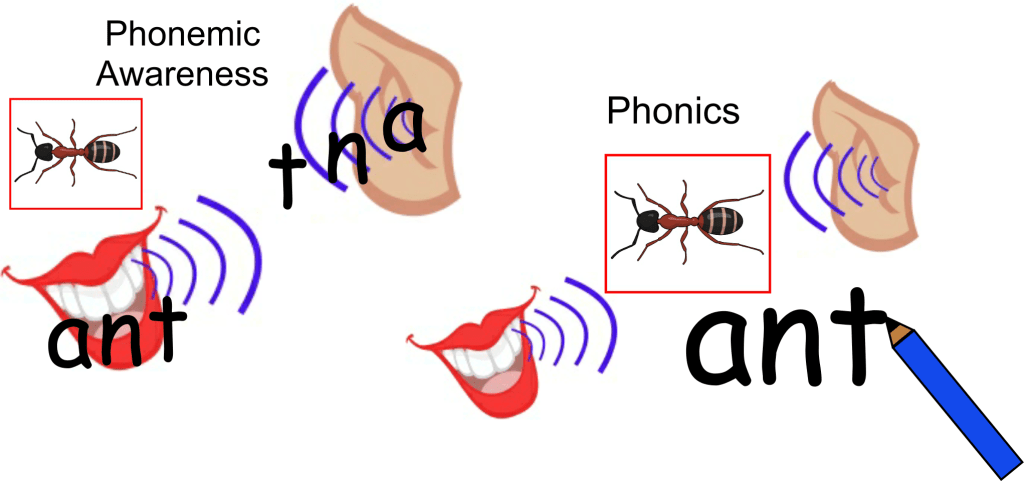
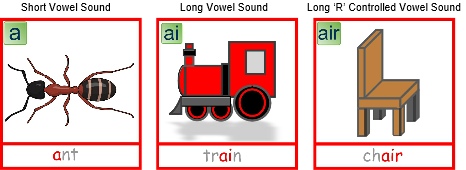
  • When taking about letters use the letter name as well as the sound it is making in the word, remember a letter is often used to represent more than one sound. The letter ‘a’ can be used to represent different sounds in the following words: ant, apron, was, and any (just 4 of the eight sounds it is used to represent).

Through Book Sharing:

What books to choose?

  • Books with shapes
  • Books where you have to find things (like I spy)
  • Alphabet books
  • Books which use different font styles in the pictures and text.

Book Sharing Tips:

  • Alphabet books do not need to be read from cover to cover. Let your child choose which letters they want to look at.
  • Trace the letters with your finger or let your child trace it (make sure you trace the letter using the correct formation orientation, encourage your child to do the same).
  • Talk about the pictures in alphabet books before focusing on the letter, its name and the sound it can make.
  • Show your child the first letter in their name and then look for that letter in the book.
  • Show and talk about how some letters are in their capital form and others in their lower-case form. Can they find other examples of the letters?
  • Choose two letters to talk about: How do they look alike? How do they look different? What shapes/line styles are they made up of?

Developing and Supporting Your Child’s Reading Journey – Week 5

Narrative Skills to Support the Understanding of Different Writing Styles

Narrative skills are based on understanding and using expressive language. This is the kind of language we use to describe things and feelings, to tell events in order and to recall and tell stories.

Children develop their narrative skills over time taking prior knowledge, what they already know, and building on this through:

  • Conceptual thinking; the development of concepts such as shape, colour, the passing of time; as well as developing and using strategies for problem solving and prediction (thinking skills).
  • Content knowledge; what they already know about the topic/situation; the ability to relate situations to their own experiences, the ability to sequence events in a logical order as well as to sequence processes such as getting dressed or making things.
  • Understanding that different genres are set out in different ways, story structure such as that used in fairy tales is different from that used for poetry or informational text (explaining things) or instructional text (how to do something) such as a recipe.

Developing Narrative Skills:

Through Play:

  • Role play different situations; doctor’s, school, office, shops etc.
  • Dramatic and imaginative play; acting out stories together using props and/or puppets and toys.
  • Matching and sorting games to develop understanding of concepts such as colour, shape and size.
  • Puzzles for developing problem solving skills.

Through Drawing/Writing:

  • Ask your child to draw pictures for a story and you write the words
  • Ask your child to draw or write (make mind maps) of the things they already know about something.
  • Ask them to draw different shapes in different sizes and to use specific colours for them.
  • With older children make and draw charts and graphs for classifying objects.

Through Songs/Nursery Rhymes:

Children’s songs and nursery rhymes cover a wide range of concepts:

  • Everyday sequences such as in the nursery rhyme ‘Here we go Round the Mulberry Bush’ which uses the phrase ‘This is the way we…’ to order the event of getting up in the morning.
  • Introduce concepts such as size, colours, shapes and numbers such as “One, two, three, four, five once I caught a fish alive…”
  • Tell stories for example ‘Baa Baa Black Sheep’ or ‘We’re going on a Bear Hunt’ by Michael Rosen & Helen Oxenbury.

Through Talk:

  • As your child explores objects, describe them and their uses; compare and contrast objects.
  • Remember to give your child time to work things out, or to solve a problem. It can take a child several minutes sometimes to process what they have heard and to formulate a response.
  • Talk about concepts such as shape, colour, size, texture.
  • Explain and use language that explains where things are in relation to each other (spatial awareness) such as above, below, on top of, next to, first, etc.
  • Help your child to develop an awareness of time, not just the here and now but what happened in the past and might happen in the future.
  • Put processes into sequence using things like recipes, making things or how plants grow, the passing of time, weeks, months, seasons etc.
  • Encourage your child to recount their day or to re-tell a story.
  • Encourage your child to tell you what they know about something as well as sharing what you know.
  • When sharing information explain how you learned about it; read it in a book or on the internet or heard it on the TV or radio.
  • Encourage your child to guess and predict what might happen.
  • Encourage your child to solve problems or resolve conflicts; if you do it for them explain what you did and why.
  • Embed conversation into everyday routines such as getting dressed, meal times and bed time.

Through Book Sharing:

What books to choose?

  • Books that tell a cumulative tale
  • Books with a natural sequence
  • Books with a repeated phrase or repetition as part of the story
  • Poetry books
  • Non-fiction books

Book Sharing Tips

  • Read books on topics that interest your child.
  • Ask your child to tell you what they know about the book you are reading.
  • Encourage your child to join in while sharing a book, saying repeated phrases for example.
  • Read with expression.
  • Encourage your child to re-tell the story.
  • Re-read books so that your child can become familiar with the story, making it easier to re-tell the story.
  • Relate what is happening in the story to your own child’s experiences or ask then to tell you how it might relate to them.
  • Use props to tell the story to help your child remember the sequence of the story. They may find using props a great way to re-tell you the story.
  • Encourage your child to talk about the pictures. Take their lead and try to ask open-ended question (those that cannot be answered by yes or no).
  • Talk about the books you like and what you like about them.
  • If your child loses interest, try again another time.
  • Talk about the pictures in a book or sections of a story and let your child tell you their thoughts about what is happening and might happen next.

Developing and Supporting Your Child’s Reading Journey – Week 4

Print Awareness to Develop Understanding of Reading Conventions

Print Awareness is knowing that print (words) has meaning, including noticing print around them in the environment (posters & street signs) and understanding how to handle the conventions for reading a book. We can often assume that all young children or pre-readers (as not always young children) will develop print awareness naturally. However, research suggests that 95% of their visual attention is directed towards pictures, which in themselves hold a great deal of meaning and often tell the story very effectively.

Pictures/ illustrations in story books and pure picture books are powerful ways to engage children and adults with books, storytelling and reading. This is not to say that pictures are any easy way to interpret a storyline as they can hold a great deal of meaning, from simple obvious interpretation to more sophisticated symbolic representation.

Young children and pre-readers need opportunities to explore print and be helped to understand that the written word (print) has meaning. Once they start to see print they will begin to notice it everywhere not just in books but on posters, food packets, menus and street signs.

Again we can often assume that a child or pre-reader knows how to handle a book, however this is not always the case and can be due to a lack of experience with books or different cultural reading conventions. So it is important to check and teach these reading conventions for reading English:

  • Front cover opens to the left and we read it from the front to the back.
  • Print on a page is read left to right.
  • Usually print is read from the top of the page across and down (this may differ slightly in some children’s books).

Supporting Print Awareness:

Through Play

  • Use takeaway menus or create your own as part of role playtime, they could have their own café serving up all sorts of interesting dishes for you. A blackboard can be very useful for this, allowing you or your child to write up their own menu for the day. 
  • Travel brochures or leaflets from your local tourist information office are great for role play encouraging new language as well as a different way to explore print as they often have maps and timetables. 
  • Use sticky labels or post it notes to label items or furniture as part of a ‘can you see or find’ game.

Through Drawing/Writing

  • Making lists of things to do or a shopping list. Their version of the list may be just squiggles and dots (so don’t rely on this for your shopping trip) but it is the beginning. I would keep the list and get them to tick off things done or items purchased as part of the experience so that it has a genuine purpose (children really like this).
  • For slightly older children making simple invitations and thank you cards can be fun. Try not to make the messages too long or to write too many as they will get bored and see it as a chore not as fun.
  • Making and drawing their own story book.

Through Songs/Nursery Rhymes

  • Showing the printed words to songs and rhymes.

Through Talk

  • Point out signs, logos and labels when out and about as well as at home.
  • A lot of print awareness skills are developed through the sharing of books and appropriate on-line material.

Through Book Sharing

What books to choose?

  • Books that have writing as part of the story;
  • Books that have writing as part of the picture;
  • Story books; all types;
  • Factual (non-fiction) books; all types;
  • Comics;
  • Children’s magazines and newspapers.

Book Sharing Tips

  • Remember babies will chew and bash the pages of the book as you read. This is normal and part of their learning experience so go with it.
  • Encourage and let your child turn the pages.
  • Point to the words of the title as you say them
  • Explain what the author and illustrator do as you say their names.
  • Point to words or repeated phrases as you say them or as your child says them. This will also help your child to develop the skill of reading from left to right and from the top of the page down (English).
  • Point to words of interest and explain how words have spaces between them and why.
  • To help your child understand how to handle a book use the word ‘front’ and ‘back’ of the book. If you are handed a book upside down or with the ‘back’ cover facing you explain that you have to turn it around or over so that you can read it.
  • Explain that page numbers help you to find things in the book as well as to help make sure you do not miss any part of the story.
  • Explain that content pages in story books show the chapters and in factual (non-fiction) they show different subject areas, as well as giving the page numbers on which to find them.
  • Explain how the index page in non-fiction books work.
  • Explain what a glossary is in a book.

Developing and Supporting Your Child’s Reading Journey – Week 2

Phonological Awareness Games and Book Sharing Ideas

Phonological awareness relates to our sensitivity and understanding of the sound structures of our oral language. It enables us to progress from our awareness of large sound units (words in sentences) to smaller sound units (phonemes in words).

Our phonological awareness develops over time and the depth of that awareness is based on the range of experiences we have. Research suggests that our phonological awareness begins in the womb at about 24 weeks and is continually built upon throughout our lives. We tend to think of children going through ten distinct phonological stages (https://www.teachphonics.co.uk/phonological-development.html ); the later stages being related to phonics (https://www.teachphonics.co.uk/phonological-development-phonics.html ). 

Children are taught to read in schools through phonics; the association between sounds (phonemes) to written alphabet letters (graphemes).

Phonics reading is the process of firstly segmenting the written word into letters, or letter combinations, then associating known sounds to those letters and finally blending the sounds together to form words (decoding). If a child is weak in any of the phonological awareness stages before those relating to phonics, then they will struggle with learning to read.

Because of the nature of how we develop our phonological awareness games and activities cannot easily be split into categories. Playing, drawing, writing, singing and book sharing all require you to talk with your child highlighting sounds, words and rhythms of language.

Here are some games and activities to help you:

  • Singing and sharing nursery rhymes is a great way to help children hear sounds in words because the words are drawn out and the sounds highlighted or exaggerated.
  • Clapping, bouncing or tapping to songs and rhymes helps to highlight the syllables of the words. A syllable is the largest phonological unit (one or a group of sounds) of a word and is like the rhythmic beat of the word.
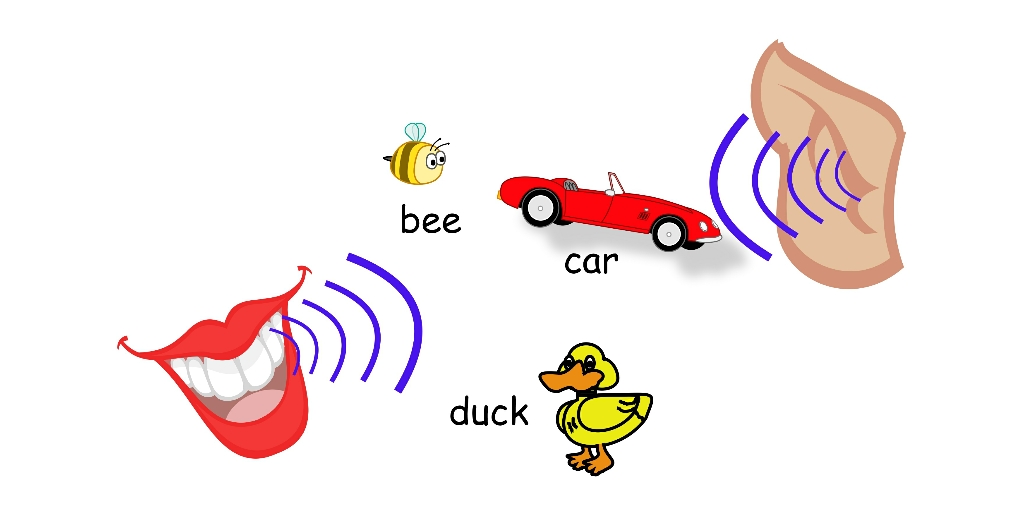
  • Pointing out the sounds you hear, such as animal or environmental noises, and explaining what is making that noise.
  • Playing games or singing songs where you and your child can make noises such as animal sounds (Old MacDonald had a farm) or vehicle noises (The Wheels on the Bus).
  • Drawing animals or other everyday objects that have a distinct sound, naming them and making the sound they produce.

Book Sharing

What books should you choose?

  • Books with sounds of animals and other objects that make sounds
  • Nursery Rhymes
  • Books formatted from songs
  • Books with rhyme and alliteration
  • Poetry books
  • Any book really, remember your local library can help you to choose a good range of books to share with your child if you are not sure.

Book Sharing Tips

  • Don’t be shy, make animal and object noises. If you are self-conscious about it your child will pick up on this. No one thinks twice about an adult making what may appear to be strange noises if they are sharing them with a child (it’s when you forget they are not with you and you do it that they tend to look at a you a bit funny).
  • Talk about whether the words in a book rhyme or not. Point out the rhyming words, make up other rhyming words for any of the words in the book. Remember they do not have to be real words they can be silly funny words that pick up the rhyming sounds in the original word.
  • It is important to remember for some children saying a word that rhymes with one you have given can be very difficult, if not impossible. So, don’t stress them out with this, it is often easier for them to recognise a rhyme than to make one. You could ask them to tell you if two words you give rhyme or not. If they find this easy try giving them three words with only two that rhyme and ask them to identify the rhyming words.
  • After sharing the book pick out words that you can clap out the syllables for. You could make this into a jumping or hopping game instead. With older children ask then to tell you how many syllables the word has and then to check their answer by counting the number of claps or jumps they make.
  • Play an ‘I Spy’ game using the pictures in the book looking for rhyming words for instance by giving clues such as; “It is red and rhymes with the word sock.” The answer is clock.

Indoor/Outdoor Circuits Ideas – To Support Language Development

Well, true to form, the half term holiday weather is a mixed bag, sunny one minute then pouring with rain the next!  

So, here are a couple of ideas to help your child burn off some of that pent-up energy. Best of all you can class it as language development homework (working on instructional, directional, body awareness vocabulary and listening skills).

An indoor/outdoor circuit training course does not have to take up much space or be messy (but it might be a good idea if indoors to move ornaments a little further out of the way).

Simple activities can be fun if they are done for short periods of time and children do love a time challenge. Make each activity last anything from 30 seconds to 1 minute.

You could record how many they did in the time and see if they have improved when you try it again.

Why not try:

  • Hopping on one leg and then the other (balance & coordination)
  • Use the bottom step of the stairs for step ups (bilateral coordination)
  • Curl ups (core strength)
  • With a cushion balanced on their head can they touch their toes without dropping the cushion (balance, coordination, bilateral coordination and core strength)
  • Star Jumps (balance & coordination)

For more fun, simple activity ideas check out our games page, it is amazing how much fun you can have just hopping, jumping, skipping and dancing on the spot: https://teachhandwriting.co.uk/games.html

If you are feeling really brave why not try building an obstacle course, a lot of the fun is in the designing and making.

Let go and have fun!!!

The ‘What’s That?’, What You Doing?’ and ‘Why?’ Stages

As children interact more with the world and those around them so their language and communications skills increase and the ‘What’s That?’, ‘What You Doing?’ and ‘Why?’ stages begin. Yes! It can drive you insane at times, but it is at these stages they are cementing their knowledge and understanding, their brains are like a sponge, absorbing all sorts of information and linking them together.

It is at these stages that a child can easily misunderstand explanations and develop misconceptions as they try to find reasons and meanings for themselves. So, it can be very useful to talk through some things again later, checking their understanding and thinking. A good way of doing this is to ask them to tell someone else who was not there, perhaps Dad or an older brother/sister for instance. This way you can help them to develop a better understanding of the meaning of the word or concept.

You can also broaden their experiences, on which to draw understanding, by setting up play scenarios or other activities.