The Key to Good Phonics Skills – Part 1

What is listening?

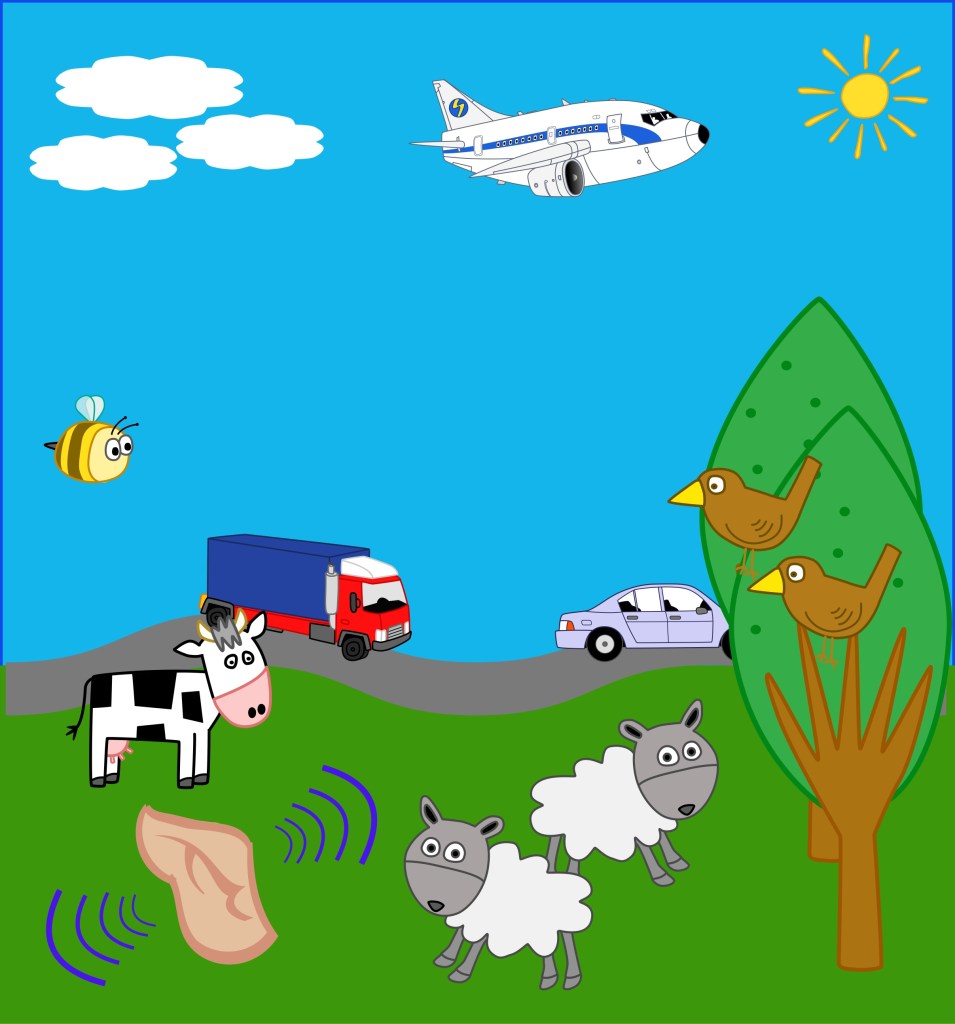
Listening is a complicated skill that requires children to learn how to pay attention – being able to focus on a particular voice or sound by filtering out other voices and ambient noises. They then have to concentrate on the voice or sounds to take in the information, building the stamina needed to listen for extended periods of time. Then they have to interpret that information to gain meaning – comprehension.

The usual approach to teaching children to listen is based on three behaviours:

  1. Sitting or standing still
  2. Looking at the person who is speaking
  3. Thinking about what the person is saying or said

However just because your child is replicating these behaviours doesn’t mean they are listening.

It is also surprising how often children are happy to follow steps 1 and 2 but completely miss step 3.

This is not surprising really as listening is not a set of behaviours but a set of skills that need to be taught and developed, starting from birth.

A child with poor listening skills will find it difficult to complete tasks, as they have not taken in all the information and so not understood the full extent of the task, or what was required of them. This can lead to a child flitting from one activity to another and never finishing anything, slowing down their learning. They also miss out on the sense of achievement and feeling of pride when a task is completed. This helps to build a child’s confidence, self-esteem and self-motivation to try again or attempt a more challenging task.

For many children good listening skills do not develop naturally, they have to be taught!

The Key to Good Phonics Skills

The key to good phonics skills is having good listening, speaking and vocabulary skills.

These are not just the elements for phonics and for other literacy success but an essential for social communication skills as well.

Sadly, schools are still reporting ever increasing concerns over the decline in young children’s speaking and listening skills. So, over the next 14 weeks, we are looking again at the different developmental elements of listening and speaking which in turn will support vocabulary development. Providing practical information, games and activities to help build a child’s skills. 

Week 1. What is Listening?

Week 2. Games to Develop Listening Skills – Sound Screen Games

Week 3. Games to Develop Listening Skills – Sound Scanning Games

Week 4. Games to develop Listening Skills – Music Fun

Week 5. Games to develop Listening Skills – Phonemic Awareness

Week 6. Conversational Turn Taking Skills

Week 7. Different Types of Talk

Week 8. The Importance of Small Talk

Week 9. How to Encourage Your Child to Keep Talking

Week 10.  Word Awareness

Week 11. Activities to Develop Talking & Language Skills

Week 12. Activities to Develop Rhyme & Alliteration

Week 13. Activities to Develop Syllable Awareness

Week 14. Activities to Develop Directional and Positional Language

When do phonics skills start?

There are 10 stages of phonological awareness. Stages 1 to 7 are what we class as the pre-phonics skill stages (https://www.teachphonics.co.uk/phonological-development.html) and stages 8 to 10 (https://www.teachphonics.co.uk/phonological-development-phonics.html) we would class as the phonics stages.

Phonological awareness skills relate to our sensitivity and understanding of the sound structures of our spoken (oral) language. It enables us to progress from our awareness of large sound units (words in sentences) to smaller sound units (phonemes in words). It also incorporates the ways in which we communicate through speech, body language and written forms.

Research suggests that our phonological awareness (Stage 1: https://www.teachphonics.co.uk/phonological-awareness-stage-1.html) begins in the womb at about 24 weeks.  New born babies have a preference for their mother’s voice, as they have had an extended period of time hearing the voice before they are born, and so find it comforting. They do not understand the words, just the sound, rhythm and intonation of her speech pattern; more like music.

So, talk to your baby even before they are born, they will not understand what you are saying but their brain is busy; starting to store sound information that will later help them to understand language and learning to speak.

Babies initially have no language preference; they respond only to the sounds and facial gestures and mouth shapes that accompany them.

How you talk to your baby also has an impact; research has shown that babies prefer you to talk to them using regular words (normal adult vocabulary) in a slightly higher pitched and more sing-song way. Although many adults do this naturally when talking to babies it has become known as ‘Parentese’ and is very different from ‘Baby Talk’. For more information about ‘Parentese’: https://www.teachphonics.co.uk/how-to-speak-parentese.html

Why Vocabulary Building with your Child is so Important!

Building your child’s vocabulary is a vital pre-reading skill. This is because schools teach what is referred to as the ‘The Simple View of Reading’:

Reading Comprehension = Decoding (Phonics) x Linguistic (Spoken Language) Comprehension  

This means that a child decodes the words using their phonics skills and their own vocabulary knowledge to help them understand the text they are reading.

So, for a child to have good reading skills they need to be able to speedily decode unknown words and recognise familiar printed words. And, understand the meaning and grammatical structure of the spoken language and then use this knowledge to understand the printed text.

This means that a child:

  • Who does not fully understand the meaning of all the words and/or the grammatical structure of the spoken language (age appropriate) will also be unable to fully understand the printed text; even if they decoded it correctly.
  • Whose ability to understand the spoken word is poor will also be unable to understand the printed text; even if they have managed to decode a few words.

Helping your child build their vocabulary is also vital, if they are to continue to develop good communication skills. Talking, explaining, sharing and playing are all important in developing your child’s vocabulary, their understanding of the words meaning in the context of the conversation and the grammatical conventions of our spoken language.

What are CVC Words?

The letter C means a consonant letter is required.

The letter V means that a vowel letter is required.

So, a CVC word is one that has a consonant letter followed by a vowel and then a consonant as in the following examples:

ca   dog    mat

There are 26 letters in the English alphabet and these can be split in to two categories:

Vowels – ‘a’, ‘e’, ‘i’, ‘o’, ‘u’ and the letter ‘y’, when it is used as a semi-vowel, in words such as by, my and fly.

Consonants – ‘b’, ‘c’, ‘d’, ‘f’, ‘g’, ‘h’, ‘j’, ‘k’, ‘l’, ‘m’, ‘n’, ‘p’, ‘q’, ‘r’, ‘s’, ‘t’, ‘v’, ‘w’, ‘x’, ‘z’ and the letter ‘y’ when it is being used as a consonant, in words such as yak, yam and yellow.

Schools will often use the abbreviation CV, CVC, CVCC words when sending home phonics work or suggestions for phonics games. It is also used by many phonics computer games, activity programs and schemes.

Here are some examples for:

Accents – #Phonemic Awareness & #Phonics

Because the English language is so rich and diverse it is very difficult to create a phonics system that caters for all. Every region that speaks the English language has its own accent which means there are always variations in the way that a word is pronounced.

Across England we all spell words the same but we certainly do not say them all the same, even though we all use the same 44 sounds. In the English language the 44 sounds can be represented by over 280 letter combinations.

So, accents have arisen from regions applying different phonemes (sounds) to graphemes (letters) when they pronounce words. The regions still use the same sounds and letters, they just associate them differently.

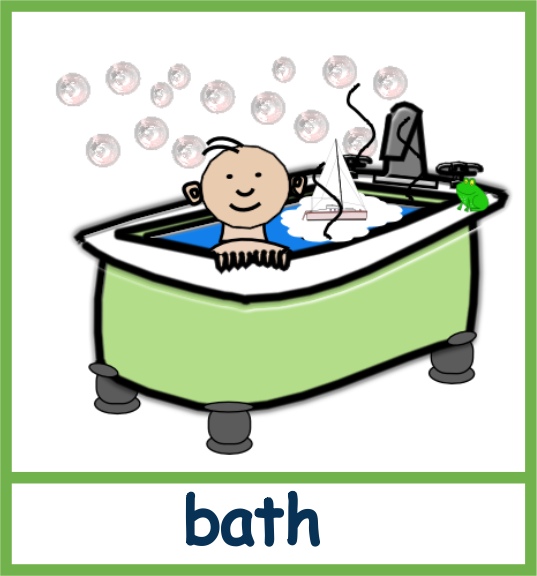
For example, in the South of England the letter ‘a’ can be pronounced as the ‘long ’R’ controlled’ vowel sound /ar,(ɑː)/ in words such as ‘grass’ and ‘bath’ whereas in the North of England it will be pronounced as the ‘short’ vowel /a,(æ)/ sound in these two words.

Click and then scroll down the page to see the animations of the different pronunciations of the word ‘bath’. https://www.teachphonics.co.uk/teaching-phonics.html#pronunciation

Both pronunciations are correct, which can make teaching phonics a little tricky; the key is to teach the sound to letter relationships which best suit the children being taught in relation to their regional accent. It is important to remember that children’s knowledge of the sounds that make words is based on how you speak to them naturally and not a strict standardized set of sounds.

However, for general educational and learning purposes the English language’s phonics system has been standardized, this is known as the ‘Received Pronounced’ (RP) English, and is used in comprehensive English dictionaries and translation dictionaries. The RP is based on a southern accent sound to letter relationship basis.

Letter & Sound Relationships That Break the #Phonics Rules

Back in September we explained that Phonics is very useful as a decoding tool used for developing reading skills and an encoding tool for spelling. It is the simple process of linking sounds to letters, its complexity comes from how many sounds (phonemes) to letter combinations (graphemes) there are.

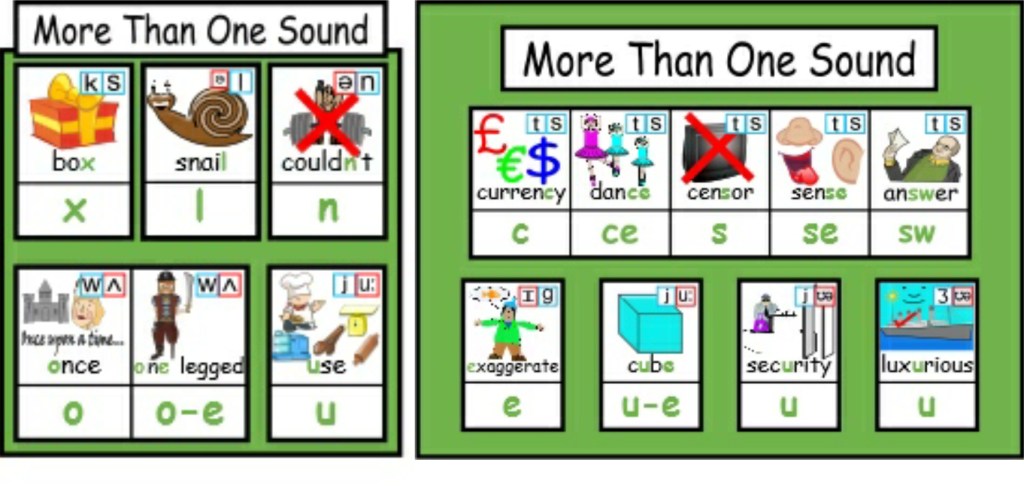
Some letter and sound associations just don’t follow the normal phonics rule of a single sound being associated to a letter or letter combination. A few letters represent two sounds, such as the letter ‘u’ which in the word ‘cupid’ represents the two sounds /y,(j)/ and /oo,(uː)/.

A more common one letter two sound relation is that of the letter ‘x’ representing the two sounds /k,(k)/ and /s,(s)/ as in thewords: six and box.

Here are some other examples of single letters and split digraphs making two sounds instead of the usual phonics rule of only making one sound:

The ‘Long’ Vowel Sounds

A couple of weeks ago we explained that there are 20 vowel sounds in the English (UK) sound system and last week we looked at the 7 ‘short’ vowel sounds. This week we are taking a look at the remaining 13 ‘long’ vowel sounds.

Here at Teach Phonics we split them in to two groups: 7 ‘long’ vowel sounds and 6 ‘long ‘R’ controlled’ vowel sounds.

The 7 ‘long’ vowel sounds areso calleddue to the length of their pronunciation; these can often be held without distorting their sound.

 The /ai,(eI)/ sound found in the words: train, tray, cake and break.

The /oa,(ǝƱ)/ sound found in the words: boat, hotel, toe and bone.

The /oi,(ɔI)/ sound found in the words: boy, coin and buoy.

The /ow,(aƱ)/ sound found in the words: owl, house, drought and hour.

The /ee,(іː)/ sound found in the words: tree, pea, me, and pony.

The /I,(aI)/ sound found in the words: iron, fly, pie and light.

The /oo,(uː)/ sound found in the words: spoon, blue, screw and you.

The 6 ‘long ‘R’ controlled’ vowel sounds are so called because of the slight /r,(r)/ sound quality that can be heard in them along with the length of their pronunciation; these can often be held without distorting their sound.

The /ar,(ɑː)/ sound found in the words: car, father (southern UK accent) and art.

The /or,(ɔː)/ sound found in the words: fork, door, walk and sauce.

The /ear,(Iǝ)/ sound found in the words: ear, here, deer and pier.

The /er,(ɜː)/ sound found in the words: bird, kerb, nurse and worm.

The /re,(Ʊǝ)/ sound found in the words: manure, tour and mature.

The /air,(eǝ)/ sound found in the words: chair, pear, square and where.

How Many ‘Short Vowel’ Sounds Do You Know?

There are 7 ‘short’ vowel sounds, although children are usually only introduced to the 5 which are most commonly heard in simple CVC (consonant, vowel, consonant) words: /a,(æ)/ in cat, /e,(e)/ in peg, /i,(I)/ in pin, /o,(ɒ)/ in hot, /u,(ʌ)/ in bus.

The other two ‘short’ vowel sounds are:/oo(u),(Ʊ)/in bull or could and /uh,(ǝ or schwa)/ heard  as the final sound in the words: zebra, doctor and corner. Our ‘Short Vowel’ Finger Chant can help you, and your child, to learn and remember the 7 ‘short vowel’ sounds: https://www.teachphonics.co.uk/phonics-resources.html

English (UK) Vowel Sounds

Learning to hear and differentiate the vowel sounds from consonant sounds is an important skill in understanding how words are formed. Every word in the English Language has to have a vowel sound in it and every syllable in a word also has to have a vowel sound within it. This knowledge is an important element in developing our phonemic awareness and phonics knowledge as we start to learn how to read and spell words.

There are 20 vowel sounds in the English (UK) Language, usually (in the UK Education System) split into two main categories based on sound quality:

  • ‘Short’ vowel sounds, due to the short duration of the sound being made, the sound cannot be held onto without becoming distorted, such as the /e,(e)/ in me, pea and tree
  • ‘Long’ vowel sounds, due to the length of their pronunciation, these can often be held without distorting their sound, such as the /oi,(ɔI)/ sound found in the words:boy, coin and buoy

Here at Teach Phonics we split the ‘long’ vowel sounds category into ‘long’ vowel sounds and ‘long ‘R’ controlled’ vowel sounds. The ‘long ’R’ controlled’ vowel sounds are so called because of the slight /r,(r)/ sound quality that can be heard in them for example the /or,(ɔː)/ sound found in the words: fork, door, walk and sauce.

The English Phoneme Chart (https://www.teachphonics.co.uk/phonics-phoneme-chart.html ), which uses the unique symbols of the International Phonetic Alphabet (IPA), splits the 20 vowel sounds into two groups based on mouth position:

  • Monophthongs which have one mouth position throughout the sound for example /e,(e)/ in me.
  • Diphthongs, where the mouth position changes, giving a 2 sounds quality to the phoneme for example, /oi,(ɔI)/ inboy.