Turn Taking Skills for Play

This week we will look at turn taking in play a skill children need to learn to take part in meaningful interaction with others. These interactions are a vital part of children’s physical, emotional, social and intellectual growth and wellbeing.

Children need to learn the importance of waiting for their turn when playing with others, something many find hard to understand to begin with. 

Like most skills it needs to be taught and practised and is part of our phonological awareness development as it requires us to learn an associated vocabulary along with facial and other physical cue.

A child who is taught and given lots of practise at taking turns will find interacting and playing with others easier later on.

Turn taking is easy to implement into everyday activities and play and something you probably do anyway, without even thinking about it

Here are some ideas to help you to support your child:

  • Try to use the phrase “My turn”, “Your turn” or “Daddy’s turn” (name a third person) when playing or doing an activity such as sharing a book.
  • Toddlers have a short attention span so keep the turn short to start with.
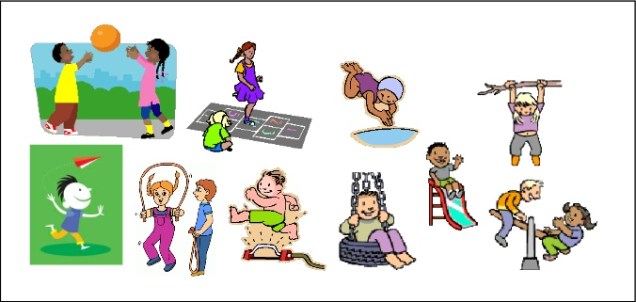
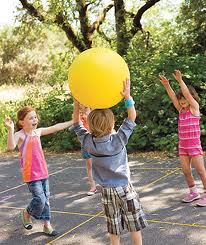
  • Physical games such as rolling and kicking a ball or running and jumping activities can help to encourage turn taking and learning to wait for your turn. Again, don’t make the turns too long and to help keep your child engaged while you have your turn, talk with them about what you are doing during your turn and when they are having theirs.
  • Count Down or Up – To help young children develop an understanding that if they wait, they will get their turn, explain that you will count to 10 and then it is time to swap and someone else has a turn, count to 10 again and return the toy or wanted object to your child. It won’t take long for them to understand that they will get their turn without a fuss.
  • Turn Time – As your child gets older try using a timer/clock to help them increase the time scale between taking turns. Try not to make the gaps between turns too long to start with, as young children find the concept of time very difficult, 1 minute might as well be an hour in their eyes. Show clearly a start point and the finish point for the time scale so your child can watch or come back and check the passing of time. Don’t be tempted to ignore the timer if it is your child’s turn, make sure they are offered the toy or turn that is due to them, otherwise they will feel cheated and some of the trust is lost.
  • As children get older, playing card and board games helps to further develop their turn taking skills.

Different Types of Play and their Importance

We are always being shown how important play is in the development of young animals’ survival and hunting skills. How many times have you thought how cute or lovely when watching kittens, puppies or polar bears playing?

Humans are also animals which thrive and develop through play; in fact, play is so important the United Nations High Commission for Human Rights state it as a right for every child (Ginsburg, 2013).

We often think of play as a frivolous pastime rather than a practical and meaningful one. However, here at Teach Children we see play as a vital part of a child’s physical, emotional, social and intellectual growth and well-being.

There has been considerable research over the years on play, which supports our point of view, with the consensus being that children need to experience five different types of play (Dr.D Whitebread, 2012). These five types of play are roughly based on the developmental opportunities they provide, especially if it is child driven rather than adult lead:

Physical Play – active exercise (running, jumping, skipping etc..), rough & tumble and fine motor skills activities to develop whole body and hand and eye co-ordination strength and endurance. The outdoor element of such play develops independence, resourcefulness and self-regulation while the fine motor skills activities support the development of concentration and perseverance.

Play with Objects – starts as soon as a child can grasp and hold an object; mouthing, biting, turning, stroking, hitting and dropping. It’s how we all learn through the exploration of our senses (sensory-motor play). This type of play develops our abilities to; physically manipulate items, think, reason and problem solve, to set challenges and goals as well as to monitor our own progress.

Symbolic Play – refers to the development of spoken language, visual symbols such as letters and numbers, music, painting, drawing and other media used for communication of thought and ideas. This type of play allows children to develop the abilities to express and reflect on experiences, ideas and emotions. Sound and language play develops phonological awareness required for literacy, while number play that relates to real life situations supports numeracy skills.

Pretence/socio-dramatic Play – Pretend play provides the opportunity to develop cognitive, social, self-regulatory and academic skills. This kind of play means children have to learn and pick up on unspoken rules of interaction, taking on the role of a character and playing within the expected confines of that role.

Games with Rules – physical games such as chase, hide & seek, sport, board and computer games. Develop social skills and the emotional skills of taking turns, winning and losing as well as other people’s perspectives.

                                                             So, to play is to learn!

Bibliography

Kenneth R. Ginsburg, MD, MSEd, 25/07/2013; ‘The Importance of Play in Promoting Healthy Child Development and Maintaining Strong Parent-Child Bonds’: THE AMERICAN ACADEMY OF PEDIATRICS: http://pediatrics.aappublications.org/content/119/1/182.full

Dr.D. Whitebread, April 2012: ‘The Importance of Play’; Commissioned for the Toy Industries of Europe:  http://www.importanceofplay.eu/IMG/pdf/dr_david_whitebread_-_the_importance_of_play.pdf                            

How to Develop a Child’s Interest in Books and Reading

Research suggests that children who enjoy books are more likely to want to learn to read and will keep trying even when they find it hard. Therefore, it is important to keep their interaction around books a positive one.

Through Play

Books come in all shapes and sizes and are made from various materials.

  • Have a few bath books. even if most of the time your baby or toddler just chews on them, they will be handling a book and possibly turning the pages. Giving you the opportunity to talk about the pictures with them.
  • Try to have a range of cloth, hard books and suitable picture books around the house and in your child’s play area so they can pick them up at any time. This way they can explore them for themselves, (even if it is to give them a quick chew on) not as an adult sharing activity.

Through Drawing & Writing

Drawing and making your own simple story book can be a great way of getting your child interested in books and reading. Children love to hear stories about them. Simple homemade books about them can be a great way of introducing children to books and reading. This can be a very effective approach to encourage reluctant readers.

  • Draw simple pictures with, or for, your child and talk through what you are drawing, for example; a picture of a house with matchstick people. The pictures could be telling the events of the day for example going to the park or walking the dog.
  • If drawing is not your thing (like me) use fuzzy felt instead to make a picture to share the story of their day.

Through Songs and Nursery Rhymes

Children’s songs and nursery rhymes cover a wide range of concepts such as going through every day sequences in the nursery rhyme ‘Here we go Round the Mulberry Bush’ which uses the phrase ‘This is the way we…’ to order the event of getting up in the morning. Some introduce concept such as size, numbers, colours and shapes. While others tell stories for example ‘Baa Baa Black Sheep’ or ‘We’re going on a Bear Hunt’ by Michael Rosen & Helen Oxenbury.

Sharing books that enable you and your child to sing along (retell) their favourite songs and nursery rhymes means that the child knows what to expect and that they are going to have fun and enjoy the experience. Over time you will then be able to introduce books with new songs and nursery rhymes, building on your child’s positive experience of other book sharing sessions with you. Remember you may have to revert back to the old favourite time and time again, but stick with it.

Through Book Sharing

What books should you choose?

  • Pick children’s books you enjoy
  • Pick books your child enjoys
  • Give your child time to choose and look at books (your local library is a great place for this).
  • Follow your child’s interests
  • Use ‘true’ books and stories (not those specifically written for developing phonics knowledge or rigidly structured reading scheme books for teaching and learning to read, these will come from school and serve a different purpose).

Book Sharing Tips

  • Remember that a child’s age personality, mood and stage of development will affect how they interact with the book.
  • Keep the interaction around the book positive and fun, if you are not enjoying it your child will pick up on this.
  • Keep your child involved, remember you do not have to read the book word for word, it is the positive sharing experience that is important.
  • If your child does not seem interested in reading or sharing books, start slowly by sharing /reading one or two pages at a time. Keep the interaction positive and over time their interest will grow.
  • If your child is showing no interest then try again another time.
  • When reading a book with your child that you really like then tell them that you like the book or story. Your child may not agree with you and insist on their favourite book which after reading for the 500th time you may be bored with but keep with it, there will be another favourite book!
  • Try to share books throughout the day not just at nap and bed times. I found having a couple of books in my bag really useful as I could then share a book with one of my girl’s while the other was swimming or with them both while waiting for the bus or sharing tea and cake in a café.
  • Read with your child every day. There are some days where this just seems impossible to manage. Remember one minute is better than no minutes and it does not have to be a book you are reading, there are lots of environment reading matter you could use such as paintings/pictures, posters, advertisements, road signs and maps.

Developing #Listening & #Speaking Skills week 8 – Music Fun

These games are designed to help a child learn about the different levels of sound, pitch, tone and volume.

Music Fun

  • Skittle Band – Use, or make, a drum stick (wooden spoons are good for this) and explore with your child the different sounds the drum stick makes against objects made of different materials, such as steel saucepan, another wooden spoon, plastic bottles etc. Choose items that are safe and you are happy for them to play with. You could photograph the objects, record the sounds they make, or video (on your phone), to play back and talk about later on. Try moving the activity outside for a different sound quality experience.
  • Orchestral Conductor – Once your child is happy and enjoys playing and making sounds, with different objects and instruments, try the conductor game. You can use your hands or a baton to point and encourage them to play certain sounds just like an orchestral conductor does, but make sure you have a clear stop gesture which your child will understand (you may need to say stop at the same time as the gesture to begin with, but they will soon get the idea). Then swap places and you become the musician and they the conductor; it may not be a classic you create but it is great fun. As your child develops their skills you can add new elements and hand gestures to make the sound louder or softer.
  • Musical Bottles – Use plastic bottles with different amounts of water/sand in them and different things as a beater. Talk about how:
    • Low/deep or high pitched a sound is compared with another.
    • Using different beaters can change the quality of the sound when used on the same bottle.
    • Using different amounts of pressure to hit the bottle makes the sound louder (harsher) or quieter (softer).

Try organizing the bottles in order of pitch to create a musical instrument and using this as part of the Orchestral Conductor game. You could number each bottle or use a different picture on the bottle as a way of encouraging your child to play the bottles in different orders (making music).

Developing #Listening & #Speaking Skills week 7 – Sound Scanning Games

These games are designed to help a child learn how to block out ambient noises so that they focus and concentrate on one particular sound.

Games

The idea is to identify and talk about different sounds in different locations; in the park or at home in different rooms. Ask the child to listen for a moment (timed activity 30 seconds to start with then increase) and to pick out different sounds they can hear. Some will be close and easier to identify; other sounds may be further away and require more focused concentration to work out what they may be.

  • Sound Scanning Questions to help:
  • What can you hear that is far away?
  • What can you hear that is close by?
  • What can you hear that is loud?
  • What can you hear that is quiet?
  • What can you hear that makes a high-pitched sound?
  • What can you hear that makes a low-pitched sound?
  • What can you hear that sounds big?
  • What can you hear that sounds small?
  • Listening Walk Activities- You could record some of the sounds heard and talked about on the walk. Try changing the ‘What can you …?’ questions to ‘What did you…?’ Depending on your child’s age they may be able to draw a sound scape picture showing all the things they heard on the walk.
  • Where is the Sound? – The aim of the game is finding out where the sound is coming from. Start by using something that makes a good clear sound.  Ask your child to cover their eyes (can use a blindfold) and have them sit or stand in the middle of the room. Move around the room, starting not too far away from them and make the sound. Pause between each sound to give your child time to settle and focus on it before you make the next sound. Try to keep an even, slow pace. The aim is for your child to point in the direction they believe the sound is coming from. Gradually move further away, maintaining the same sound level. Swap places with your child, so you have to guess where the sound is coming from.

To make it more challenging:

  • Change the volume of the noise.
  • Change the object that is making the noise.
  • Change the speed (rhythm), as well as the location, at which the sounds are made.

Have Fun!

Developing #Listening & #Speaking Skills week 6 – Sound Screen/Barrier Games

Last week we explained the three things required for good listening skills:

  • To pay attention – being able to focus on a particular voice or sound by filtering out other voices and ambient noises.
  • To concentrate on the voice or sounds to take in the information, building the stamina needed to listen for extended periods of time.
  • To interpret that information to gain meaning – comprehension.

Here are some games to help build these skills.

These games are designed to help a child learn how to block out ambient noises so that they focus and concentrate on one particular sound.

Create a barrier between you and your child so that they cannot see the object you are going to use to make noises with and see if they can guess the object. Try to use objects that make sounds that occur around them a lot of the time, for example keys rattling together or wooden blocks being knocked together. There are many variations of the game that can be played but you need to make sure your child has the opportunity to experience the sounds with the relevant object beforehand so they don’t get frustrated by the game.

  • Mrs Blog has a box… To the tune of Old Macdonald changing the name as best fits the situation. Place a box, on its side with a number of objects inside that make a noise (choose items your child is familiar with the sound of), between you and your child so they can’t see what is in the box. Start singing “My mummy has a box ee, i, ee, i, o and in that box she has…” Stop and gesture to encourage your child to listen (maybe a cupped hand to your ear) then pick one of the objects and make a sound; your child then tries to guess what it is. Continue to sing but imitating the sound of the object you played, which your child can now see. If it was a bunch of keys for example; “with a jingle, jangle here and a jingle jangle there, my mummy has a box ee, i, ee, i, o.” Swap places so your child can choose an object in the box, change the song so you are using their name, for example “My James has a box…”
  • Same or Different?  Place a barrier between you and your child so they cannot see which object you will use to make a sound and that you duck behind so they cannot see your face when you make vocal sounds.  This can be played at different levels. At the basic level using animal noises such as baa, moo, woof etc. A more complex level would be to use shakers with different size things inside to make different shaking sounds. Plastic containers or bags of the same size and type can be used to make the shakers with different small items in such as dried pea, rice, sand or small coins, pebbles or small Lego bricks. Make the noise once and then repeat either with the same noise or a different one. The child then says if they were the same or different.
  • Copy Cat!  Place a barrier between you and your child so they cannot see which object you will use to make a sound and that you duck behind so they cannot see your face when you make vocal sounds.  You will need two set of the same objects, a set for you and one for your child. The aim of the game is for you to make a noise with either an object or your voice and for your child to copy that sound choosing the correct object in front of them or using their voice as you did. The game can become more complicated as you mix a number of sounds using objects and your voice. Swap roles so that your child becomes the leader of the game and you have to copy them.

Have Fun! N.B. Be careful of small objects, especially those escaping from shakers, as these can be a choke hazard.

Developing #Listening & #Speaking Skills week 5 – What is listening?

Listening is a complicated skill that requires children to learn how to pay attention – being able to focus on a particular voice or sound by filtering out other voices and ambient noises. They then have to concentrate on the voice or sounds to take in the information, building the stamina needed to listen for extended periods of time. Then they have to interpret that information to gain meaning – comprehension.

The usual approach to teaching children to listen is based on three behaviours:

  1. Sitting or standing still
  2. Looking at the person who is speaking
  3. Thinking about what the person is saying or said

However just because your child is replicating these behaviours doesn’t mean they are listening.

It is also surprising how often children are happy to follow steps 1 and 2 but completely miss step 3.

This is not surprising really as listening is not a set of behaviours but a set of skills that need to be taught and developed, starting from birth.

A child with poor listening skills will find it difficult to complete tasks, as they have not taken in all the information and so not understood the full extent of the task, or what was required of them. This can lead to a child flitting from one activity to another and never finishing anything, slowing down their learning. They also miss out on the sense of achievement and feeling of pride when a task is completed. This helps to build a child’s confidence, self-esteem and self-motivation to try again or attempt a more challenging task.

For many children good listening skills do not develop naturally, they have to be taught!

Indoor/Outdoor Circuits Ideas – To Support Language Development

Well, another half term holiday is here.  

So, here are a couple of ideas to help your child burn off some of that pent-up energy. Best of all you can class it as language development homework (working on instructional, directional, body awareness vocabulary and listening skills).

An indoor/outdoor circuit training course does not have to take up much space or be messy (but it might be a good idea if indoors to move ornaments a little further out of the way).

Simple activities can be fun if they are done for short periods of time and children do love a time challenge. Make each activity last anything from 30 seconds to 1 minute.

You could record how many they did in the time and see if they have improved when you try it again.

Why not try:

  • Hopping on one leg and then the other (balance & coordination)
  • Use the bottom step of the stairs for step ups (bilateral coordination)
  • Curl ups (core strength)
  • With a cushion balanced on their head can they touch their toes without dropping the cushion (balance, coordination, bilateral coordination and core strength)
  • Star Jumps (balance & coordination)

For more fun, simple activity ideas check out our games page, it is amazing how much fun you can have just hopping, jumping, skipping and dancing on the spot: https://teachhandwriting.co.uk/games.html

If you are feeling really brave why not try building an obstacle course, a lot of the fun is in the designing and making.

Let go and have fun!!!

Developing #Listening & #Speaking Skills week 4 – How to encourage your child to keep talking!

Learning to the conventions of conversation start from birth, as parents we do not really think about it in this way but it is what we tend to do naturally.

Sometime though we all need a few pointers to help us, so here are some ideas to help you develop and encourage your child to talking skills:

From Birth to 1 Years Old

  • To encourage cooing and babbling. Get yourselves comfortable in a face-to-face interaction position, babies often like lying on their back or on your lap looking up at you.
  • Start by talking to your child while gently tickling their tummy or neck.
  • Anytime they make a sound you imitate or match the sound as best you can. It is best to wait until they have finished before you try (one of the conventions of conversation).
  • Try changing or adding a new sound to the one your child has made, so if they say ‘ah’ you might say ‘ah-ooh’, this will help to keep the game interesting.
  • Show that you are excited by the sound they make – smile and laugh, if you are enjoying the interaction, they will be excited by it too.
  • Vocal play works best when it occurs naturally, such as playing with farm animals, for instance sheep go baa, baa or cows make a moo, moo sound.

1 to 2 Years Old

  • Talk directly to your baby/toddler so they can see your facial expressions and how your lips move, as this is the beginnings of learning the conventions of communicating, listening and responding (something they cannot get from the TV, iPad or overheard conversations – indirect talk).
  • Talk through everyday events, such as getting dressed; what is happening, where you are going and what the plan is for the day.
  • Use your body language, expressions and gestures to help reinforce and develop your child’s neurological pathways to support understanding and comprehension.
  • Share books with your baby/toddler, they may not understand what you are saying to begin with but they will be listening to the different sounds that the words make. By reading aloud you are probably using words that will introduce new sounds that your child may not be picking up from your normal day to day conversations. As they get older you are developing and increasing the range of their vocabulary.
  • Babies and young children love to hear you singing and saying rhymes, this is because the language is slowed down, allowing them to hear the small units of sounds and patterns which are often repeated several times in a short time lapse. Again, the language used is often different from your day-to-day talk.
  • To encourage and help your child to generate and play with sound, repeat the sounds that they make.
  • Using familiar objects and toys make the noises associated with them for example a toy car, broom, broom or a toy bumble bee buzz, buzz.
  • When you are out and about talk about what you can see and about the sounds they make, a cat goes meow or a train Choo, Choo, for example.
  • You can use other onomatopoeic words to describe sounds, such as wooden spoons on saucepans could be bang, bang or blocks being knocked together could be click, clack.

2 to 5 Years Old

  • When playing, talking and sharing new words it is important to get down to your child’s level so they can see your face and how your mouth and lips move to form the words or sounds being explored.
  • Remember toddlers learn to listen best when they are taking an active role in what they are doing, especially when you or others join in eagerly with them to play the games.
  • Give your child thinking and response time, this may seem like a long pause but it is worth waiting, be sure your child has finished what they wanted to say before you respond.
  • Try not to finish off your child’s sentence, yes sometimes it may be quicker but just give them a little moment longer and they will get there. If it is clear they cannot think of the word they want then that is of course different.
  • Before a child can really take part in meaningful interactions with others, they need to learn how to take turns. It is one of the basic elements of communication, when we are talking to someone, we leave a gap/pause so that the other person has the opportunity to respond, taking turns. Turn taking skills need to be modelled and taught to help your child develop and understand this element of communicating with others.
  • To encourage your child to keep talking try nodding, smiling and using comments such as; wow, really or acknowledging something they have said by repeating rather than always asking them questions.
  • We are all guilty of half-listening, especially when we are busy trying to cook dinner for example. If it is obvious that what your child wants to tell you is really important then make it clear that you are interested by saying “Just let me finish this and then I can listen to you more carefully.”

Developing #Listening & #Speaking Skills week 3 – The Importance of Small Talk!

Don’t underestimate the importance of everyday chatter or conversation (‘Small Talk’), children develop and learn a great deal through ‘Small Talk’ with adults and other children.

What do we mean by ‘Small Talk’?

With babies it is the kind of talk that explains what we are doing, what they are doing, where we are going and what we can see.  As they get older our verbal exchanges increase as we support their receptive and expressive vocabulary development. Through these exchanges we also support their general language development and understanding of how words are pronounced, basic sentence structure and using the correct tense.

When we talk with a child we demonstrate and model the use of language in real time so that it has meaning. For instance, a child may point and say “cat” and we would respond with “Yes, the cat is sleeping.” Or we may correct the child and say “That is a dog.” If we could we would point to a cat and explain the difference. We also correct mispronunciation of words and correct tense issues in the same way; repeating the word or sentence using the correct pronunciation or tense back to the child.

The Communication Trust is now part of the I Can organisation and has a great range of information and guidance for parents and professionals: https://www.icancharity.org.uk/