Developing and Supporting Your Child’s Reading Journey – Week 1

How to Develop a Child’s Interest in Books and Reading

Research suggests that children who enjoy books are more likely to want to learn to read and will keep trying even when they find it hard. Therefore, it is important to keep their interaction around books a positive one.

Through Play

Books come in all shapes and sizes and are made from various materials.

  • Have a few bath books. even if most of the time your baby or toddler just chews on them, they will be handling a book and possibly turning the pages. Giving you the opportunity to talk about the pictures with them.
  • Try to have a range of cloth, hard books and suitable picture books around the house and in your child’s play area so they can pick them up at any time. This way they can explore them for themselves, (even if it is to give them a quick chew on) not as an adult sharing activity.

Through Drawing & Writing

Drawing and making your own simple story book can be a great way of getting your child interested in books and reading. Children love to hear stories about them. Simple homemade books about them can be a great way of introducing children to books and reading. This can be a very effective approach to encourage reluctant readers.

  • Draw simple pictures with, or for, your child and talk through what you are drawing, for example; a picture of a house with matchstick people. The pictures could be telling the events of the day for example going to the park or walking the dog.
  • If drawing is not your thing (like me) use fuzzy felt instead to make a picture to share the story of their day.

Through Songs and Nursery Rhymes

Children’s songs and nursery rhymes cover a wide range of concepts such as going through every day sequences in the nursery rhyme ‘Here we go Round the Mulberry Bush’ which uses the phrase ‘This is the way we…’ to order the event of getting up in the morning. Some introduce concept such as size, numbers, colours and shapes. While others tell stories for example ‘Baa Baa Black Sheep’ or ‘We’re going on a Bear Hunt’ by Michael Rosen & Helen Oxenbury.

Sharing books that enable you and your child to sing along (retell) their favourite songs and nursery rhymes means that the child knows what to expect and that they are going to have fun and enjoy the experience. Over time you will then be able to introduce books with new songs and nursery rhymes, building on your child’s positive experience of other book sharing sessions with you. Remember you may have to revert back to the old favourite time and time again, but stick with it.

Through Book Sharing

What books should you choose?

  • Pick children’s books you enjoy
  • Pick books your child enjoys
  • Give your child time to choose and look at books (your local library is a great place for this).
  • Follow your child’s interests
  • Use ‘true’ books and stories (not those specifically written for developing phonics knowledge or rigidly structured reading scheme books for teaching and learning to read, these will come from school and serve a different purpose).

Book Sharing Tips

  • Remember that a child’s age personality, mood and stage of development will affect how they interact with the book.
  • Keep the interaction around the book positive and fun, if you are not enjoying it your child will pick up on this.
  • Keep your child involved, remember you do not have to read the book word for word, it is the positive sharing experience that is important.
  • If your child does not seem interested in reading or sharing books, start slowly by sharing /reading one or two pages at a time. Keep the interaction positive and over time their interest will grow.
  • If your child is showing no interest then try again another time.
  • When reading a book with your child that you really like then tell them that you like the book or story. Your child may not agree with you and insist on their favourite book which after reading for the 500th time you may be bored with but keep with it, there will be another favourite book!
  • Try to share books throughout the day not just at nap and bed times. I found having a couple of books in my bag really useful as I could then share a book with one of my girl’s while the other was swimming or with them both while waiting for the bus or sharing tea and cake in a café.
  • Read with your child every day. There are some days where this just seems impossible to manage. Remember one minute is better than no minutes and it does not have to be a book you are reading, there are lots of environment reading matter you could use such as painting/pictures, posters, advertisement, road signs and maps.

Reading with Your Child Can Be Fun!

The importance of reading to, and with, your child from a very early age can’t be over emphasized. The more your child is exposed to words and enjoys the reading experience the quicker they will learn to read for themselves.

Reading with your child enables you to introduce them to new words and language structures which they will not come across in their everyday interactions. You can explain these words, through reading with your child, and help them to develop an understanding of their meaning. If a child likes the sound and rhythm of these new words or language structures they will, over time, start to use them in conversations with others and during imaginative play.

Reading to, and with, your child is such an important activity, however knowing how to keep it fun and to get the most out of the experiences is not always clear. This is why we are re-running our popular six-week series on ‘Developing and Supporting Your Child’s Reading Journey’

Each week we will look at a different reading skill element, giving example games and activities you can use to support and develop your child through:

  • Play
  • Drawing/Writing
  • Book Sharing
  • Talk & Song

‘Developing and Supporting Your Child’s Reading Journey’ Series:

  • Week 1. How to develop a child’s interest in books and reading.
  • Week 2. Phonological awareness skills required for reading.
  • Week 3. Vocabulary development for comprehension.
  • Week 4. Print awareness to develop understanding of reading conventions.
  • Week 5. Narrative skills to support the understanding of different writing styles.
  • Week 6. Letter knowledge.

Developing Speaking and Listening Skills: Play – the great starting point!

Developing good speaking and listening skills along with a wide vocabulary knowledge is an important part of your child’s phonological awareness development and phonics pre-skills base. So, it is not surprising that if a child has a weakness in these areas, they may struggle in learning to read and write.

How do we start to working on supporting a child to develop the skill sets needed for learning to read?

PLAY!!!

A couple of weeks ago we looked at the importance of different types of play. By giving your child the opportunity to experience the different types of play you will also be supporting them to build their speaking and listening skills as well as broadening their vocabulary.

Developing these skills is not all about paper and pencil worksheet activities (though this helps later on).

For fun game ideas go to our ‘Big to small’ (https://teachhandwriting.co.uk/big-to-small.html) or games (https://teachhandwriting.co.uk/games.html) sections.

All these can be found in our Learning Through Play in the new parents’ area of the website: https://teachhandwriting.co.uk/parents.html

Different Types of Play and their Importance

We are always being shown how important play is in the development of young animals’ survival and hunting skills. How many times have you thought how cute or lovely when watching kittens, puppies or polar bears playing?

Humans are also animals which thrive and develop through play; in fact, play is so important the United Nations High Commission for Human Rights state it as a right for every child (Ginsburg, 2013).

We often think of play as a frivolous pastime rather than a practical and meaningful one. However, here at Teach Children we see play as a vital part of a child’s physical, emotional, social and intellectual growth and well-being.

There has been considerable research over the years on play, which supports our point of view, with the consensus being that children need to experience five different types of play (Dr.D Whitebread, 2012). These five types of play are roughly based on the developmental opportunities they provide, especially if it is child driven rather than adult lead:

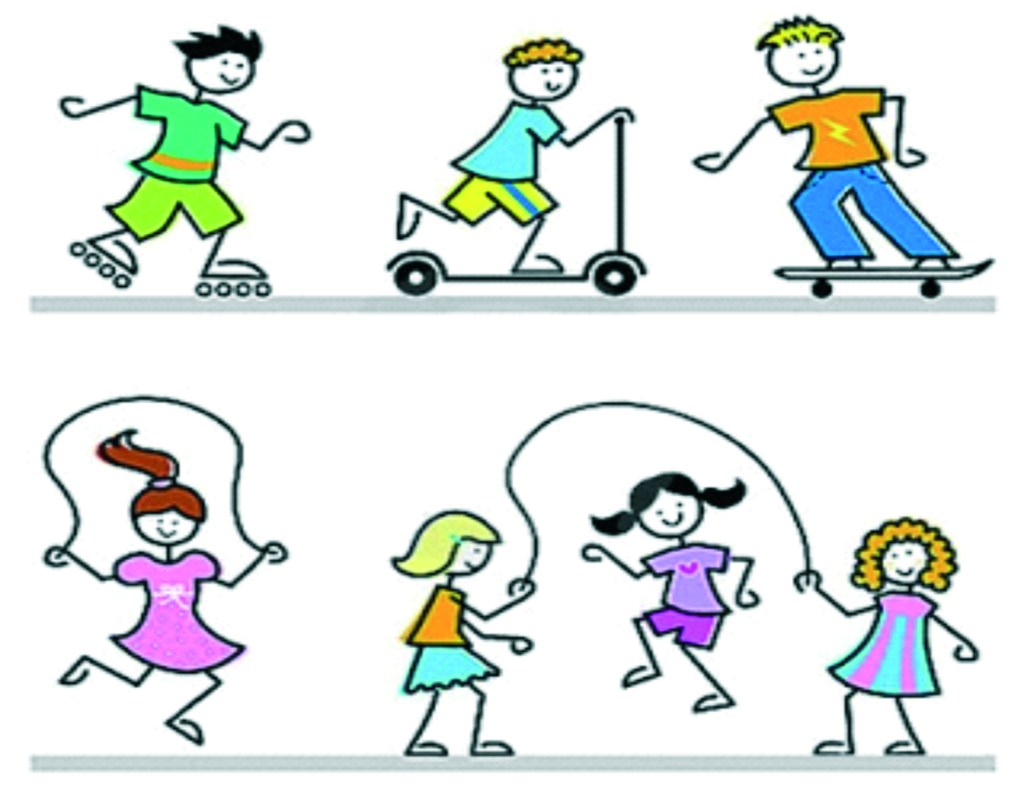
Physical Play – active exercise (running, jumping, skipping etc..), rough & tumble and fine motor skills activities to develop whole body and hand and eye co-ordination strength and endurance. The outdoor element of such play develops independence, resourcefulness and self-regulation while the fine motor skills activities support the development of concentration and perseverance.

Play with Objects – starts as soon as a child can grasp and hold an object; mouthing, biting, turning, stroking, hitting and dropping. It’s how we all learn through the exploration of our senses (sensory-motor play). This type of play develops our abilities to; physically manipulate items, think, reason and problem solve, to set challenges and goals as well as to monitor our own progress.

Symbolic Play – refers to the development of spoken language, visual symbols such as letters and numbers, music, painting, drawing and other media used for communication of thought and ideas. This type of play allows children to develop the abilities to express and reflect on experiences, ideas and emotions. Sound and language play develops phonological awareness required for literacy, while number play that relates to real life situations supports numeracy skills.

Pretence/socio-dramatic Play – Pretend play provides the opportunity to develop cognitive, social, self-regulatory and academic skills. This kind of play means children have to learn and pick up on unspoken rules of interaction, taking on the role of a character and playing within the expected confines of that role.

Games with Rules – physical games such as chase, hide & seek, sport, board and computer games. Develop social skills and the emotional skills of taking turns, winning and losing as well as other people’s perspectives.

                                                             So, to play is to learn!

Bibliography

Kenneth R. Ginsburg, MD, MSEd, 25/07/2013; ‘The Importance of Play in Promoting Healthy Child Development and Maintaining Strong Parent-Child Bonds’: THE AMERICAN ACADEMY OF PEDIATRICS: http://pediatrics.aappublications.org/content/119/1/182.full

Dr.D. Whitebread, April 2012: ‘The Importance of Play’; Commissioned for the Toy Industries of Europe:  http://www.importanceofplay.eu/IMG/pdf/dr_david_whitebread_-_the_importance_of_play.pdf                            

Half-term Fun – Clothes Peg Games

Some fun indoor activities may be the order of the day for this half term as the weather is not so hot.

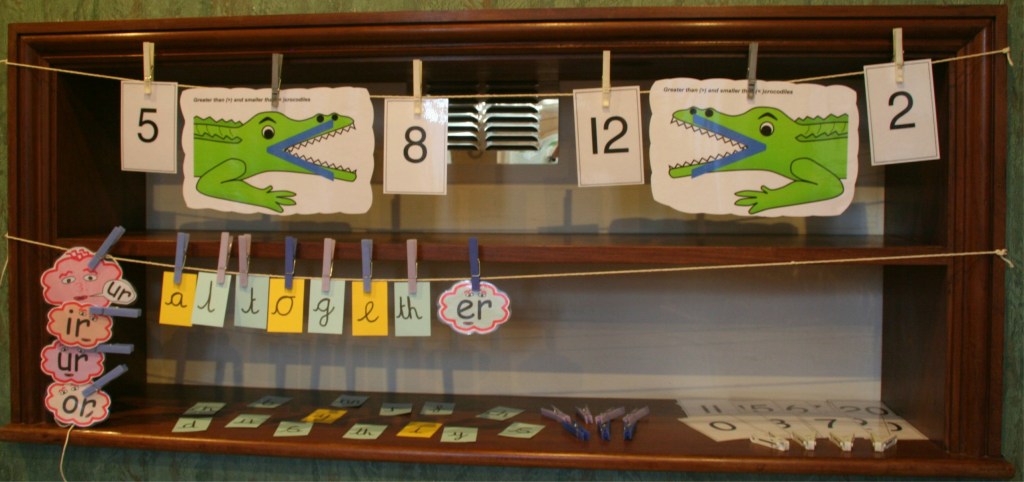
This is a very simple idea which children love because they can take greater ownership of it. The aim of the activity is to help build up hand and finger strength through using the pegs; however, it can have a dual purpose, helping to keep track of the week by using it as a timetable or for learning spellings or maths activities, as well as supporting the development of language skills.

You do not need anything fancy, just some string (for the washing line), clothes pegs and pieces of paper or card to peg onto the washing line. The washing line can be a permanent fixture or you can just pop it up when you need to use it.

The clothes line needs to be at a height suitable for your child to peg things on to (placed against a wall is a safe option so that no-one can walk into it by accident and hurt themselves).

There are a whole range of games that can be played using this simple washing line and pegs concept:

Memory games – Get your child to peg up 5 to 10 different pictures or items on the line. Then give them 1 minute to remember the items. Once the time is up ask them to look away, or close their eyes, and then you remove one or more of the items. Get them to look back at the line. Can they work out what is missing?

  • You could try just moving one or two of the items around. Can they figure out which ones are in the wrong place and put them back in their correct place?
  • Try swapping an item for something new, which your child did not hang up on the line. Can they work out which is the new item on the line?

Odd One Out – Hang pictures on the line that belong together. Can they pick out the odd item on the line and explain why it is the odd one out.

  • They could all be pictures of fruit with a picture of some clothing
  • They could be shapes with straight sides and one with curves
  • They could all be animals but all are wild with only one being domestic

Sorting – Ask your child to sort all the pictures or items from a selection and to hang all the identical things on the washing line. They could all be the same;

  • Colour
  • Shape
  • Type

Pattern Work – Using pictures, different colour and shaped paper or items create different patterns. The patterns can be based on colour, size or type of object. You can create a pattern sequence on the washing line and then ask your child to try and copy the sequence. Can they explain the pattern and create their own for you to copy and explain?

Pairing or What is the Same? – Hang a range of pictures or items on the line, making sure that some of the items can be paired together because they are exactly the same. They could match because;

  • They are exactly the same e.g., a pair of socks
  • Match numbers to a picture with the same number of items on
  • Match capital to lower-case letters

Or have items that can be put together because they are both from the same set, for example they are types of fruit or are the same

To Play is to Learn!

Play is often thought of as a frivolous pastime rather than a practical and meaningful one. However, here at Teach Children Ltd we see play as a vital part of a child’s physical, emotional, social and intellectual growth and well-being.

There has been considerable research over the years on play, which supports our point of view, with the consensus being that children need to experience five different types of play (Dr.D Whitebread, 2012). These five types of play are roughly based on the developmental opportunities they provide, especially if it is child driven rather than adult lead.

In our update parent section of the Teach Handwriting website we have a new ‘Learning Through Play’ section. Here you will find games and activities ideas to suit all ages.

If you click on the ‘Games’ button or follow the link (https://teachhandwriting.co.uk/games.html) you will find games split into the five types of play, which will help you encourage your child to experience them all.

This wide range of play opportunities will also support your child in developing their gross and fine motor, communication and turn taking skills.

                                                             So, to play is to learn!

Bibliography

Dr.D. Whitebread, April 2012: ‘The Importance of Play’; Commissioned for the Toy Industries of Europe:  http://www.importanceofplay.eu/IMG/pdf/dr_david_whitebread_-_the_importance_of_play.pdf                            

Why Poor Eye Tracking and Spatial Awareness Skills Affect #Reading

Eye tracking is the ability to control and coordinate the fine eye movements that allows us to:

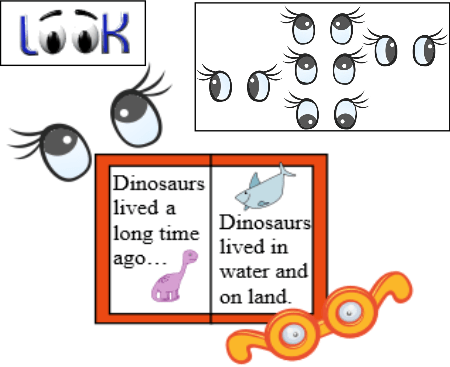
  • Read a line of print by moving our eyes from left to right, without moving the head.
  • To focus and move the eyes to follow an object, without moving the head, in all directions.
  • To track/follow objects near and far.
  • To focus on one object without moving the eyes.

Eye tracking difficulties can have a dramatic effect on a child’s ability to read fluently and with ease due to the fact that they do not see the print in the same way as people with good eye tracking skills.

Typical problems due to poor eye tracking skills:

  • They lose their place, skip words or transpose them.
  • They use a finger to help keep their place.
  • Some will turn their head sideways to read or write.
  • Others may cover one eye to read.
  • They hold their head close to the table when looking at things, reading, writing and drawing.

Activities that help to build these strengths and skills are: Swing Ball, target games and catching games.

Game idea: Goal post skittles

You need: Posts/marker, large plastic drink bottles/skittles and a range of ball sizes.

How to do it:

Place the posts about 2 metres away from the start position and about half a metre apart. Place the skittles about half a metre behind the posts but directly between them. The child starts by rolling a large ball through the posts to knock the skittles over. Before they roll the ball explain to get a maximum score, they need to knock all the skittles over in one roll and that the best way to do this is to look directly ahead through the posts at the skittles, NOT at the ball or their hand.

It may take a little practise, as they improve, they can use a different size ball or move the skittles so that they form different patterns which means they have to be more accurate with the roll.

This game can also be used as a foot and eye activity, the same rules apply, they must look to where they want the ball to end up not at their feet or the ball, tricky!

Good spatial awareness enables us to be aware of the space around us and our position in that space, as well as the relationship between ourselves and objects. This also includes our ability to see and understand the spacing of text and pictures on a page, to distinguish between paragraphs, sentences, words and individual letters.

Spatial awareness difficulties can have a dramatic effect on a child’s ability to read fluently and with ease due to the fact that they do not see the print in the same way as people with good spatial awareness skills.

Typical problems due to poor spatial awareness skills:

  • They lose their place, skip lines and words or transpose them.
  • They use a finger to help keep their place.
  • Comprehension can be difficult as text is mis-read.

Games idea: Pattern making

You need: Beads, building blocks, Lego or shapes.

How to do it:

Talk through the process of making the same pattern as shown on a card or already produced; for instance, the red square goes on the right of the blue square and the yellow square is below the blue square. Ask the child to verbalise what they see and are doing to recreate the pattern.

Patterns can be created and copied with all sorts of items – beads, building blocks, Lego and shapes.

As skill levels improve tessellation (a pattern of shapes that fit perfectly together) activities and square or patterned paper for colouring and creating their own pattern designs are enjoyable.

The Impact of Poor Visual Memory Skills on #Reading

Good visual memory skills enable us to recall information that has been previously visually presented.

Visual memory difficulties can hinder a child’s ability to read fluently and with ease due to the fact that they cannot always remember what the word looks like, even though it may be a very common sight word which has been taught to them many times before.

 Typical problems due to poor visual memory skills:

  • Difficulty in recognising some letters and numbers, especially those they may not use very often, for example some of the capital letters.
  • Have problems learning sight words, or remembering what a word is, from one page to another.
  • Reading is slow and stilted, making comprehension difficult.

For games and activities ideas to support and develop this skill use this links: https://teachhandwriting.co.uk/handwriting-motor-skills.html

Homonyms & Homophones!

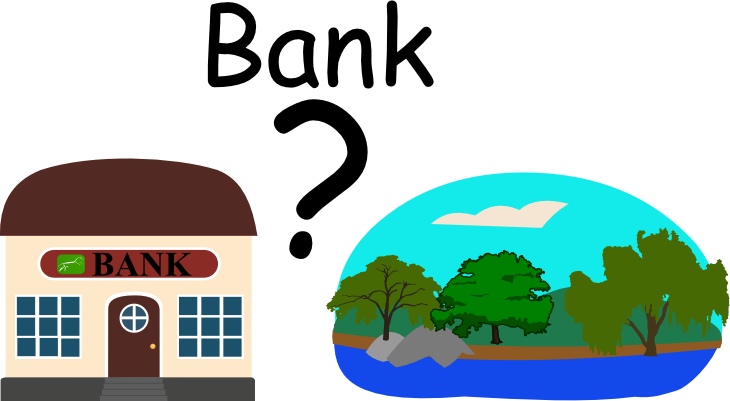
Homonyms and homophones need to be heard or read within a specific context if we are to understand what the word means, for instance, if I say the word ‘bank’ and do not give any other verbal or written clues what do I mean?

The word on its own could mean a couple of things the bank of a river or sand bank or a bank where I can collect money. If it is not put into a context its meaning is unclear. The word ‘bank’ is classed as a homonym.

Homonyms are words which are pronounced and spelt the same; therefore, their meaning can only be truly understood when the context in which the word is being used is made clear. For instance, the word ‘bark’ can be used to mean the bark on a tree or the noise a dog makes.

Homophones are words which are pronounced (sound) the same but have a different meaning and are spelt differently such as, ‘their’ and ‘there’, ‘one’ and ‘won’ or ‘two’, ‘to’ and ‘too’.

To view more examples, scroll down the page of this link:  http://bit.ly/2BcUa8N

Developing #Listening & Speaking Skills – Directional and Positional Language (Word Play)

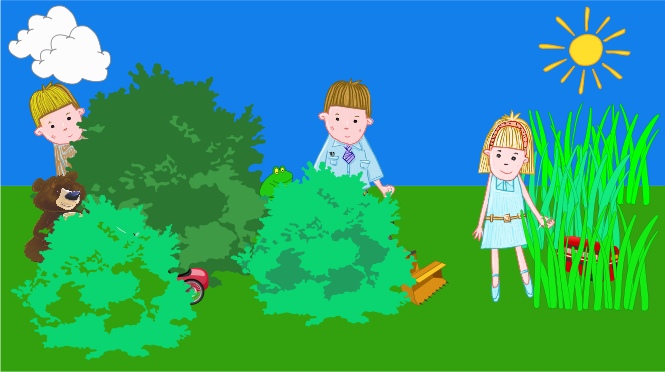
Treasure hunt and hide & seek games are a great way to teach a child directional and placement (prepositions) language. It is important for a child to learn directional and placement vocabulary so that they can both understand instructions given and share information themselves, such as; ‘put your cup on the table’ or to say ‘teddy in car’.

Through treasure hunts and hide & seek games you can introduce new directional and placement language in a fun and exciting way. There are a number of different ways to approach this:

  • You can give verbal instructions to the hidden treasure.
  • You could create a map for them to follow and ask them to talk through the map, supporting with new language as necessary.
  • You could use a mixture of verbal and map clues.
  • For older children get them to hide the treasure and give you instructions, or draw a map.
  • If you have more than one treasure to find, make the most exciting piece more difficult to find.

The important thing is the language shared. Words and phrases to use are: left, right, straight on, forward, backwards, about turn, turn around, up, down, higher, lower, stop, next to, in front, beside, underneath, on top of, behind, on the left of, on the right of, outside, and inside.

Treasure hunts and hide & seek games are a great whole class or family activity and you are never too young or too old to join in!